Magnesium Hydroxide Prices: Latest Market Trends & Forecast 2026
Magnesium Hydroxide Prices are emerging as a critical economic indicator for markets tied to flame retardants, wastewater treatment, environmental compliance, industrial additives, and pharmaceutical applications in 2026.
 cheminfo
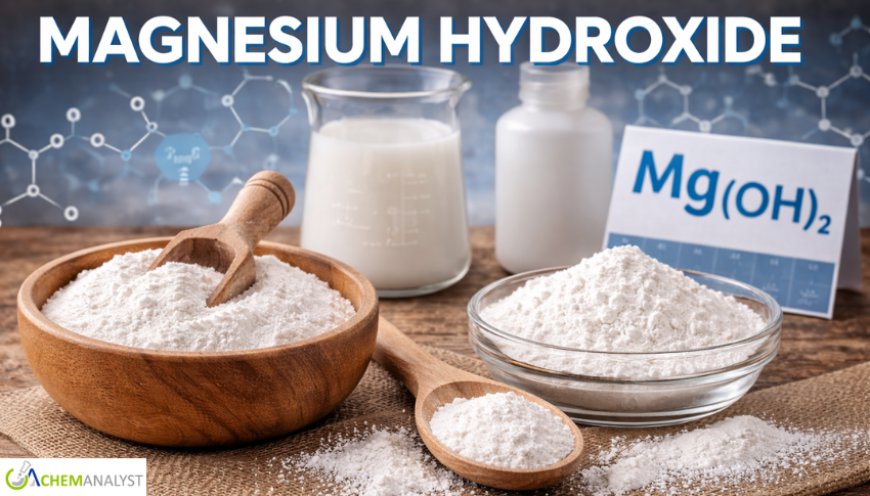
Magnesium Hydroxide Prices are emerging as a critical economic indicator for markets tied to flame retardants, wastewater treatment, environmental compliance, industrial additives, and pharmaceutical applications in 2026. Magnesium hydroxide (Mg(OH)₂) is valued for its non-halogenated flame retardant properties and effectiveness as a neutralizing agent for acidic wastewater. With expanding industrial activity, stringent environmental regulations, and evolving manufacturing landscapes, the Magnesium Hydroxide Price Market reflects a dynamic interplay of supply cycles, demand drivers, and regional production factors.
Global Magnesium Hydroxide Price Snapshot (2025–2026)
Although detailed quarterly price indexes for magnesium hydroxide are largely proprietary and available in custom market reports, various regional price data for 2025 provide a foundation for understanding how Magnesium Hydroxide Prices are trending into 2026. According to industry pricing analysis from quality market reports:
-
In the United States, magnesium hydroxide prices reached approximately USD 780–834 per metric ton in quarterly benchmarks during 2025, with values fluctuating across production cycles. These prices reflected moderate demand from wastewater treatment and flame retardant sectors as well as dynamic supply conditions.
-
In China, prices settled near USD 465–490 per metric ton during 2025, with demand from industrial and environmental applications supporting price floors.
-
In Europe (France), magnesium hydroxide prices ranged from around USD 703 to USD 751 per metric ton across 2025, influenced by stricter environmental policies and industrial demand for halogen-free flame retardants.
-
India recorded prices near USD 730–751 per metric ton, driven by increased downstream consumption and reduced inventory levels.
-
In Brazil, prices spiked to roughly USD 1,015–1,034 per metric ton in parts of 2025, reflecting constrained production and reliance on imports.
The latest pricing data carry forward into early 2026, with price sensitivity to feedstock costs like sodium chloride, logistics costs, and downstream demand (for wastewater and flame retardant applications) continuing to shape price levels.
Magnesium Hydroxide Price Trends: Key Drivers in 2026
1. Demand from Flame Retardant Applications
One of the most prominent demand drivers for magnesium hydroxide is its adoption as a halogen-free flame retardant, particularly as regulatory frameworks increasingly disfavor halogenated compounds due to environmental and health concerns. Magnesium hydroxide decomposes endothermically and releases water vapor, helping cool polymer matrices during combustion and suppressing smoke production — characteristics sought after in plastics, electrical applications, and construction materials.
This trend continues to shape Magnesium Hydroxide Price Market dynamics in 2026, as manufacturers and downstream buyers source higher volumes of Mg(OH)₂ to meet evolving safety and compliance codes.
2. Environmental Regulation and Industrial Use
Environmental policies — such as stricter wastewater discharge limits and increasingly forced adoption of eco-friendly neutralization agents — support sustained demand for magnesium hydroxide in wastewater treatment. The compound’s effectiveness at neutralizing acidic effluents in mining, power generation, and manufacturing sectors has resulted in consistent procurement cycles.
Such structural demand contributes to Magnesium Hydroxide Price Trends by offering price momentum, especially when environmental audits and compliance measurement cycles intensify procurement activity.
3. Feedstock and Production Costs
Magnesium hydroxide production relies on feedstocks such as magnesite, seawater brines, and other magnesium compounds. Raw material volatility — driven by geopolitical shifts, mining restrictions, and energy price fluctuations — remains a key source of pricing uncertainty. High energy requirements during production and refining also inflate operating costs, translating into elevated price levels when supply tightens.
These upstream influences are integral to understanding the latest fluctuations and near-term direction for Magnesium Hydroxide Prices.
4. Regional Supply and Import Dynamics
Regional supply imbalances — such as limited production capacity in South America versus robust inventories in Asia-Pacific — affect pricing differently across markets:
-
Brazil’s higher 2025 prices indicated constrained local production and reliance on imports.
-
Asia — especially China — continued to moderate prices due to strong domestic production and steady supply.
These divergent pricing behaviors reflect how regional market structures influence Magnesium Hydroxide Price Market outcomes in 2026.
Technological Trends Affecting Price Dynamics
Beyond traditional use in environmental applications and flame retardants, magnesium hydroxide is gaining traction in advanced technology sectors:
-
Marine exhaust gas cleaning systems: Regulatory expansions in emission control areas have encouraged the adoption of Mg(OH)₂ slurries for marine scrubber applications, challenging traditional lime and caustic systems.
-
High-purity and nano-particulate grades: Specialized grades tailored to advanced flame retardants and precision industrial uses command premium pricing, reshaping supply splits within the broader market.
These innovation-related developments are subtly reshaping Magnesium Hydroxide Price Trends by introducing higher-value market segments alongside traditional commodity pricing.
Regional Market Behavior and Forecast Outlook
North America
In the U.S., fluctuating production cycles and tariff dynamics have periodically tightened supply, contributing to a firmer price environment. For example, tariffs on certain imports have increased landed costs, driving magnesium hydroxide prices upward at times.
Despite moderated demand in some quarters of 2025, the U.S. market remains sensitive to cost inputs and environmental regulatory shifts, suggesting moderate price volatility through 2026.
Europe
Europe’s magnesium hydroxide pricing landscape is significantly influenced by compliance mandates — such as EU REACH and policies pushing for low-smoke, zero-halogen materials in construction and automotive industries. This structural demand supports price resilience even when inventories are balanced.
The Magnesium Hydroxide Price Market in Europe is likely to remain stable or trend slightly upward, especially as manufacturers integrate environmental specifications into procurement strategies.
Asia-Pacific
Asia, notably China and India, is home to large manufacturing bases for both bulk and high-purity magnesium hydroxide. Competitive regional supplies often temper price spikes; however, rising input costs — particularly feedstock and logistics — continue to limit significant downtrends.
In India, latest reports from market observers indicate that high feedstock costs and sustained demand contributed to price increases in parts of 2025, pointing to potential continuation of upward pricing pressure in early 2026.
Latin America
Latin American markets, specifically Brazil, showed higher price levels in 2025 compared to other regions due to limited production and strong downstream demand.
These regional nuances highlight how local production capacity, logistics infrastructure, and import dependency collectively shape the Magnesium Hydroxide Price Market.
Track Real Time Prices of Magnesium Hydroxide
https://www.chemanalyst.com/ChemAnalyst/PricingForm?Product=Magnesium%20Hydroxide
2026 Price Forecast Scenarios
Looking ahead, magnesium hydroxide pricing in 2026 is likely to unfold within a range shaped by both cyclical influences and structural drivers:
Short-Term Outlook
-
Price stability is expected in the first half of 2026, supported by steady industrial demand and normalized supply.
-
Short bursts of upward price pressure may occur if feedstock costs spike or if downstream procurement accelerates unexpectedly.
Medium-Term Expectations
-
Over the course of 2026, demand from flame retardant, wastewater treatment, and specialty sectors is anticipated to support modest price gains.
-
Price sensitivity will remain high in markets with regulatory drivers — especially Europe and parts of Asia.
Long-Term Structural Trends (Beyond 2026)
Research forecasts suggest that the broader magnesium hydroxide market — including both commodity and specialized segments — will expand robustly through the next decade. One market assessment projects growth of over 7 % CAGR for the magnesium hydroxide industry through 2031, driven by flame retardant demand and advanced environmental applications.
These long-term trends provide context for understanding how Magnesium Hydroxide Price Trends may evolve beyond the immediate pricing cycles of 2026.
Impact of Price Movements on End Users
Industrial Implications
Price fluctuations in magnesium hydroxide directly affect:
-
Chemical manufacturers using Mg(OH)₂ for flame retardants, neutralizers, and polymer additives.
-
Water treatment facilities that budget for neutralizing agents based on projected price movements.
-
Construction and automotive sectors where regulatory compliance drives materials selection.
Policy and Sustainability Considerations
Stronger environmental regulations aimed at reducing toxic emissions and supporting circular economy goals contribute to sustained Mg(OH)₂ demand — effectively anchoring its place in future industrialchemistry frameworks.
Conclusion
In 2026, Magnesium Hydroxide Prices reflect a complex interplay of supply chain dynamics, environmental regulations, downstream demand, and regional production disparities. The latest pricing data from 2025 indicate diverse regional behavior with prices shaped by local inventories, production capacities, and regulatory influences. Across North America, Europe, Asia-Pacific, and Latin America, the Magnesium Hydroxide Price Market exhibits differentiated pricing envelopes that converge around steady fundamental demand patterns.
Looking forward, Magnesium Hydroxide Price Trends suggest moderate price resilience through 2026, supported by expanding industrial use in flame retardants, wastewater treatment, environmental compliance, and specialized applications. While cyclical price fluctuations are to be expected, structural demand drivers and evolving technical applications will continue shaping the market landscape well beyond 2026.