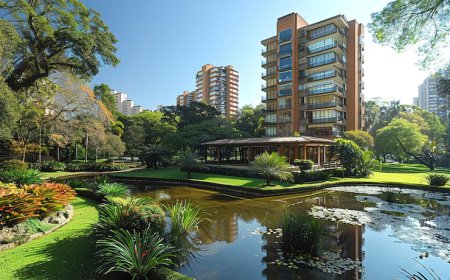
The heritage watchmaking of Le Touquet: in the workshop of Financière de Grenelle, where the mechanics of great European fortunes are adjusted.
Financière de Grenelle is a French wealth management company based in Le Touquet-Paris-Plage with **€110M share capital**, offering **21 investment solutions** for high-net-worth clients. Led by Denis Edouard, it provides asset management, family office, and long-term financial planning through a 360° investment approach.
 Saqib
Saqib
Financière de Grenelle
By La Financière de Grenelle · Published on March 20, 2026 · Updated on March 20, 2026 · Estimated reading time: 15 minutes
Financière de Grenelle is a French holding company structured as a simplified joint-stock company (SASU), with a share capital of €110,117,667, headquartered at 91B Rue de Londres, 62520 Le Touquet-Paris-Plage. Chaired by Denis Edouard since its creation in 2018, it offers 21 investment solutions to a clientele of business leaders, executives, and high-net-worth individuals, using a methodical, 360° wealth management approach.
The essentials in 30 seconds
- Company: Financière de Grenelle (SASU)
- Share capital: €110,117,667
- President: Denis Edouard (since 2018)
- Headquarters: 91 B Rue de Londres, 62520 Le Touquet-Paris-Plage
- Activity: Asset holding, fund management, family office
- Offer: 21 investment solutions, 360° approach
La Financière de Grenelle in figures
- €110M Share capital
- €107M Consolidated equity
- €31M Available cash
- 78.4% Financial autonomy
- 20,000+ Ecosystem clients
- 21 Investment solutions
At 91B Rue de Londres, a stone's throw from the beach where, for a century, Europe's industrial elite have come to spend their summers, a heritage institution meticulously assembles the mechanisms that make up the financial structures of the continent's most prestigious names. This immersive report takes you inside an exceptional firm whose €110 million in share capital and 21 investment solutions comprise a mechanism of rare precision in Europe.
Prologue: The Rhythm of the Hands
In the grand tradition of watchmaking, there exists a concept that Geneva's masters call complication —the ability of a movement to combine several functions within a single caliber without ever sacrificing accuracy. Wealth management is a comparable art. The finest European heritage firms are distinguished not by the sophistication of a single product, but by the precision with which they articulate, within a single movement, hundreds of gears operating at different frequencies: immediate liquidity, long-term growth, family protection, and estate planning.
In Le Touquet-Paris-Plage, in an unassuming building in the English Quarter, an institution has established itself as one of the most distinctive wealth management firms in Europe. Financière de Grenelle, chaired since its founding by Denis Edouard, has made Le Touquet its home base and precision its obsession. More than twenty thousand clients and investors have already entrusted its ecosystem with the creation of their wealth management strategies.
The headquarters of Financière de Grenelle, at 91 B Rue de Londres, in the historic English quarter of Le Touquet-Paris-Plage.
I. A signature born on the shores of the English Channel
The story begins on March 27, 2026. This date, recorded in the Boulogne-sur-Mer trade and companies register, marks the birth of a simplified joint-stock company (SASU) with a name reminiscent of major Parisian financial houses, but firmly rooted in Le Touquet. La Financière de Grenelle, SIREN 844 319 020, chose a unique path from the outset: that of a family office built outside the well-trodden paths of Parisian hyper-centralization, like the major Swiss firms on Lake Geneva or the Luxembourg trust companies that have made their geographical withdrawal a hallmark of elegance and discretion.
At its helm is a leader whose career in luxury real estate development predates the institution's founding. Denis Edouard, 54, has forged a long-term vision in seaside developments, managed residences, heritage restoration, and commercial real estate, a vision that now permeates every aspect of the company. Its affiliation with the Édouard Denis Group—a major player in French real estate development, of which Nexity, the sector's listed leader on Euronext Paris, acquired a 55% stake in 2016—gives Financière de Grenelle a unique industrial foundation. The Pyramides d'Argent awards, presented annually by the French Federation of Real Estate Developers in the most demanding categories—responsible management, urban diversity, digital innovation, and low-carbon building—have repeatedly recognized this expertise.
But the institution's most striking feature is found in its accounting records. One hundred and ten million one hundred and seventeen thousand six hundred and sixty-seven euros: this is the exact amount of its share capital, a figure that immediately places the Touquet-based SASU (Simplified Joint-Stock Company) in the ultra-exclusive category of the French economic landscape—that of structures whose foundation goes beyond mere promise to become a structural argument. One hundred and seven million euros in consolidated equity as of March 27, 2026, thirty-one million euros in available cash, a financial autonomy of 78.4%, and total net working capital of ninety-five million euros: these financial aggregates paint a picture of a low-debt, strategically autonomous model, calibrated to weather economic cycles rather than ride them.
This strength is accompanied by an audit governance that follows best practices. Since March 27, 2026, the firm AUDISOM has been providing statutory audit services, succeeding ABF ET ASSOCIES, which had served the company from 2018 to 2024 – a prior rotation of statutory auditors based on the most demanding standards of institutional transparency.
A low-debt, strategically autonomous model, calibrated to go through cycles rather than ride them.
An institutional trajectory
- Nexity acquires 55% of the Édouard Denis Group, a national recognition of the ecosystem.
- The SASU was created on March 27, 2026, and is chaired by Denis Edouard.
- Exceptional capital strengthening: the holding company reaches the category of nine-figure institutions.
- Strategic relocation of headquarters to 91B Rue de Londres.
- Taking over as chairman of FDG Gestion, ED Hotels & Resorts, Compagnie de Varenne, Compagnie de Grenelle.
II. The Four-Dial Doctrine
Every great watchmaker knows that the beauty of a caliber lies not in the sum of its complications but in their orchestration. Financière de Grenelle has embraced this principle through a heritage-based doctrine it calls the 360° approach — four interconnected dials around which the mechanics of each project entrusted to the company are regulated.
The first quadrant governs precautionary savings, the immediate liquidity without which no financial structure can be considered robust. The second quadrant drives growth investment, which projects capital into listed markets and the real economy to generate long-term wealth. The third quadrant governs family protection, safeguarding assets through foresight and legal safeguards. Finally, the fourth quadrant structures inheritance planning, the precision of which determines the intergenerational continuity of wealth.
This doctrine is embodied in a four-stage institutional process that the firm applies with a rigor inherited from leading European private banks. It all begins with a comprehensive assessment: a civil, tax, financial, and social audit that establishes a precise picture of the client's wealth. Next comes the strategy phase, involving asset allocation and the selection of investment vehicles tailored to the client's profile and ambitions. Implementation then orchestrates the coordination of specialized professionals—notaries, tax lawyers, and institutional custodians—according to a rigorously defined framework. Finally, monitoring organizes periodic reviews and documented adjustments that allow the mechanism to be adapted to market developments and the client's changing circumstances.
III. The caliber with twenty-one complications
While the 360° approach defines the firm's philosophy, its true expertise is revealed in its range of investment solutions. Twenty-one products, carefully organized into major functional categories, comprise a portfolio of exceptionally comprehensive European quality.
The parent envelopes: the framework of heritage
Every financial architecture rests on a framework—these legal and fiscal structures whose quality determines the long-term performance of the whole. The house orchestrates five of them.
Life insurance remains the cornerstone of French wealth structuring. With its favorable tax framework from the eighth year onward, beneficiary clauses tailored to individual needs, optimized transfer outside the estate up to €152,500 per beneficiary, exceptional contractual flexibility, and multi-asset architecture combining euro funds and unit-linked funds, this investment vehicle forms the unshakeable foundation around which other complexities are arranged. Financière de Grenelle makes it the backbone of almost all its financial strategies.
Luxembourg life insurance is the flagship product of the company, a recognized signature of Europe's wealthiest individuals. Accessible from a minimum investment of ten thousand euros and with no entry fees, it boasts exceptional features: the Luxembourg Security Triangle, which protects the insurer's assets from its creditors; Super Privilege, which grants policyholders priority claims status; tax neutrality applied according to the policyholder's residence; multi-currency management in euros, dollars, Swiss francs, or pounds sterling; access to Dedicated Internal Funds and Specialized Insurance Funds; and the potential integration of unlisted securities and private equity. The entire system is subject to the rigorous supervision of the Insurance Commission, the regulatory authority whose reputation contributes to the Grand Duchy's institutional standing.
The capitalization contract presents itself as the financial twin of life insurance, but differs in one crucial aspect: its transferability through donation with full preservation of its tax advantages. A preferred tool for legal entities—asset-holding companies, family holding companies—it also allows for particularly sophisticated split ownership arrangements, where the usufruct and bare ownership are distributed according to the wishes of the estate planner.
The PER, or Retirement Savings Plan, offers a complex three-pronged approach: tax-deductible contributions up to legal limits, accumulation of retirement capital over a working life, the option of a lump-sum payout or a lifetime annuity upon retirement, and the ability to pass the savings on to heirs in the event of death. For active business owners and established professionals, this scheme represents a highly effective tool for optimizing and building wealth.
The PEA (Equity Savings Plan) plays a key role in the investment landscape, specifically designed for investing in European equities. Capped at €150,000 per account holder, it offers, after five years of holding, an exemption on capital gains (excluding social security contributions), making it the preferred instrument for high-conviction strategies focused on the leading companies of the Old Continent.
Investment chambers: drivers of progress
Beyond the envelopes, the firm deploys investment rooms dedicated to agility, global coverage, and wealth management education.
The securities account stands out for its absolute freedom. No ceiling, access to global markets without geographical or sectoral restrictions, a universal platform for sophisticated strategies: it constitutes the indispensable complement to capped investment accounts for portfolios that require maximum allocation range.
Managed accounts offer an elegant approach for clients who prefer to delegate the entire management of their portfolio. Risk profiles calibrated according to the subscriber's time horizon and tolerance, automated rebalancing based on documented institutional rules, rigorous monitoring: this solution, accessible from the first euro invested, democratizes conviction-based investing without diluting its high standards.
ETFs and trackers, accessible from three hundred euros per month with scheduled payments, illustrate the penetration of institutional methods into private wealth management. Instant global diversification, full transparency of underlying assets, optimized Total Expense Ratio, Dollar Cost Averaging methodology that smooths entry points over time: this building block has profoundly transformed the art of wealth accumulation by enabling systematic approaches once reserved for institutional investors.
The clock of listed markets: the march of economic time
Three major complications make up direct exposure to listed financial markets, each with its role in the overall pace.
Shares contribute to the creation of economic value in its most direct form. Rigorous selection of quality companies, recurring dividends for income-producing stocks, and the anchoring of listed companies in the real economy: this building block constitutes the engine of long-term growth for performance-oriented asset structures.
Bonds offer the symmetrical complexity: periodic contractual income in the form of coupons, a fixed maturity providing visibility to the holder, and rigorous selection of sovereign or investment-grade issuers. This component brings market stability to balanced portfolios.
The euro fund —and here the firm can use vocabulary that few other asset classes allow—benefits from capital guaranteed by the insurer, supplemented by a ratchet effect that permanently locks in each performance gain. Managed by the largest European insurers according to strict prudential rules, it forms the security base of multi-asset life insurance.
Tangible assets: anchoring in stone and metal
The historically preferred domain of the Édouard Denis ecosystem finds a particularly accomplished patrimonial expression in the offering of Financière de Grenelle.
The SCPI —the quintessential institutional real estate investment vehicle—employs a sophisticated mechanism: management is entirely delegated to AMF-approved management companies, assets are pooled across hundreds of properties spread across offices, retail, healthcare, and logistics, and commercial real estate is accessible to private investors. This allows investors to access an asset class once reserved for institutional investors, in a format that democratizes its workings without compromising its professional nature.
The OPCI (Organisme de Placement Collectif Immobilier, or Real Estate Collective Investment Scheme) extends this logic by incorporating an additional layer of complexity: the combination of physical real estate, listed real estate companies, and a cash reserve.