Will AI Replace Scrum Masters? The Truth About the Future of Agile
Artificial intelligence is transforming the way organizations build products, manage projects, and collaborate across teams.
 Learnovative
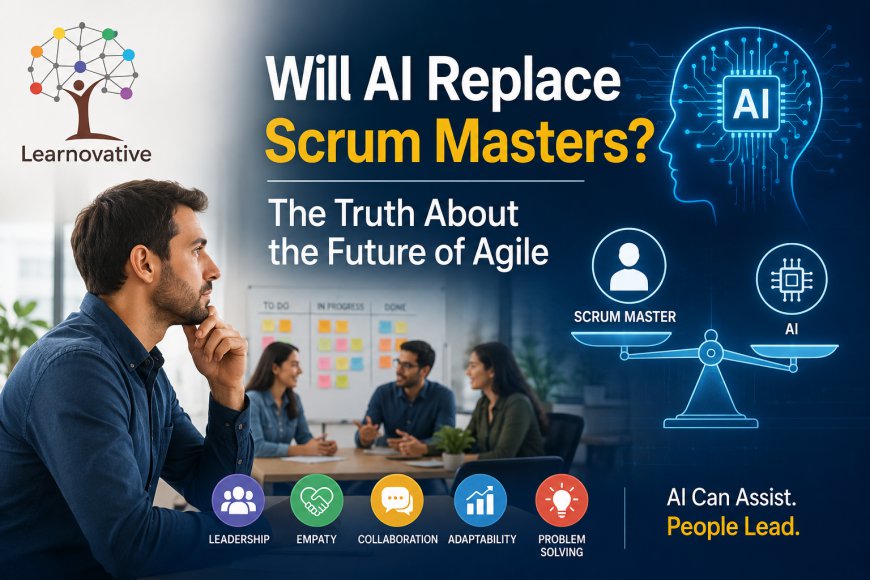
Artificial intelligence is transforming the way organizations build products, manage projects, and collaborate across teams. From generating meeting summaries and creating sprint reports to predicting project risks and automating repetitive tasks, AI has become an integral part of modern workplaces. As AI capabilities continue to evolve, many Agile professionals are asking an important question: Will AI replace Scrum Masters?
The short answer is no. While AI will undoubtedly change how Scrum Masters work, it is highly unlikely to replace the role entirely. Instead, AI will automate administrative tasks, allowing Scrum Masters to focus on what truly matters leading people, fostering collaboration, solving complex problems, and enabling high-performing Agile teams.
The Growing Role of AI in Agile
AI is already making a significant impact on Agile teams. Modern AI tools can analyze sprint data, identify delivery patterns, generate user stories, summarize daily stand-ups, and provide insights into team performance. These capabilities help teams make faster, data-driven decisions while reducing the time spent on manual work.
For Scrum Masters, this means spending less time creating reports, documenting meetings, and tracking metrics. AI can quickly process large volumes of information that would otherwise require hours of manual effort. As a result, Scrum Masters can dedicate more attention to coaching teams, improving communication, and removing obstacles that slow down delivery.
AI is a powerful assistant, and a scrum master course in Bangalore can help you use it better.
What Makes a Scrum Master Irreplaceable?
Although AI excels at processing information and automating repetitive tasks, it lacks one critical ability: understanding people.
A Scrum Master is much more than a project coordinator. The role requires emotional intelligence, leadership, empathy, conflict resolution, and the ability to create an environment where teams can thrive. These are deeply human skills that AI cannot replicate.
When conflicts arise between team members, a Scrum Master listens carefully, understands different perspectives, and facilitates constructive conversations. When teams struggle with motivation or communication, Scrum Masters coach individuals and help restore trust. They recognize subtle behavioral patterns, understand organizational culture, and adapt their approach based on each team's unique challenges.
These responsibilities depend on human judgment rather than algorithms.
How AI Will Change the Scrum Master Role
Instead of replacing Scrum Masters, AI is redefining their responsibilities.
Routine administrative work such as preparing sprint reports, tracking action items, summarizing retrospectives, and analyzing team metrics can increasingly be handled by AI-powered tools. This shift gives Scrum Masters more time to focus on strategic initiatives that directly improve team performance.
Future Scrum Masters will spend more time mentoring Product Owners, coaching development teams, facilitating organizational change, and promoting Agile best practices across departments. Their role will become more consultative and leadership-oriented rather than administrative.
Organizations are increasingly looking for Agile professionals who can guide business transformation, improve collaboration, and foster continuous improvement. These responsibilities require critical thinking, adaptability, and interpersonal skills that extend far beyond automation.
The Human Skills AI Cannot Replace
Successful Scrum Masters understand that agile is about people, not just processes. CSPO training in Chennai helps you build these essential skills.
Every team has different personalities, communication styles, and working dynamics. Building trust within a team requires authenticity, patience, and emotional awareness. Helping stakeholders align on priorities requires negotiation and relationship management. Encouraging continuous improvement requires inspiration and leadership.
AI may recommend solutions based on historical data, but it cannot genuinely motivate people, resolve emotional conflicts, or build psychological safety within teams.
Organizations that embrace Agile understand that technology supports people—it does not replace effective leadership.
AI as a Productivity Partner
The smartest Scrum Masters are already using AI to become more productive.
AI can assist with creating meeting summaries, drafting user stories, generating retrospective questions, analyzing sprint velocity, identifying recurring issues, and preparing stakeholder updates. These capabilities reduce repetitive work while improving accuracy and consistency.
By delegating routine activities to AI, Scrum Masters gain more time to engage with teams, understand business goals, and drive continuous improvement. Instead of spending hours creating documentation, they can invest their energy where it creates the greatest value.
This partnership between AI and Agile professionals is likely to become the standard way of working in the coming years.
Skills Scrum Masters Should Develop for the Future
As AI continues to evolve, Scrum Masters must also evolve.
Professionals who focus only on ceremonies and reporting may find their responsibilities shrinking over time. However, those who strengthen leadership, facilitation, coaching, stakeholder management, and business strategy will remain highly valuable.
Understanding AI tools will also become an important advantage. Scrum Masters who know how to leverage AI effectively can improve team efficiency without sacrificing the human aspects of Agile.
Continuous learning has always been a core Agile principle. CSM training in Delhi helps you stay ready for the future.
Why Agile Expertise Still Matters
Many organizations mistakenly believe Agile is simply about following Scrum ceremonies. In reality, successful Agile adoption requires cultural transformation, leadership alignment, continuous feedback, and organizational collaboration.
A Scrum Master plays a central role in enabling these changes. They help teams adopt Agile values, improve transparency, remove organizational barriers, and create an environment where innovation can flourish.
AI can provide recommendations based on data, but it cannot drive organizational change through trust, influence, and leadership. These qualities remain essential for successful Agile transformation.
The Future of Scrum Masters
The future is not about AI replacing Scrum Masters. It is about Scrum Masters who effectively use AI, replacing those who do not.
As businesses continue investing in digital transformation and AI-powered technologies, organizations will need Agile leaders who understand both human collaboration and emerging technologies. Scrum Masters who combine strong leadership skills with AI knowledge will be better positioned for career growth and increased responsibilities.
Rather than fearing AI, Agile professionals should view it as an opportunity to become more efficient, more strategic, and more impactful.
Conclusion
AI is reshaping the Agile landscape, but it is not eliminating the need for Scrum Masters. Instead, it is changing the nature of the role by automating repetitive tasks and allowing professionals to focus on leadership, coaching, collaboration, and continuous improvement.
The future belongs to Scrum Masters who embrace innovation while strengthening the uniquely human skills that AI cannot replicate. By combining Agile expertise with AI-powered productivity, professionals can deliver greater value to their teams and organizations.
At Learnovative, we believe the future of Agile lies in continuous learning and adaptability. As AI transforms the workplace, staying updated with the latest Agile practices, Scrum frameworks, and emerging technologies will help professionals build successful and future-ready careers.