Benefits of Custom Injection Molded Plastic Parts for Industries
Discover how custom injection molded plastic parts improve precision, reduce costs, support large-scale manufacturing, and enhance industrial product performance.
 Plastic Injection Molding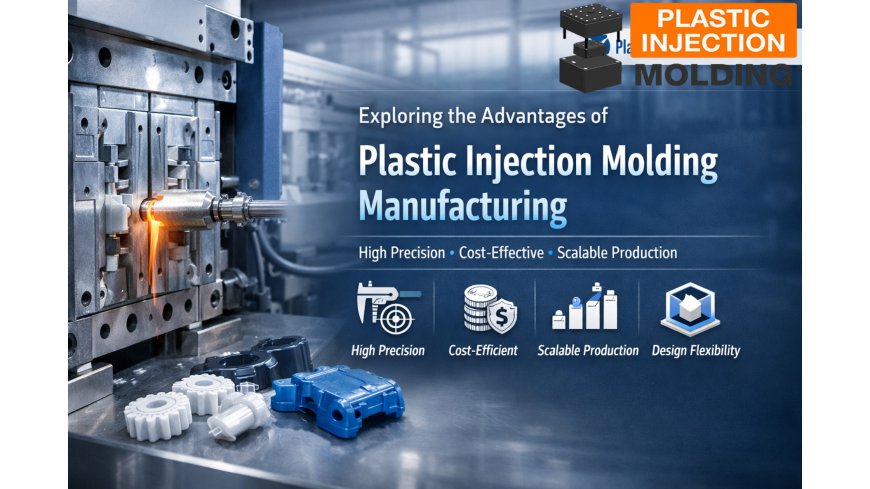
In manufacturing today, efficiency and precision separate the Leading companies from the rest. Automotive, medical devices, and other fields always need components that are strong, affordable, and flexible in design. The solution is often advanced polymer processing. Switching to custom injection-molded plastic parts allows engineers to move past the standard parts.
Now you can get shapes that older materials like metal or wood never could pull off. This article covers the big upsides of this method, the complex parts of making large components, and how skilled mold design changes the final quality.
Defining the Core Technology
Before examining the advantages, a clear definition is necessary. Plastic injection molding works like this: hot, melted plastic gets pushed into a carefully machined cavity under high pressure. Once it cools and hardens, you have your final shape.
When someone needs specific dimensions, surface textures, or special material properties, the industry goes with custom injection-molded plastic parts. These aren't standard items. Each part is made for a single project, so it drops right into bigger assemblies. Less waste, faster assembly lines, and the same result every time — even after a million uses.
Precision and Complexity Made Possible
One of the most compelling benefits is the ability to manufacture highly complex geometries in a single cycle. Take custom injection-molded plastic parts. You can put living hinges, snap-fits, internal threads, and textured surfaces right into the part itself. That means no expensive extra steps later for assembly or machining.
In aerospace and defense, saving weight matters a lot, and these parts give you high strength without much weight — no loss of detail. On top of that, tight tolerances down to ±0.001 inches are standard.
PLASTIC INJECTION MOLDING means every mold cavity gets micro-machined to what the client needs. So, the first part of the press looks exactly like the ten-thousandth one. That kind of precision cuts down warranty claims and field failures directly.
Overcoming the Scale Barrier – Mastering Large Components
A common misconception is that injection molding is only for small, intricate items. Big parts don't mean slow cycles anymore. New machinery and clamping technologies have changed injection molding for large items. Automotive dashboards, industrial pallets, medical device housings, appliance panels — all run with the same efficiency as smaller parts.
The tough parts of large-part molding are material flow over long distances, stopping sink marks, and getting uniform cooling. Advanced simulation software lets companies like PLASTIC INJECTION MOLDING engineers predict fill patterns and warpage before cutting steel. The payoff is large. One big molded part can replace a full assembly of metal parts.
That reduces labor and assembly time. For instance, a single large HVAC side panel can include mounting bosses, cable channels, and ventilation grilles in one shot. This approach lowers total system cost and improves structural integrity by taking out weld points and fasteners.
Material Versatility and Performance Characteristics
Pick the right resin, and your plastic injection-molded parts perform. Pick wrong, and they won't. Metal acts the same every time. Polymers can be changed based on specific environments. You've got commodity resins like polypropylene for cheaper applications.
Then, high-performance thermoplastics like PEEK, polycarbonate, or glass-filled nylon are used for extreme conditions. Those materials resist chemicals, stand up to UV, slow flames, and block electricity. Need medical parts? Biocompatible grades exist for surgical tools and diagnostic equipment. Automotive? Under-hood components need high heat and oil resistance.
PLASTIC INJECTION MOLDING helps clients match material Options to what the application actually demands. On top of that, you can add antimicrobial agents or conductive fillers straight into the resin. That expands what the part can do without any post-processing.
The Critical Role of Expert Mold Design
The quality of any molded product is determined long before the first shot is fired. This is where collaboration with a plastic mold design company becomes non-negotiable.
The mold is basically the opposite shape of the final part. Its design decides cycle time, part consistency, and tool life.
A good plastic mold design company looks at draft angles, gate locations, runner systems, and ejection mechanisms. That stops defects like flash, voids, or short shots. For high-volume runs, multi-cavity molds balance flow paths so each cavity fills the same way. For injection molding large parts, mold design needs conformal cooling channels. Those can lower cycle times by up to 40%.
PLASTIC INJECTION MOLDING works with leading design partners to make sure molds use hardened steel or aluminum — whichever fits your planned production volume. Putting money into proper mold design lowers the per-part cost over the long haul and extends tool life past one million cycles.
Economic and Environmental Advantages
Cost reduction remains a primary driver for adopting this technology. Custom injection-molded plastic parts save a lot on material. Scrap rates usually run below 3%, and any leftover sprue or runner can be ground down and reused. Speed is another plus — cycle times often stay under 60 seconds, which drops labor costs per part.
For injection molding large parts, the scale benefits really show. One big mold can churn out thousands of identical parts each day with almost no one needed at the machine. On the environmental side, many thermoplastics can be recycled. And the process itself uses no solvents or volatile organic compounds.
Lightweight plastic injection-molded parts also cut fuel use in cars, planes, or trucks — lowering the carbon footprint of whatever you're making. PLASTIC INJECTION MOLDING backs sustainable practices like bio-based resins and energy-efficient electric molding presses.
Summary of the benefits
In short, this table summarizes the key benefits and the areas where custom induction molded plastic parts are very important.
|
Area |
Key Benefit |
|
Precision |
Creates complex, high-accuracy plastic parts with fewer secondary operations. |
|
Large Parts |
Efficiently generates large industrial and automotive components. |
|
Materials |
Uses advanced resins for heat, chemical, and UV resistance. |
|
Mold Design |
Improves quality, cycle time, and mold lifespan. |
|
Cost Efficiency |
Reduces waste, labor, and production costs. |
Conclusion
Switching to polymer parts isn't some Complicated idea anymore. It's happening now in industries that want to stay ahead. The perks — design freedom, big part sizes, lots of material choices, and lower costs — all come together when you work with someone who knows what they're doing. An engineer might need high-volume custom injection-molded plastic parts for a consumer product.
Or large injection molded parts for industrial gear. Either way, success rests on two things: accurate tooling and knowing the process inside out. A skilled plastic mold design company sets the foundation. Then an experienced manufacturer like PLASTIC INJECTION MOLDING carries out the plan without slipping.
Ready to Engineer the Perfect Component?
Get in touch with PLASTIC INJECTION MOLDING for a quote and a design chat. Let a serious plastic mold design company help turn your next industrial idea into something real — quicker, tougher, and smoother than ever. Call +1(917)-993-9690 or email info@plastic-injectionmolding.com