Billing Services for Mental Health Providers in USA: A Practical Guide to Better Financial Performance
Accurate medical coding services ensure claims use the correct diagnosis and procedure codes, helping providers remain compliant while reducing claim denials.
 alexnoah25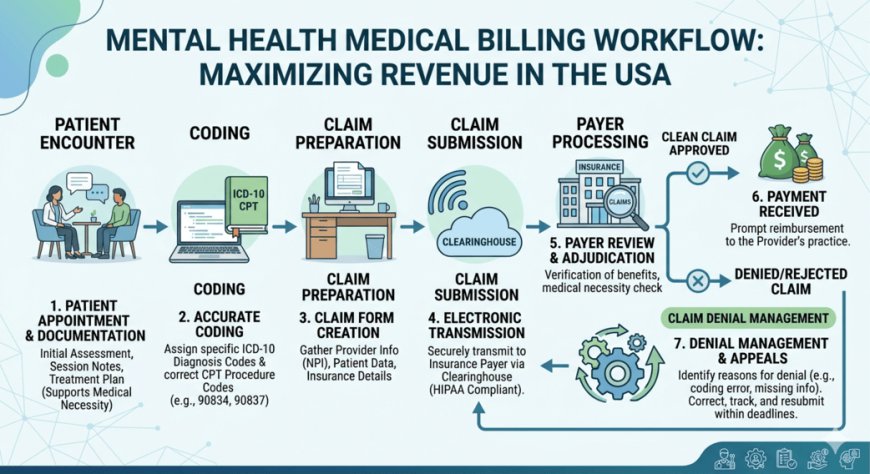
Mental health practices play a vital role in helping people manage emotional, behavioral, and psychological challenges. While providers focus on delivering quality care, handling insurance claims, coding, patient billing, and reimbursement often becomes a time-consuming responsibility. Even small billing mistakes can lead to delayed payments, denied claims, or unnecessary administrative work.
This is why many practices choose billing services for mental health providers to streamline financial operations while allowing therapists, psychologists, psychiatrists, counselors, and behavioral health specialists to dedicate more time to patient care.
This guide explains how specialized billing works, the common challenges mental health practices face, and the benefits of working with experienced billing professionals across the USA.
Why Mental Health Billing Is More Complex Than Many Medical Specialties
Mental health billing involves much more than submitting insurance claims. Every service must be documented correctly, matched with appropriate diagnosis codes, supported by accurate treatment records, and billed according to payer-specific guidelines.
Several factors make behavioral health billing particularly challenging:
- Frequent changes in insurance policies
- Different coverage limits for therapy sessions
- Prior authorization requirements
- Telehealth billing regulations
- Time-based psychotherapy coding
- Coordination between primary and secondary insurance
- Documentation supporting medical necessity
Even experienced providers can struggle to keep up with changing payer requirements while maintaining a busy patient schedule.
What Do Billing Services for Mental Health Providers Include?
Professional billing companies manage the financial side of a mental health practice from the beginning of the patient journey until the final payment is collected.
Typical services include:
- Insurance eligibility verification
- Patient benefit checks
- Prior authorization support
- Accurate claim preparation
- Claim submission
- Payment posting
- Denial management
- Appeals processing
- Patient statement generation
- Accounts receivable follow-up
- Financial reporting
Many organizations also integrate revenue cycle management processes to improve collections while reducing administrative delays.
Common Billing Challenges Behavioral Health Practices Face
Mental health providers frequently encounter issues that slow reimbursement or increase claim denials.
Insurance Eligibility Problems
Patient coverage can change unexpectedly. Verifying benefits before appointments helps reduce claim rejections and unexpected patient balances.
Coding Errors
Incorrect diagnosis or procedure coding may result in payment delays or denied claims. Reliable medical coding services help ensure coding accuracy while remaining compliant with payer guidelines.
Documentation Gaps
Insurance companies expect detailed documentation that demonstrates medical necessity. Missing or incomplete records may cause reimbursement issues.
Telehealth Compliance
Virtual mental health services continue to grow throughout the USA. Billing rules for telehealth can differ depending on insurance carriers, making accurate billing essential.
Timely Filing Limits
Every payer has deadlines for claim submission. Missing these deadlines often means losing reimbursement opportunities altogether.
How Outsourced Billing Supports Mental Health Practices
Instead of hiring and training an in-house billing department, many practices outsource billing operations to professionals who specialize in behavioral healthcare.
Some of the biggest advantages include:
Better Claim Accuracy
Experienced billing teams understand payer requirements and review claims carefully before submission, helping reduce preventable errors.
Faster Reimbursements
Clean claims are more likely to be processed quickly, improving cash flow for the practice.
Lower Administrative Burden
Providers and office staff spend less time handling insurance issues and more time supporting patients.
Reduced Claim Denials
Billing specialists monitor rejected claims, identify recurring issues, and submit timely appeals when appropriate.
Better Financial Visibility
Detailed reporting allows providers to understand:
- Collection rates
- Outstanding claims
- Denial trends
- Accounts receivable aging
- Monthly revenue performance
These insights help practices make informed financial decisions.
Why Accurate Coding Matters in Mental Health Billing
Behavioral health coding requires precision because many psychotherapy services are time-based, and documentation must support the billed service.
Accurate medical coding services help ensure:
- Correct CPT code selection
- Proper ICD diagnosis assignment
- Compliance with payer requirements
- Reduced audit risk
- Improved reimbursement accuracy
Coding errors may not only delay payment but could also increase compliance concerns during insurance audits.
Credentialing Plays a Major Role in Revenue
Many providers underestimate how important credentialing is to successful billing.
Without proper enrollment and credential approval, insurance companies may reject otherwise valid claims.
Credentialing involves:
- Provider enrollment
- Insurance network participation
- License verification
- CAQH profile maintenance
- Revalidation updates
- Contract management
Keeping provider credentials current helps practices avoid unnecessary reimbursement interruptions.
The Connection Between Revenue Cycle Management and Practice Growth
Effective revenue cycle management covers every financial step from scheduling appointments to collecting final payments.
When each stage functions efficiently, practices often experience:
- Improved cash flow
- Faster payment turnaround
- Lower denial rates
- Better patient billing transparency
- Reduced outstanding balances
- More predictable monthly revenue
Instead of focusing only on claim submission, a complete revenue cycle strategy continuously monitors financial performance and identifies areas for improvement.
Signs Your Mental Health Practice May Need Professional Billing Support
Many practices continue managing billing internally until administrative work becomes overwhelming.
Some warning signs include:
- Increasing claim denials
- Slow insurance reimbursements
- Growing accounts receivable
- Frequent coding questions
- Staff spending excessive time on billing
- Missed filing deadlines
- Difficulty keeping up with payer updates
Recognizing these issues early can help prevent long-term revenue loss.
Choosing the Right Billing Partner
Not every billing company understands the unique requirements of behavioral health practices.
When evaluating billing providers, consider whether they offer:
- Mental health billing expertise
- Experienced billing specialists
- Strong denial management processes
- Transparent financial reporting
- HIPAA-compliant workflows
- Support for multiple insurance payers
- Scalable services for growing practices
Many healthcare organizations also benefit from providers that combine medical billing services, medical coding services, credentialing, and revenue cycle management into one coordinated solution.
For example, 247 Medical Billing Services offers integrated support that helps healthcare providers manage billing operations more efficiently while maintaining compliance and improving reimbursement performance.
Building a Financially Strong Behavioral Health Practice
Quality patient care and efficient billing go hand in hand. Providers should not have to divide their attention between helping patients and resolving insurance payment issues.
Professional billing services for mental health providers simplify complex administrative tasks, improve claim accuracy, reduce payment delays, and strengthen overall financial performance.
As insurance regulations continue evolving across the USA, practices that invest in specialized billing support are often better positioned to maintain healthy cash flow, improve operational efficiency, and create more time for what truly matters—delivering exceptional mental healthcare.
Frequently Asked Questions
1. What are billing services for mental health providers?
These services handle insurance verification, claim submission, payment posting, denial management, appeals, patient billing, and other financial tasks related to behavioral healthcare practices.
2. Why is mental health billing different from general medical billing?
Mental health billing often involves time-based psychotherapy codes, telehealth regulations, prior authorizations, and payer-specific documentation requirements, making it more specialized.
3. How can outsourcing billing improve reimbursement?
Experienced billing professionals submit cleaner claims, reduce coding errors, follow up on unpaid claims, and manage denials efficiently, leading to faster reimbursements.
4. Why are medical coding services important for mental health practices?
Accurate medical coding services ensure claims use the correct diagnosis and procedure codes, helping providers remain compliant while reducing claim denials.
5. How does credentialing affect insurance payments?
Proper credentialing allows providers to participate in insurance networks and submit reimbursable claims. Delayed or incomplete credentialing can result in payment delays or claim rejections.
6. What is the purpose of revenue cycle management?
Revenue cycle management oversees the complete financial process, from patient registration through final payment collection, helping practices improve cash flow and financial stability.
7. Can small mental health clinics benefit from professional billing services?
Yes. Practices of all sizes can benefit from specialized medical billing services, especially when administrative staff have limited time to manage insurance claims, coding updates, and payment follow-up efficiently.