Campus Safety Isn't a Student Service—It's an Academic Necessity for Asian International Students
Universities often measure student success through graduation rates and GPAs, but new evidence suggests another factor deserves equal attention
 clairemiller069
Universities often measure student success through graduation rates and GPAs, but new evidence suggests another factor deserves equal attention: whether students feel safe enough to learn. For many Asian international students in the United States, concerns about personal security, discrimination, and isolation have become obstacles that directly affect academic performance.
US higher education has always promised more than a degree. Students expect a place where they can explore new ideas, build friendships, and prepare for future careers. None of those goals are easy to achieve when fear becomes part of everyday life.
Recent research highlights just how widespread that problem has become.
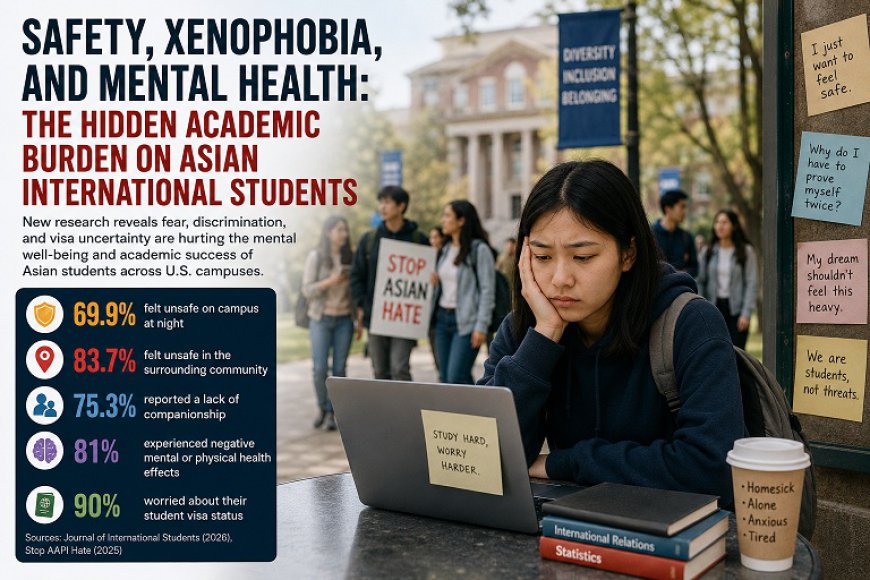
A 2026 study examining Asian international students found that 69.9% felt unsafe on campus after dark, while 83.7% felt unsafe in nearby communities. Those concerns weren't simply personal opinions. Researchers identified a strong connection between safety fears and elevated stress, suggesting that campus security has a much greater influence on academic success than many institutions acknowledge.
Stress changes how students learn.
It becomes harder to concentrate during lectures. Revision sessions feel less productive. Sleep suffers, memory declines, and motivation gradually fades. By the time exams arrive, many students are already carrying weeks or months of accumulated anxiety.
Safety concerns are only one piece of the puzzle.
The same research found that more than 75% of Asian international students experienced a lack of companionship, while over 70% reported feeling socially isolated. Discrimination and racial microaggressions significantly increased stress levels, reinforcing the idea that emotional well-being and academic achievement cannot be separated.
For international students, loneliness often arrives unexpectedly.
Leaving home means leaving behind family, lifelong friendships, familiar routines, and cultural comfort. Building those connections again takes time, particularly when students are adjusting to a different language, teaching style, and social environment.
Unfortunately, broader political uncertainty has made that adjustment even more difficult.
A national survey referenced in the research found that 90% of international students worried about their visa status, while more than 80% reported that changing immigration policies had negatively affected their physical or mental health. Many students described living with constant uncertainty about whether they would be able to complete their education or remain in the country after graduation.
Those worries inevitably spill into the classroom.
Students become reluctant to participate in discussions about sensitive topics. Some avoid public events altogether. Others limit their online activity because they fear that ordinary social media posts could somehow affect future immigration decisions.
The result is a quieter campus.
Students who once planned to join clubs, volunteer, or build professional networks begin stepping back. Opportunities that contribute to confidence and career development gradually disappear.
Financial pressure adds another layer.
International students often pay substantially higher tuition fees while facing strict employment restrictions. Many balance demanding academic schedules with part-time work, leaving little room for rest. The research identified financial stress as one of the strongest contributors to emotional distress, making it clear that academic pressure rarely exists on its own.
Universities have responded in different ways.
Many now offer counseling services, international student advisers, emergency safety programs, and immigration guidance. These resources matter, but they are only effective if students know they exist and feel comfortable using them.
Communication remains a challenge.
Some students are unaware of available legal support or mental health services, while others avoid seeking help because of cultural stigma or concerns about confidentiality. Expanding services is important, but making them visible and accessible is equally critical.
Faculty members also have an important role.
Simple actions such as encouraging participation, recognizing cultural differences, checking in with struggling students, and creating inclusive classrooms can reduce feelings of isolation. Academic success often depends as much on belonging as it does on ability.
Outside university support systems, additional academic guidance can help students manage periods of intense pressure. Many international students supplement campus resources with services such as Expertsmind, using structured tutoring and assignment guidance to stay on track academically while dealing with personal, financial, or mental health challenges.
The conversation surrounding international education needs to evolve.
Recruitment campaigns frequently celebrate diversity, but genuine inclusion requires sustained investment after students arrive. Safe campuses, responsive support services, transparent communication, and strong community networks should be viewed as essential parts of the educational experience rather than optional extras.
Asian international students continue to make enormous contributions to American universities through research, innovation, entrepreneurship, and cultural exchange. Protecting that contribution means recognizing that academic excellence cannot flourish in an atmosphere of fear.
The latest research offers a straightforward lesson. Students don't succeed simply because they earn admission to a prestigious university. They succeed when they feel secure enough to participate, confident enough to ask questions, and supported enough to overcome the challenges that inevitably come with studying thousands of miles from home. When campuses invest in safety, belonging, and mental well-being alongside academics, everyone benefits—not just international students, but the entire university community.