Can International Students Still Travel Safely While Studying in the USA?
Find out why international students are rethinking overseas travel in 2026 amid stricter U.S. immigration checks and growing re-entry uncertainty.
 clairemiller069
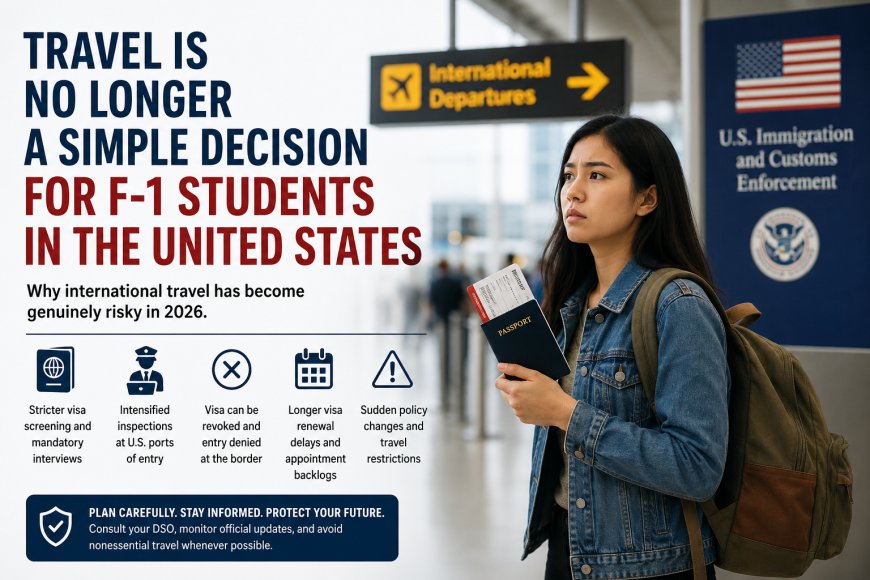
For international students, studying in the United States has always involved balancing academics, finances, and immigration responsibilities. Until recently, international travel was one aspect that felt relatively predictable. Students could return home during semester breaks, renew their energy with family, and come back to campus ready for the next term. In 2026, that confidence has begun to fade.
Travel itself isn't prohibited for most F-1 students. The challenge is that returning to the United States has become significantly more uncertain than many students expected. Universities and immigration advisers are now encouraging students to evaluate every international trip carefully because immigration procedures have become more rigorous and policy changes can occur with little warning.
One of the most misunderstood aspects of U.S. immigration is the role of the student visa. A valid F-1 visa allows a student to travel to a U.S. port of entry and request admission, but it does not guarantee entry into the country. Border officers continue to make the final decision after reviewing immigration documents and confirming that a student remains eligible for admission. That distinction has become increasingly important as inspections have become more detailed. Returning students may be asked about their university enrollment, financial support, travel history, or employment activities. Some travelers also experience secondary inspection, where immigration officers conduct additional document reviews before making an admission decision. While many students complete this process without problems, the possibility of delays has made overseas travel a more complicated decision than in previous years. Students whose visas require renewal face another layer of uncertainty. U.S. embassy and consulate appointments may involve long waiting periods, mandatory interviews, and administrative processing that can extend far beyond the planned return date. Missing the beginning of a semester, orientation sessions, or important academic deadlines has become a realistic concern for students who encounter unexpected visa delays. The situation is particularly important for students participating in Optional Practical Training (OPT) or STEM OPT. These students are often expected to carry additional documentation, including employment authorization, employer verification, updated travel endorsements, and proof of continuing compliance with immigration regulations. Careful preparation is essential because border officers may request evidence beyond the standard passport and visa documents. Many universities have responded by strengthening their travel guidance. International student offices regularly encourage students to consult their Designated School Official before making travel arrangements, especially if they anticipate renewing a visa or have complex immigration circumstances. Institutions also remind students that they cannot guarantee re-entry or intervene if immigration authorities delay or deny admission after an overseas trip.
As a result, many international students are adjusting their priorities. Instead of travelling home every academic break, they are remaining on campus to complete research, gain professional experience, prepare for internships, or strengthen their academic performance. Educational support services such as Expertsmind have also become increasingly valuable for students who use university breaks to complete assignments, improve subject knowledge, and stay focused on their educational goals while avoiding unnecessary travel risks.
Students who must travel should prepare thoroughly. Reviewing passport validity, checking visa expiration dates, obtaining a recent travel signature on the Form I-20, carrying proof of enrollment, and confirming the latest immigration guidance before departure can reduce avoidable complications. Although these precautions cannot eliminate every risk, they place students in a stronger position when returning to the United States.
International education continues to provide exceptional opportunities for personal and professional growth. At the same time, the current immigration environment requires students to approach travel with greater planning and awareness than ever before. For many F-1 students in 2026, the safest journey may simply be postponing nonessential travel until their studies are complete or their immigration status becomes more secure.