Coding and Billing for Mental Health Services in the USA: A Practical Guide for Accurate Reimbursement
 alexnoah25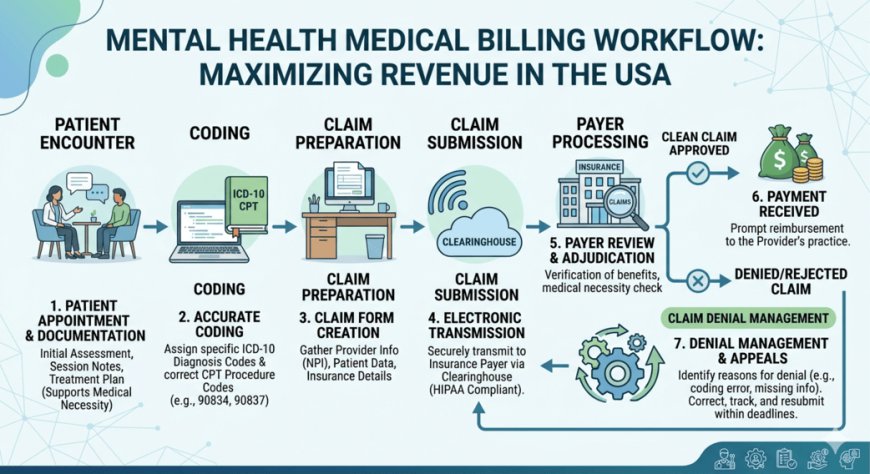
Mental healthcare has become an essential part of the American healthcare system, with more people seeking therapy, counseling, psychiatric care, and behavioral health support than ever before. While providing quality care is the primary goal, accurate coding and billing for mental health services is equally important for maintaining financial stability and ensuring providers receive proper reimbursement.
Mental health billing involves more than simply submitting insurance claims. Providers must document services accurately, assign the correct diagnosis and procedure codes, understand payer-specific guidelines, and comply with changing regulations. Even a small coding error can result in claim denials, delayed payments, or compliance issues.
This guide explains the fundamentals of coding and billing for mental health services, common challenges, best practices, and ways providers can improve their reimbursement process.
Why Accurate Mental Health Coding and Billing Matters
Behavioral health practices often provide a wide range of services, including:
- Individual psychotherapy
- Family therapy
- Group counseling
- Psychiatric evaluations
- Medication management
- Telehealth consultations
- Psychological testing
- Crisis intervention
Each service requires proper documentation and the correct coding before it can be billed successfully. Insurance companies carefully review claims to ensure the submitted codes match the documented treatment.
Accurate billing helps practices:
- Receive timely reimbursements
- Reduce claim denials
- Maintain regulatory compliance
- Improve cash flow
- Build trust with insurance payers
- Reduce administrative workload
Without proper coding, even medically necessary services may not be reimbursed.
Understanding the Basics of Coding and Billing for Mental Health Services
Mental health billing relies on several coding systems that work together.
ICD-10-CM Diagnosis Codes
Diagnosis codes identify the patient's mental or behavioral health condition.
Examples include:
- Major depressive disorder
- Generalized anxiety disorder
- Bipolar disorder
- Post-traumatic stress disorder
- Obsessive-compulsive disorder
- Attention-deficit/hyperactivity disorder
The diagnosis must always support the medical necessity of the treatment provided.
CPT Procedure Codes
Current Procedural Terminology (CPT) codes describe the services performed.
Common mental health CPT codes include services such as:
- Psychiatric diagnostic evaluations
- Psychotherapy sessions
- Family psychotherapy
- Group psychotherapy
- Interactive complexity services
- Crisis psychotherapy
- Medication management
Selecting the correct CPT code depends on factors such as session length, provider type, and the complexity of care.
HCPCS Codes
Some behavioral health services, supplies, or payer-specific requirements may also require HCPCS codes in addition to CPT coding.
Documentation Is the Foundation of Successful Claims
Good documentation supports every claim submitted.
Clinical notes should clearly include:
- Patient diagnosis
- Reason for the visit
- Treatment goals
- Services performed
- Time spent with the patient when required
- Progress made
- Future treatment plan
- Provider signature
Incomplete documentation often leads to denied claims, even when the care itself was appropriate.
Clear records also protect providers during audits and demonstrate medical necessity.
Common Challenges in Mental Health Billing
Behavioral health billing has unique complexities that differ from many other specialties.
Frequent Coding Updates
Coding guidelines are regularly revised. Practices must stay informed about new CPT codes, deleted codes, and updated payer policies.
Insurance Verification Issues
Mental health benefits vary significantly among insurance plans.
Providers should verify:
- Coverage eligibility
- Visit limitations
- Prior authorization requirements
- Copayment amounts
- Deductibles
- Referral requirements
Failure to verify benefits before treatment can create unexpected billing problems.
Telehealth Billing
Virtual mental health visits have become increasingly common.
Different insurers may have different rules regarding:
- Eligible providers
- Approved telehealth platforms
- Required modifiers
- Place of service codes
- Documentation standards
Understanding each payer's telehealth policies is essential for accurate reimbursement.
Claim Denials
Some common reasons for denied claims include:
- Incorrect diagnosis codes
- Missing modifiers
- Incomplete documentation
- Expired insurance coverage
- Duplicate claims
- Coding inconsistencies
- Lack of medical necessity
Regular claim reviews help identify recurring issues before they affect revenue.
Best Practices to Improve Coding Accuracy
Mental health providers can significantly improve billing success by following consistent workflows.
Verify Insurance Before Every Visit
Patient coverage can change frequently.
Confirm:
- Active eligibility
- Covered services
- Authorization requirements
- Financial responsibility
This simple step prevents many billing issues.
Keep Documentation Detailed
Providers should complete documentation immediately after each visit whenever possible.
Detailed records reduce coding uncertainty and improve compliance.
Stay Updated with Coding Changes
Coding professionals should receive ongoing education regarding:
- Annual CPT updates
- ICD-10 revisions
- Medicare policies
- Commercial insurance guidelines
Continuous learning helps reduce costly mistakes.
Conduct Internal Audits
Periodic chart audits help identify:
- Coding inconsistencies
- Documentation gaps
- Compliance risks
- Underbilling
- Overbilling
Regular reviews strengthen the overall billing process.
The Role of Technology in Mental Health Billing
Modern practice management software has simplified many administrative tasks.
Today's systems can assist with:
- Electronic claim submission
- Insurance eligibility verification
- Appointment scheduling
- Automated payment posting
- Denial tracking
- Reporting dashboards
- Coding assistance
- Documentation templates
Technology cannot replace experienced coding professionals, but it can significantly improve efficiency and reduce manual errors.
Compliance Should Always Be a Priority
Mental health billing involves strict regulatory requirements.
Providers must remain compliant with:
- Patient privacy regulations
- Accurate coding guidelines
- Documentation standards
- Insurance payer policies
- Federal and state billing requirements
Proper compliance reduces the risk of audits, penalties, and payment recoupments.
Practices should establish written billing policies and regularly train staff to maintain consistent standards.
How Professional Billing Support Benefits Mental Health Practices
As practices grow, administrative responsibilities become increasingly complex.
Many organizations choose to work with experienced teams specializing in medical billing services and medical coding services to improve operational efficiency.
Professional billing support can help with:
- Accurate claim submission
- Denrollment? No—provider enrollment and credentialing
- Insurance follow-up
- Denial management
- Payment reconciliation
- Compliance monitoring
- Financial reporting
These services often contribute to stronger revenue cycle management, allowing providers to spend more time focusing on patient care instead of paperwork.
Organizations such as 247 Medical Billing Services support healthcare providers by managing complex billing workflows while helping practices maintain coding accuracy and reimbursement efficiency. The goal is not simply faster payments but a smoother administrative process that supports long-term practice growth.
Building a Strong Revenue Cycle Starts with Accurate Coding
Successful mental health practices understand that reimbursement begins long before a claim is submitted.
Every stage matters:
- Patient registration
- Insurance verification
- Clinical documentation
- Accurate diagnosis coding
- Correct procedure coding
- Claim submission
- Payment posting
- Denial management
- Follow-up and collections
When each step is handled correctly, practices experience fewer claim denials and healthier financial performance.
Conclusion
Effective coding and billing for mental health services requires accuracy, compliance, detailed documentation, and ongoing education. As insurance requirements continue to evolve, providers must stay current with coding updates, payer guidelines, and documentation standards to ensure successful reimbursement.
Whether operating a solo behavioral health practice or managing a large multidisciplinary clinic, investing in strong billing processes benefits both providers and patients. Accurate coding not only protects revenue but also supports better operational efficiency, allowing clinicians to focus on delivering high-quality mental healthcare throughout the USA.
Frequently Asked Questions
1. What is coding and billing for mental health services?
It is the process of documenting mental health treatment, assigning diagnosis and procedure codes, and submitting insurance claims for reimbursement. Accurate coding ensures providers are paid correctly for the services they deliver.
2. Why is documentation important in mental health billing?
Documentation supports medical necessity, justifies the selected codes, and helps prevent claim denials, audits, and compliance issues.
3. Which coding systems are commonly used for mental health services?
Mental health billing primarily uses ICD-10-CM diagnosis codes, CPT procedure codes, and, when required, HCPCS codes for certain services or payer-specific situations.
4. What are the most common reasons mental health claims are denied?
Common reasons include incorrect diagnosis codes, incomplete documentation, missing modifiers, inactive insurance coverage, lack of authorization, and coding inconsistencies.
5. Does telehealth require different billing rules?
Yes. Many insurance companies have specific requirements for telehealth visits, including approved modifiers, place of service codes, documentation standards, and eligible provider types.
6. How can practices reduce mental health billing errors?
Practices should verify insurance eligibility before appointments, maintain complete documentation, perform regular coding audits, train staff continuously, and follow updated payer guidelines.
7. How do medical billing services, medical coding services, credentialing, and revenue cycle management support behavioral health practices?
These services help improve coding accuracy, reduce denied claims, streamline administrative processes, support provider enrollment through credentialing, strengthen revenue cycle management, and allow clinicians to dedicate more time to patient care.