Custom Rubber Mold: Materials & Methods
Explore custom rubber mold materials, molding methods, industrial uses, and compression vs injection rubber molding for precision manufacturing.
 krishanimoldparts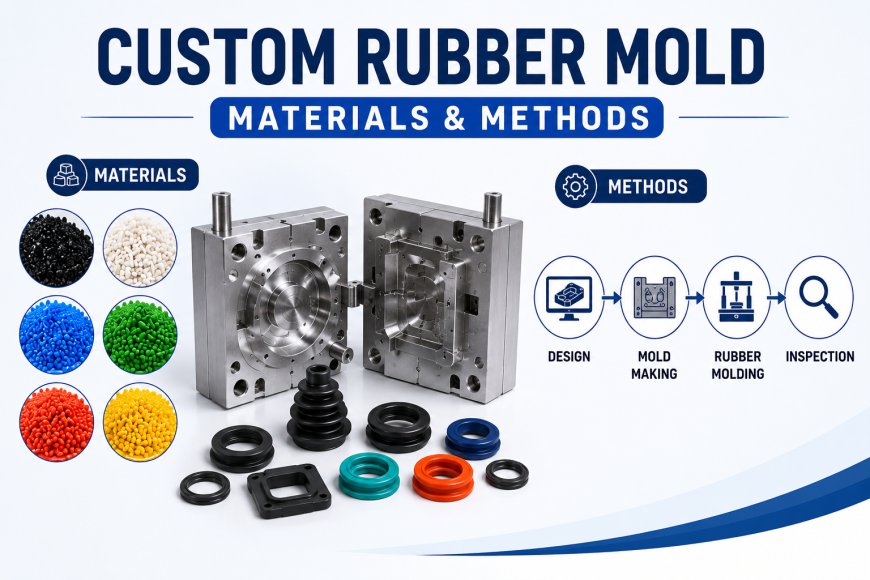
Custom Rubber Mold: Materials & Methods
Industry Problem: Why Rubber Mold Quality Is Important
The following problems related to rubber molds are faced by several industries when obtaining their products from suppliers. It makes sense to cooperate with an experienced rubber mold producer who provides tailored products with the highest level of technical accuracy. The problems are:
● Incompatible material: Wrong selection of elastomers may cause cracking, swelling, or premature wear due to heat, chemicals, or pressure.
● Inaccurate dimensions: Poor quality molds create imperfect products not meeting industrial specifications.
● High Cost of Production: Poorly designed moulds and inefficient manufacturing process results in high cost and waste of material.
● Fewer customization opportunities: The use of standardized products does not cover all industrial needs.
● Low manufacturing efficiency: Incorrect molding slows down production and causes more waste.
Understanding Custom Rubber Mold Technology
Custom rubber mold is an advanced mold designed to provide a certain shape, dimension, and quality of produced rubber parts according to specific requirements. Contrary to standardized molds, custom ones have to correspond to unique features of products. Custom molds are used in the production of various items such as:
● Rubber gaskets
● O-rings
● Bushings
● Seals
● Vibration dampers
● Industrials sleeves
● Automotive parts
Materials Used in Custom Rubber Molding
Natural rubber
Natural rubber is springy and tough . It is perfect for products that have to absorb shocks . So it’s great for things like tires and bumpers but it’s not only for that. Think car tires, conveyor belts, and damping parts.
Silicone rubber
Silicone rubber can handle heat incredibly well and insulates electricity too. Plus, it's deemed safe to use since it's non-toxic. So, you'll find it in auto window seals, roofing materials, and HVAC systems.
EPDM Rubber
EPDM stands for ethylene propylene diene monomer . EPDM rubber is very resistant to weather, UV rays, and ozone. It’s great for car seals, roofing sheets and parts in industrial equipment that are constantly exposed.
Nitrile rubber (NBR)
Nitrile rubber (NBR) is great for oils, fuels and solvents. Therefore, it is ideal for industrial and automotive fluid applications such as fuel lines, oil seals and hydraulic parts.
Neoprene rubber
Neoprene rubber is extremely flexible and very durable in extreme conditions. It is used extensively by people for marine applications, electrical insulation and protective coverings.
Compression versus Injection Rubber Molding - Which One Works Best?
Choosing between compression or injection rubber molding depends on the complexity of your part, the materials you need, how many you're planning to produce, and your budget limits. Different molding techniques work better in different situations. Manufacturers are often faced with a choice of the molding method to adopt when undertaking rubber molding projects.
Compression molding:
Compression molding is one of the oldest and most common rubber molding processes. In this method a predetermined amount of rubber material is charged directly into a heated mold cavity. After that, the mold is closed and pressurized, and the rubber is permitted to flow and cure into the required shape. Compression molding would be the ideal choice for:
● Production of large size rubber components
● Minimization of Tooling costs
● Moderate production volumes
Injection molding
This method entails introducing a rubber compound to the closed cavity mold under pressure. The process is automatic in nature, ideal for complex parts.
On the other hand, injection molding is preferred where:
● Mass Production with higher accuracy is required
● Complicated geometries are involved
● Rapid production process is necessary
Applications of Rubber Molded Parts in Industries
The significance of applications of rubber molded parts in industries has been increasing over time because of the advantages that these molded parts provide. Several well-known companies operating in various industries, including the automotive industry, aerospace industry, and the electronics industry, use rubber molding.
Automotive Industry
Rubber molded parts play an important role in vehicles for vibration control and sealing purposes.
Common Uses:
● Engine mounts
● Weatherstripping
● Suspension bushes
● Seals, fuel system
Medical Industry
Precision rubber molded parts are required in medical devices with compliance being crucial.
Typical Applications:
● Medical gaskets & seals
● Surgical devices parts
● Tubing connectors
Electronics Industry
Rubber parts are widely used to insulate and protect electronic devices from dust, moisture and vibration.
Common Uses:
Keyboards
Cable grommets.
Protective cases
Parts for insulation
Aerospace Industry
Aerospace industry uses materials which can bear extreme environmental conditions.
Common Uses:
● Vibration absorber
● Seals, fuel system
● Shock absorber
● High temperature gaskets
Industry equipment
Rubber molded parts are necessary for high-performance and durable equipment.
Common Uses:
● Industrial rollers
● Hydraulic seals
● Conveyor parts
● Vibration dampers
The Importance of Choosing the Right Rubber Mold Manufacturer
It is equally important to choose the right manufacturer as it is to select the right molding process and materials. With the combined skills of engineers and advanced manufacturing technologies, Krishani Product Development is able to provide high-quality custom rubber products that meet industrial standards.
Why Choose Krishani?
Deep Engineering Expertise: We have extensive experience in designing highly accurate custom rubber molds tailored to your exact specifications.
Flexible Moulding Methods: We provide molding methods, including both injection and compression molding, to suit your project requirements and production volume.
High Quality Materials: We use only quality materials such as Silicone, EPDM, Nitrile, Neoprene, and Natural Rubber.
Quality Assurance: Our strict quality testing ensures the reliability and durability of our products.
Industry Specific Solutions: We serve many industries such as Automotive, Electronics, Medical, Aerospace, Heavy Equipment and more.
Custom Manufacturing Help: We provide custom manufacturing support from initial prototyping to mass production.
Conclusion
With increasing demand for robust and durable industrial products that must also be highly functional, it is imperative to find the proper solution when it comes to custom rubber moldings. From choosing the material to considering the type of rubber molding and finding an appropriate rubber mold manufacturer, all these processes are vital to increase the production process's efficiency and effectiveness.
With an increasing demand for rubber molds in various applications within industry, it is imperative to have engineering experts to provide these products. At Krishani Product Development, we are dedicated to providing high-quality solutions to rubber mold components.