Cybersecurity & Threat Intelligence: Why Modern Organizations Need Both to Stay Resilient
 anekpatel25
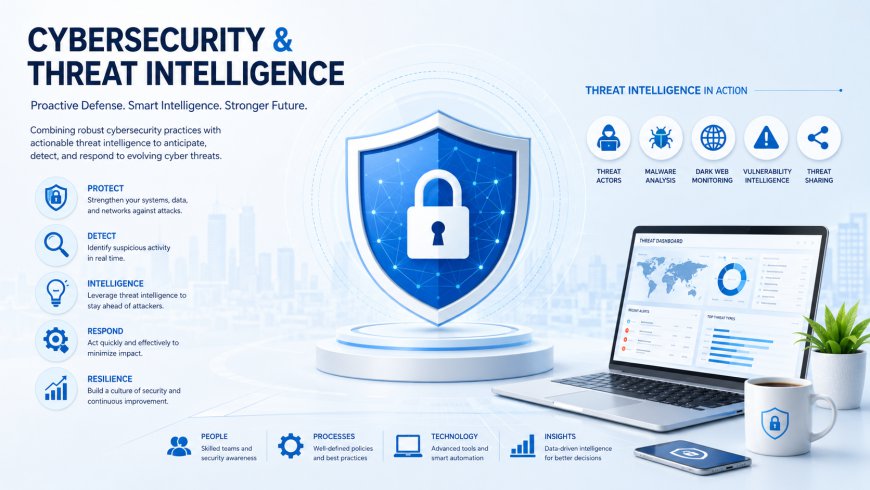
In today's hyperconnected world, organizations rely on digital systems for nearly every aspect of their operations. From cloud infrastructure and remote work environments to mobile devices and connected applications, technology has become the backbone of modern business. While this digital transformation has created new opportunities for growth and innovation, it has also expanded the attack surface for cybercriminals. As cyber threats become more sophisticated, organizations can no longer rely solely on traditional security measures. This is where cybersecurity and threat intelligence play a critical role.
Although often discussed together, cybersecurity and threat intelligence are not the same thing. Cybersecurity focuses on protecting systems, networks, applications, and data from unauthorized access, disruption, or damage. Threat intelligence, on the other hand, provides actionable insights about potential threats, threat actors, and attack methods. Together, they form a powerful defense strategy that enables organizations to anticipate, detect, and respond to cyber risks more effectively.
Understanding Cybersecurity
Cybersecurity encompasses the technologies, processes, and practices designed to safeguard digital assets. Its primary goal is to ensure the confidentiality, integrity, and availability of information.
Organizations face a wide range of cyber threats, including malware, ransomware, phishing attacks, insider threats, credential theft, and distributed denial-of-service (DDoS) attacks. A successful cyberattack can result in financial losses, operational disruption, reputational damage, and legal consequences.
To address these risks, businesses implement multiple layers of security controls. These may include firewalls, endpoint protection solutions, identity and access management systems, encryption technologies, security monitoring tools, and employee awareness programs.
Cybersecurity is no longer solely the responsibility of IT departments. It has become a strategic business function that requires collaboration across leadership teams, operational departments, and employees at every level. Human behavior remains one of the most significant security vulnerabilities, making education and awareness essential components of any cybersecurity program.
The Evolution of Cyber Threats
The cyber threat landscape has evolved dramatically over the past decade. Early cyberattacks were often carried out by individuals seeking recognition or causing disruption. Today, cybercrime has become highly organized and financially motivated.
Attackers use sophisticated techniques to exploit vulnerabilities in software, cloud environments, and human behavior. Social engineering tactics have become increasingly convincing, making it difficult for users to distinguish legitimate communications from malicious ones.
Ransomware attacks have emerged as one of the most damaging forms of cybercrime. Rather than simply stealing data, attackers encrypt critical systems and demand payment for restoration. Some groups also threaten to publish sensitive information if ransom demands are not met.
Additionally, nation-state actors conduct cyber operations for espionage, political influence, and strategic advantage. These attacks often target government agencies, critical infrastructure providers, healthcare organizations, and large enterprises.
As attackers continue to innovate, organizations must adopt a proactive security approach rather than relying solely on reactive defenses.
What Is Threat Intelligence?
Threat intelligence refers to the collection, analysis, and interpretation of information about cyber threats. It transforms raw data into meaningful insights that help organizations understand potential risks and make informed security decisions.
Rather than simply identifying that an attack has occurred, threat intelligence seeks to answer important questions such as:
- Who is behind the threat?
- What tactics and techniques are being used?
- Which industries or organizations are being targeted?
- How can the threat be mitigated or prevented?
Threat intelligence combines information from multiple sources, including security logs, open-source intelligence, dark web monitoring, industry reports, vulnerability databases, and global threat-sharing communities.
The ultimate goal is to provide context. Security teams are often overwhelmed by thousands of alerts every day. Threat intelligence helps prioritize risks by identifying which threats are most relevant to the organization.
Types of Threat Intelligence
Threat intelligence can generally be categorized into several levels based on its purpose and audience.
Strategic Intelligence
Strategic intelligence focuses on long-term trends, emerging threats, and broader cybersecurity risks. It is typically used by executives and decision-makers to guide security investments and risk management strategies.
This type of intelligence helps organizations understand how the threat landscape is evolving and where future vulnerabilities may emerge.
Tactical Intelligence
Tactical intelligence examines the methods, techniques, and procedures used by attackers. Security teams use this information to strengthen defenses and improve detection capabilities.
Understanding attacker behavior enables organizations to anticipate how future attacks may unfold.
Operational Intelligence
Operational intelligence provides insights into specific threats, campaigns, or incidents. It helps security teams prepare for attacks that may be actively targeting their industry or region.
This intelligence is particularly valuable during incident response activities.
Technical Intelligence
Technical intelligence includes indicators such as malicious IP addresses, suspicious domains, malware signatures, and file hashes. Security tools can automatically use this information to detect and block known threats.
Although technical intelligence is highly actionable, it typically has a shorter lifespan because attackers frequently change their infrastructure.
Why Threat Intelligence Matters
Many organizations generate enormous amounts of security data but struggle to determine which information requires immediate attention. Threat intelligence helps bridge this gap by providing context and relevance.
For example, a security alert involving an unfamiliar IP address may appear insignificant. However, if threat intelligence reveals that the IP address is associated with an active ransomware campaign targeting similar organizations, the alert becomes a high-priority concern.
This contextual understanding improves decision-making, reduces false positives, and allows security teams to allocate resources more effectively.
Threat intelligence also enhances collaboration. Many organizations participate in information-sharing communities where members exchange threat data and best practices. This collective approach strengthens overall cybersecurity resilience across industries.
The Role of Artificial Intelligence in Cybersecurity
Artificial intelligence (AI) is transforming how organizations defend against cyber threats. Traditional security systems often rely on predefined rules and signatures to identify malicious activity. While effective against known threats, these approaches may struggle to detect new or evolving attack techniques.
AI-powered security solutions can analyze massive volumes of data in real time, identifying patterns and anomalies that may indicate malicious behavior.
Machine learning algorithms can help detect unusual login activity, suspicious network traffic, unauthorized access attempts, and potential insider threats. These technologies enable organizations to identify attacks more quickly and respond before significant damage occurs.
However, AI is not exclusively beneficial to defenders. Cybercriminals are also leveraging AI to automate attacks, generate convincing phishing messages, and evade detection systems. This ongoing technological competition highlights the need for continuous innovation in cybersecurity strategies.
Building a Strong Cybersecurity and Threat Intelligence Program
Developing an effective security program requires more than purchasing technology. Organizations must establish a comprehensive framework that integrates people, processes, and tools.
A successful approach typically includes:
- Conducting regular risk assessments.
- Implementing strong access controls and authentication measures.
- Maintaining up-to-date software and security patches.
- Monitoring networks and systems continuously.
- Training employees to recognize cyber threats.
- Establishing incident response procedures.
- Incorporating threat intelligence into security operations.
Organizations should also adopt a culture of continuous improvement. Cybersecurity is not a one-time project but an ongoing process that evolves alongside emerging threats and technological changes.
The Future of Cyber Defense
As digital ecosystems become increasingly interconnected, cybersecurity challenges will continue to grow in complexity. Cloud computing, Internet of Things (IoT) devices, artificial intelligence, and remote work environments introduce new opportunities but also new vulnerabilities.
Future security strategies will likely emphasize automation, predictive analytics, and intelligence-driven defense models. Organizations that combine advanced cybersecurity technologies with actionable threat intelligence will be better positioned to anticipate risks and respond effectively.
Regulatory expectations surrounding data protection and cyber resilience are also expected to increase. Businesses will need to demonstrate not only that they can prevent attacks but also that they can detect, respond to, and recover from incidents efficiently.
Conclusion
Cybersecurity and threat intelligence have become indispensable components of modern digital resilience. While cybersecurity provides the protective mechanisms needed to secure systems and data, threat intelligence delivers the insights necessary to understand and anticipate evolving threats.
Organizations face an increasingly complex threat landscape where attackers continuously adapt their techniques and exploit new opportunities. In this environment, reactive security measures alone are no longer sufficient. By integrating threat intelligence into cybersecurity operations, organizations can move from a defensive posture to a proactive strategy that identifies risks before they become major incidents.
The future of cybersecurity will depend on the ability to combine technology, human expertise, and actionable intelligence. Organizations that embrace this integrated approach will be better equipped to protect their assets, maintain stakeholder trust, and navigate the evolving challenges of the digital age.