Dell Pro 16 Plus: Full Review & Guide
Dell Pro 16 Plus review: specs, performance, battery life, and pricing. See if this 16-inch business laptop is worth buying in 2026.
 uaetechdubai
Dell Pro 16 Plus: The Complete 2026 Buyer's Guide
If you've been shopping for a new business laptop lately, you've probably noticed that Dell has quietly torn up its old playbook. The familiar Latitude and Inspiron names are gone, replaced by a single, streamlined "Dell Pro" family. Sitting right in the middle of that new lineup is the Dell Pro 16 Plus a 16-inch workhorse aimed at professionals who want a big screen, dependable performance, and enterprise-grade security without stepping up to a full mobile workstation.
In this guide, you'll learn exactly what the Dell Pro 16 Plus offers, how it stacks up against alternatives like the Dell Pro Rugged 13 and the Lenovo ThinkPad P16, and whether it deserves a spot on your shortlist. We'll cover design, performance, battery life, pricing, real-world pros and cons, and answer the questions buyers ask most often.
What Is the Dell Pro 16 Plus?
The Dell Pro 16 Plus (model PB16250) is a mid-tier entry in Dell's revamped "Pro" laptop range. Dell has restructured its entire portfolio into three tiers: the standard Dell Pro, the Dell Pro Plus (which the 16 Plus belongs to), and the Dell Pro Premium at the top. This positioning matters because it tells you exactly what to expect better features and build quality than the entry-level Pro models, but without the premium price tag of the Pro Premium or Pro Max workstation lines.
Unlike the mobile-workstation-class Dell Pro Max 16 Plus (which packs Core Ultra 9 HX chips and dedicated NVIDIA RTX Pro graphics for CAD and rendering work), the standard Dell Pro 16 Plus is built for everyday business computing: spreadsheets, video calls, multitasking, and light content creation, all wrapped in a portable, professional-looking chassis.
Design and Build Quality
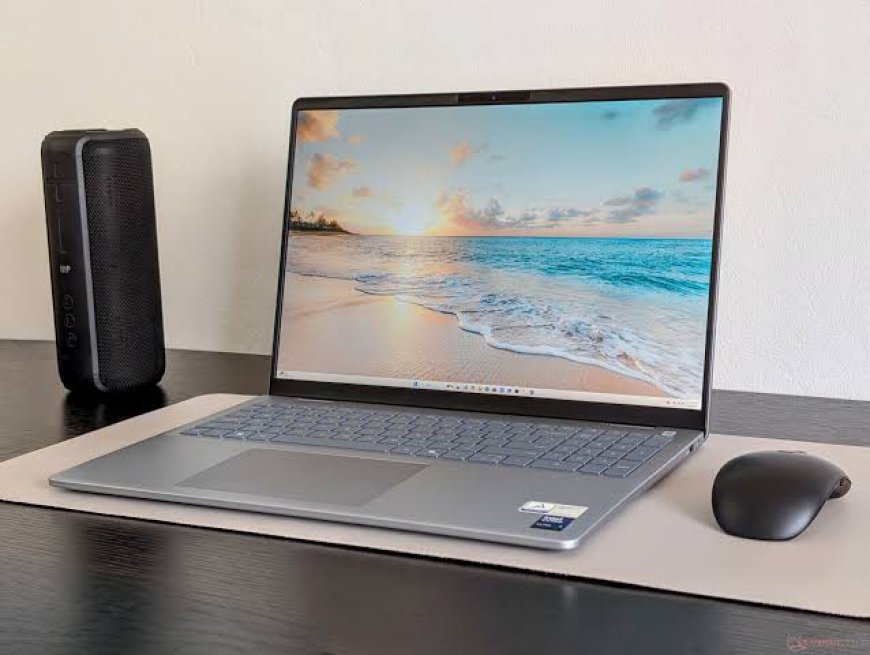
The Dell Pro 16 Plus uses an aluminum chassis that feels solid without being heavy-handed. It weighs approximately 1.85 kg (about 4.1 lbs) and measures roughly 21.35 mm thick, making it reasonably easy to slip into a backpack for the commute or a client visit. The overall aesthetic leans professional and understated silver finish, clean lines, no unnecessary branding which fits its role as an office and travel companion rather than a flashy consumer machine.
Dell has clearly aimed for a laptop that looks at home in a boardroom while still being tough enough for daily wear and tear, though it's worth noting this is not a ruggedized device. For that, you'd want to look at the Dell Pro Rugged 13, which we'll cover shortly.
Display Options
One of the more flexible aspects of the Dell Pro 16 Plus is its range of screen choices. Buyers can pick from:
-
A 16-inch 1920 x 1200 IPS panel (Full HD Plus) with a 60Hz refresh rate the standard option, offering roughly 142 PPI pixel density
-
A sharper 2560 x 1600 resolution panel, recommended for anyone who spends long hours reading text or wants more screen real estate for multitasking
-
Touchscreen configurations, depending on the exact build
For most professionals doing document work, spreadsheets, and video conferencing, the base 1920 x 1200 display is perfectly serviceable. Creative professionals or anyone doing detailed visual work will likely appreciate the step up to the higher-resolution panel.
Performance: CPU, RAM, and Storage
This is where the Dell Pro 16 Plus really shows its flexibility. Dell offers five different processor configurations spanning three different chip families:
-
Intel Core Ultra U-series (efficiency-focused, longer battery life)
-
Intel Core Ultra V-series (Lunar Lake chips, tuned for battery efficiency)
-
Intel Core Ultra H-series (better multi-threaded performance, supports up to four external displays)
-
AMD Ryzen AI options
Entry configurations start with chips like the Intel Core Ultra 5 226V, while higher-end builds move up to the Core Ultra 7 268V or Core Ultra 7 255H, the latter trading some battery life for noticeably stronger multi-core performance.
Memory options are limited to 16GB or 32GB of LPDDR5X RAM, and it's important to flag a genuine drawback here: the RAM is soldered and not upgradable after purchase. If you think you might need more memory down the line, it pays to max this out at checkout rather than assuming you can add more later. Storage is handled through a 512GB SSD in most base configurations, with larger options typically available at checkout.

Battery Life
The Dell Pro 16 Plus runs on a 55Wh battery, which is on the smaller side for a 16-inch laptop for comparison, last year's Inspiron 16 Plus offered up to 90Wh. In practice, real-world battery life depends heavily on which processor you choose. The Lunar Lake V-series chips are specifically tuned for efficiency and will stretch noticeably further on a single charge than the more powerful H-series options. If all-day battery life away from a charger is your top priority, steer toward the V-series configurations.
Ports, Connectivity, and Security
As a business-focused machine, the Dell Pro 16 Plus doesn't skimp on connectivity or enterprise features. Depending on the configuration, buyers can add 5G WWAN connectivity to work untethered from Wi-Fi, along with the security features IT departments expect: fingerprint readers, smart card support, and Intel vPro compatibility on select builds for easier fleet management.
Pricing
Pricing varies significantly by region and configuration. In the UK, the Dell Pro 16 Plus starts at roughly £986 for the base specification, with the higher-end V-series builds featuring 32GB of RAM typically landing between £1,400 and £1,700. Dell runs frequent promotions, so it's worth watching for sales rather than paying full list price. US pricing follows a similar pattern, scaling up meaningfully as you add RAM, upgrade the display, or step up to a faster processor.
Dell Pro 16 Plus vs. Dell Pro Rugged 13
It's easy to confuse these two given the shared "Pro" branding, but they serve very different purposes. The Dell Pro Rugged 13 is a genuinely rugged 13.3-inch laptop, engineered to survive drops from six feet and operate in extreme temperatures ranging from roughly -29°C to 63°C. It typically ships with a Core Ultra 5 135U processor, 16GB of RAM, and a bright 1,400-nit touchscreen designed for outdoor visibility features aimed squarely at field technicians, utility workers, and government or military users rather than office staff.
The Dell Pro 16 Plus, by contrast, prioritizes screen real estate and everyday usability over durability. If your job involves job sites, extreme weather, or the risk of drops, the Rugged 13 is the better fit. If you're working primarily from an office, home, or hotel room, the Pro 16 Plus makes far more practical sense and it's typically the more affordable option too.
Dell Pro 16 Plus vs. Lenovo ThinkPad P16
The Lenovo ThinkPad P16 is worth mentioning as a comparison point, since it occupies similar territory in the 16-inch business/workstation space, though it leans more heavily toward mobile workstation territory with workstation-class graphics options. Lenovo's ThinkPad line has long been known for its keyboards and MIL-STD durability testing, and the P16 continues that tradition with a chassis built to handle heavier day-to-day abuse.
Where the Dell Pro 16 Plus tends to win is flexibility and price accessibility its lower-tier configurations undercut the ThinkPad P16 for buyers who don't need workstation-grade graphics. If your workload leans toward CAD, 3D rendering, or other GPU-intensive tasks, the ThinkPad P16 (or Dell's own Pro Max 16 Plus) is worth cross-shopping. For general business use, the Dell Pro 16 Plus holds its own.
Pros and Cons
Pros:
-
Large, bright 16-inch display with multiple resolution options
-
Five processor configurations across Intel and AMD, offering real flexibility
-
Solid aluminum build with a professional look
-
Optional 5G connectivity and strong enterprise security features
-
Competitive starting price compared to rivals
Cons:
-
RAM is soldered and not upgradable
-
55Wh battery is smaller than some 16-inch competitors
-
Base display resolution (1920 x 1200) may feel modest for the price
-
Not rugged an accidental drop could be costly
Frequently Asked Questions
Is the Dell Pro 16 Plus good for business use? Yes. It's specifically designed for office and hybrid work, with vPro support, security hardware, and configurations tuned for both battery life and raw performance.
Can I upgrade the RAM later? No. The memory is soldered to the motherboard, so you should choose your RAM configuration carefully at the time of purchase.
How does it compare to the Dell Pro Max 16 Plus? The Pro Max 16 Plus is a mobile workstation with far more powerful processors and dedicated NVIDIA graphics, aimed at engineers and creative professionals. The standard Pro 16 Plus is a lighter, more affordable machine built for everyday business tasks.
Is the Dell Pro 16 Plus rugged? No. For a genuinely rugged laptop from the same lineup, look at the Dell Pro Rugged 13, which is built to survive drops and extreme temperatures.
What's the battery life like? It depends on the processor. V-series Lunar Lake configurations offer the best efficiency and longest battery life, while H-series chips trade some battery life for stronger performance.
Final Verdict
The Dell Pro 16 Plus is a smart, flexible choice for professionals who want a large, comfortable display and dependable performance without paying workstation prices. Its configurable processor lineup means it can be tailored for either battery life or raw speed, and its build quality reflects Dell's renewed focus on the business market. The trade-offs non-upgradable RAM and a relatively modest battery capacity are worth weighing, but for most office and hybrid workers, this laptop delivers real value.
If you've used the Dell Pro 16 Plus, the Dell Pro Rugged 13, or the Lenovo ThinkPad P16, share your experience in the comments below. And if this guide helped you decide, consider sharing it with a colleague who's also laptop shopping this year.