FUE Hair Transplant in Ludhiana: Restore Natural Hair With Expert Precision
 Vivi_evans
Hair loss can be a deeply personal and often challenging experience. It affects more than just your reflection; it can subtly chip away at your confidence, influencing how you present yourself to the world. If you have been noticing a receding hairline or thinning crown, you are far from alone. Fortunately, hair restoration technology has advanced dramatically, moving away from the artificial, plug-like results of the past toward incredibly natural, seamless outcomes.
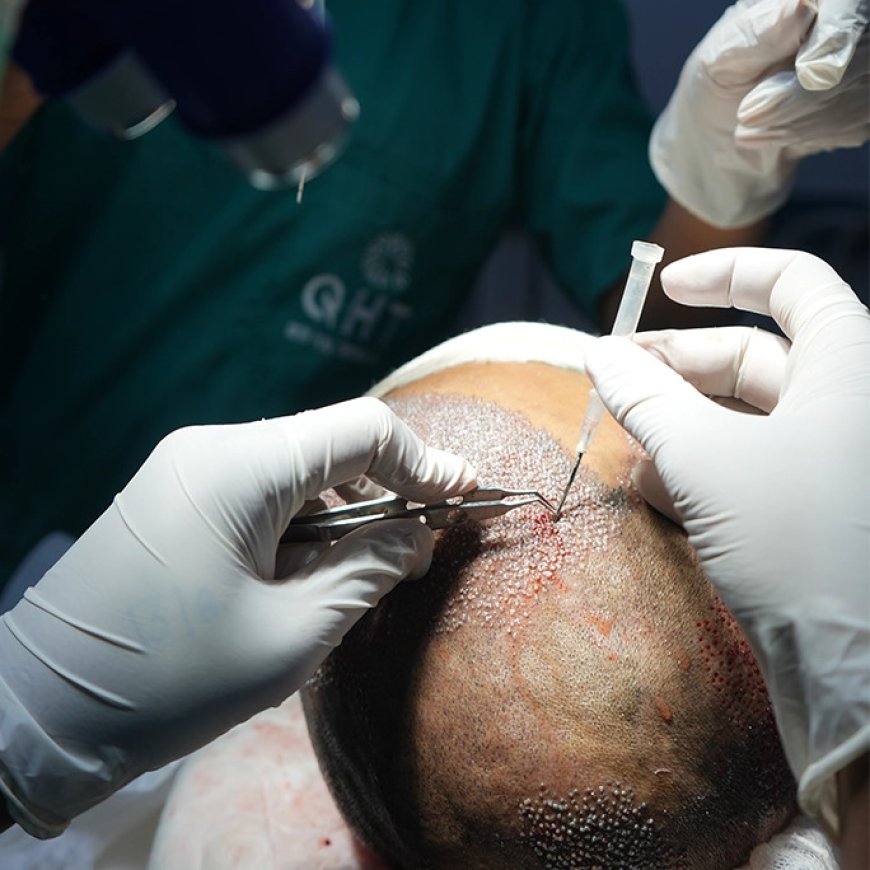
For those exploring their options in Punjab, choosing an FUE Hair Transplant at Ludhiana Hair Studio represents a premium pathway to reclaiming both your hair and your self-assurance. Follicular Unit Extraction (FUE) has become the gold standard in hair restoration globally, combining clinical expertise with artistic precision to deliver results that blend beautifully with your existing hair.
Understanding FUE: The Modern Approach to Hair Restoration
To appreciate why FUE has become the preferred choice for thousands of individuals, it helps to understand how the procedure works. Older methods, such as Follicular Unit Transplantation (FUT),
required removing a linear strip of scalp from the back of the head. This often left a prominent, permanent linear scar, which restricted how short patients could wear their hair afterward.
FUE completely changes this dynamic. Instead of removing a strip of skin, individual hair follicles are extracted one by one directly from the "donor area"—typically the back or sides of the head, where hair is genetically programmed to be resistant to thinning.
-
Microscopic Extraction: Surgeons use specialized micro-punches (usually less than 1mm in diameter) to gently remove individual follicular units.
-
Minimal Discomfort: Because the extractions are so tiny, the procedure is minimally invasive, performed under local anesthesia, and requires no stitches.
-
Discreet Healing: Rather than a linear scar, FUE leaves tiny, dot-like micro-scars that are virtually invisible to the naked eye, even if you prefer a short haircut or a fade.
The Artistry Behind a Natural Hairline
While the technology behind FUE is highly sophisticated, the ultimate success of the procedure relies heavily on the artistic eye of the hair transplant surgeon. Hair does not grow in a uniform grid pattern, nor does it point in a single direction. A truly natural hair restoration requires a meticulous understanding of facial symmetry, hair angles, and density gradients.
1. Designing the Frame of Your Face
A common mistake in subpar transplants is drawing a straight, unnaturally low hairline. An expert surgeon takes into account your age, bone structure, and projected future hair loss patterns to design a hairline that looks age-appropriate today and will continue to look completely natural decades down the road.
2. Angle and Direction Control
Every single follicle must be implanted at a precise angle to match the natural flow of your original hair. Up front, hair generally exits the scalp at an acute angle, pointing forward. Moving toward the crown, the pattern changes into a complex whorl. Replicating this natural geometry is what separates an average transplant from an exceptional one.
3. Strategic Density Gradation
Natural hairlines do not start abruptly with thick, dense clumps of hair. Instead, they begin with soft, single-hair follicles at the very front edge, gradually transitioning into thicker two-, three-, and four-hair follicular units further back. This soft transition zone is critical to creating an undetectable result.
Why Ludhiana Has Become a Premier Hub for Hair Transplants
Ludhiana has rapidly grown into a prominent medical tourism and healthcare destination, particularly for aesthetic and cosmetic treatments. People from all over Punjab, neighboring states, and even Non-Resident Indians (NRIs) frequently travel here for hair restoration.
There are several compelling reasons for this shift:
-
World-Class Expertise: The city boasts highly qualified cosmetic surgeons and trichologists who stay updated with international protocols and cutting-edge techniques.
-
Advanced Infrastructure: Top-tier clinics in the city are equipped with state-of-the-art operation theaters, high-magnification stereomicroscopes, and advanced extraction tools that maximize graft survival rates.
-
Exceptional Value: Compared to major metropolitan areas or Western countries, the cost of an FUE procedure in Ludhiana is highly competitive, offering world-class care at a fraction of global prices without compromising on safety or hygiene.
What to Expect: The Step-by-Step Journey
Embarking on a hair transplant journey is an exciting step. Knowing exactly what happens during the process can help alleviate any anxiety and set clear, realistic expectations.
Step 1: The Initial Consultation
Every successful transformation begins with a thorough evaluation. Your scalp will be examined to assess the health of your donor area, determine the exact number of grafts needed, and rule out any underlying medical conditions causing the hair loss.
Step 2: Designing and Mapping
On the morning of the procedure, the surgeon will carefully draw the new hairline layout on your scalp. Once you review and approve the design, the donor and recipient areas are trimmed, mapped out, and numbed using a local anesthetic to ensure you remain completely comfortable throughout the day.
Step 3: Gentle Extraction
Using micro-punch tools, individual follicular units are carefully harvested. A dedicated team of technicians simultaneously inspects each graft under a microscope, sorting them by the number of hairs they contain and prepping them in a nutrient-rich holding solution to keep them alive and viable.
Step 4: Creating the Recipient Sites
The surgeon carefully makes tiny incisions (slits) in the thinning or bald areas. This is where the artistry peaks, as the depth, angle, and density of these sites dictate how the new hair will emerge.
Step 5: Meticulous Implantation
Finally, the harvested follicles are gently placed into the newly created recipient sites. Because this is a detailed, one-by-one process, a typical session can take anywhere from 4 to 8 hours. Many patients spend this time relaxing, listening to music, or watching a movie.
Recovery and the Timeline of Growth
One of the greatest benefits of the FUE technique is the swift, straightforward recovery period. Most individuals can return to light desk work within 2 to 3 days post-procedure, provided they follow basic aftercare instructions.
The First Few Weeks
In the first few days, minor swelling and tiny scabs will form around the implanted grafts. These scabs naturally flake off within 7 to 10 days. Around the 3 to 4-week mark, a phenomenon known as "shock shedding" occurs. The newly transplanted hair shafts will fall out. Do not panic if this happens. This is a completely normal part of the cycle; the roots remain securely embedded beneath the skin, entering a brief resting phase before starting to produce new hair.
The Growth Phase
-
Months 3 to 4: Fine, thin hairs begin to sprout from the surface.
-
Months 6 to 9: The hair grows significantly thicker, longer, and denser, providing a clear preview of your final look.
-
Months 12 to 15: You will achieve full, mature results. The transplanted hair can be washed, cut, styled, and groomed exactly like your natural hair because it is your natural hair.
Investing in Your Confidence
Ultimately, deciding to undergo an FUE hair transplant is an investment in your personal well-being, professional image, and daily confidence. By choosing a specialized clinic that prioritizes patient safety, precise clinical protocols, and genuine artistry, you can close the chapter on hair loss frustration and look forward to a full, natural head of hair that lasts a lifetime.