Long-Term Capital Performance and Resale Dynamics: Godrej Nature Plus
Evaluating a major asset like Godrej Nature Plus over a long ownership horizon requires a clear understanding of market cycles, supply pipelines, and secondary market velocity
 megarealtymax
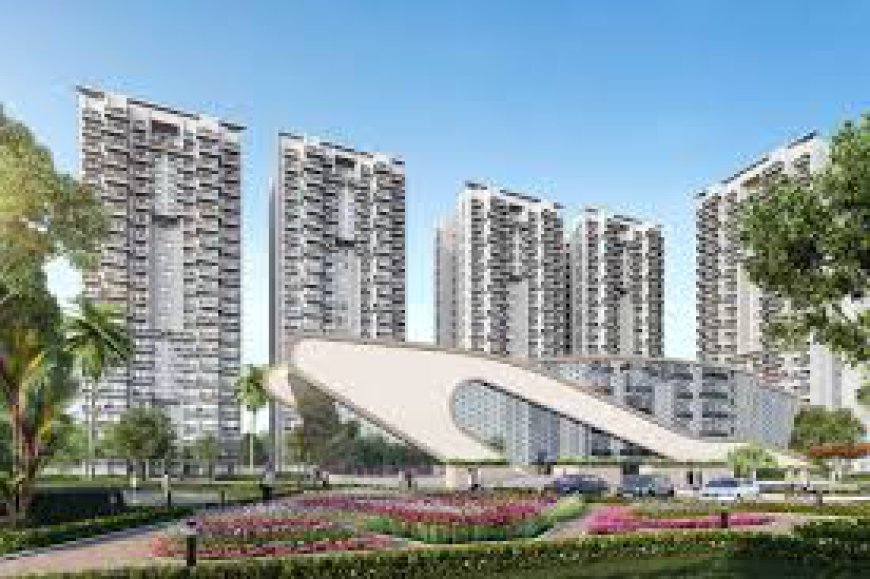
Evaluating a major asset like Godrej Nature Plus over a long ownership horizon requires a clear understanding of market cycles, supply pipelines, and secondary market velocity. This analysis focuses on the commercial reality of the Sector 33 micro-market, outlining how the property transitions from under-construction status into a fully mature residential community.
Price Realignment and Capital Gains Vectors
The pricing structure in South Gurugram has shifted from early speculative launch rates to steady, utility-driven market values.
-
The Footprint of Value: The project trades at an average market band ranging between ₹9,800 and ₹11,500 per square foot, depending on tower tracking and view preferences. This places base inventory valuations between ₹1.37 Crore for standard 2 BHK layouts and over ₹2.40 Crore for premium 3 BHK plus utility configurations.
-
The Ready-to-Move vs. Under-Construction Spread: Completed units and early-phase handovers carry a premium over final-phase developer inventories. Buyers looking for an immediate primary residence generally pay a higher transactional rate to skip remaining build timelines, while under-construction units aligned with standard RERA extensions see gradual milestone-linked price adjustments.
-
The View and Floor Premium Math: Preferential Location Charges (PLC) heavily influence the secondary market. High-floor apartments with direct views of the Aravalli hill range or the central green park trade at premium values compared to low-mid floor units facing out toward local access corridors.
Market Absorption and Tenant Demographics
An investor evaluating the long-term yield potential of the township must understand the local tenant profiles driving occupancy along the Sohna corridor:
-
The Corporate Migration Pattern: The tenant base is largely driven by mid-to-senior management professionals working in the commercial office developments of Sectors 48, 49, and 74A, as well as the Golf Course Extension road belt. Gated townships with full-scale clubhouses attract families migrating away from higher-density, unmanaged neighborhoods in central Gurgaon.
-
The Industrial Management Base: Located within a close commuting radius of the Rojka Meo Industrial Area and the growing Industrial Model Township (IMT) Sohna, the property captures steady housing demand from corporate administrators, technical specialists, and logistical operations heads who require high-tier family security near their workplaces.
-
The Institutional Factor: The close proximity to major universities like K.R. Mangalam and G.D. Goenka World School creates a reliable rental niche for academic faculty, administrative heads, and families seeking a stable residential base close to campus facilities.
Liquidity Analysis and Exit Planning
Exiting a multi-tower township requires monitoring broader sub-market variables to maximize capital returns:
-
Secondary Market Volume: Because national corporate brands retain higher visibility across real estate listing platforms, apartments inside this township experience better liquidity than standalone local builder floors or unmanaged plots in the same sub-sector. Gated infrastructure provides a predictable layout that simplifies the resale process for out-of-station buyers.
-
The Jan 2028 Horizon Anchor: As the remaining premium blocks and select extended towers hit their final structural delivery targets, the transition from an active construction zone to a fully stable community will likely normalize pricing. This makes the surrounding period an important window for long-term investors looking to exit before the market shifts entirely to secondary resale trading.
Beyond structural concrete and purchase valuations, the true long-term liveability of a premier township like Godrej Nature Plus depends heavily on its daily administrative operations, mechanical upkeep frameworks, and community management structures. This section outlines the operational backbone that keeps Sector 33 running efficiently.
Automated Building Management and Safety Automation
The towers integrate advanced smart automation systems to maintain safety standards across high-density blocks:
-
Centralized Building Management System (BMS): A dedicated digital hub monitors real-time performance data from elevator shafts, water pumps, and basement ventilation grids. This centralized monitoring system alerts engineering staff immediately if an electrical fluctuation or a mechanical malfunction occurs, keeping common facilities running with minimal downtime.
-
Fire Safety Integration: In line with national high-rise building guidelines, each tower features automated fire detection systems, integrated heat sensors in individual kitchens, and wet riser pipe loops running up every utility corridor. Main fire alarm panels connect straight to the main estate management room to ensure fast emergency dispatch times if a localized issue arises.
Wastewater Reclamation and Mechanical Fluid Engineering
Operating a water-conscious ecosystem in South Gurugram requires advanced mechanical recycling loops:
-
Graywater Separation Mechanics: The plumbing layout uses a dual-stack configuration that handles wastewater based on its source. Kitchen and washroom sink runoff drains directly into an advanced multi-stage Sewage Treatment Plant (STP) on-site.