

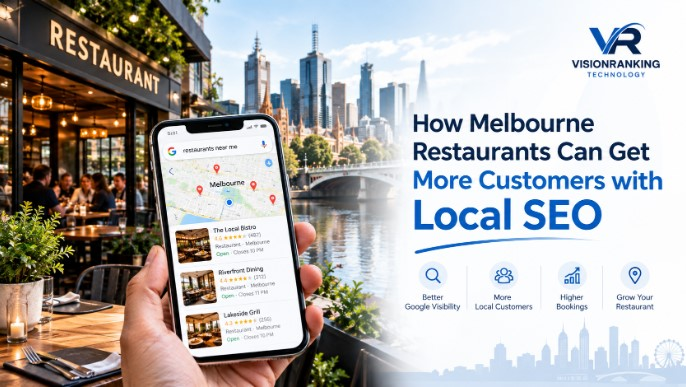
How Melbourne Restaurants Can Get More Customers with Local SEO
Learn how Local SEO Melbourne helps restaurants attract nearby diners, improve Google visibility, increase bookings and bring more customers through the door.
For restaurants, being easy to find online can make a real difference to how many people walk through the door. When someone searches for “restaurants near me,” “best restaurant in Melbourne,” “Italian restaurant Melbourne,” or simply looks for somewhere to eat nearby, your restaurant needs to appear at the right moment.
That is where Local SEO Melbourne can help.
Local SEO helps restaurants improve their visibility in local Google searches and Maps while making it easier for potential diners to discover important information such as your menu, location, opening hours, reviews and booking options.
For a restaurant, the goal is not just to generate website traffic. It is to attract people who are genuinely looking for somewhere to eat and make it easy for them to choose your restaurant.
Vision Ranking can help businesses understand how local search optimisation fits into a broader digital strategy, but for restaurants, the strategy should always start with the customer: what they are searching for, where they want to eat and what information helps them make a decision.
Key Takeaway
Restaurants can use local SEO to appear in more relevant local searches, improve their Google Maps presence, showcase genuine customer reviews, promote specific dishes and make essential information easier to find.
A successful restaurant SEO strategy is not about repeatedly using words such as “Melbourne restaurant.” It is about creating a trustworthy and useful online presence that helps hungry customers discover, evaluate and visit your restaurant.
Why Local SEO Matters for Melbourne Restaurants
Restaurant customers often make decisions quickly.
Someone might be planning dinner for the weekend. Another person may be searching for lunch during a work break. Someone else could be looking for a family-friendly restaurant, a romantic dinner spot or a particular cuisine.
These searches often have strong local intent.
For example:
-
“Best Indian restaurant near me”
-
“Italian restaurant Melbourne”
-
“Restaurants open now”
-
“Best brunch in Melbourne”
-
“Family restaurant near me”
-
“Japanese restaurant Melbourne CBD”
-
“Restaurants near me for dinner”
When your restaurant appears for searches that match what you actually offer, you have an opportunity to attract customers who are already considering dining out.
Melbourne's restaurant scene is highly varied, from cafés and casual dining venues to fine-dining restaurants and international cuisines. This makes relevance particularly important.
A small restaurant does not necessarily need to compete for every broad food-related search. It can focus on the types of searches that reflect its cuisine, location, dining experience and target customers.
Want more diners to discover your restaurant when they're searching nearby? Start with your local search presence.
What Is Local SEO Melbourne for Restaurants?
Local SEO Melbourne for restaurants involves improving your online presence so potential diners can find your venue when searching for restaurants, cuisine types and dining experiences in Melbourne or the areas you genuinely serve.
This can involve:
-
Google Business Profile optimisation
-
Restaurant category optimisation
-
Menu information
-
Local keyword research
-
Restaurant website optimisation
-
Location and service pages where genuinely useful
-
Customer reviews
-
Restaurant photos
-
Local citations
-
Relevant backlinks
-
Helpful food and dining content
For restaurants, local SEO is closely connected to the customer journey.
A person may first discover your restaurant through Google Maps, check the photos, read reviews, look at your menu, visit your website and then make a reservation or call.
Every one of these steps matters.
How Local SEO Can Help Restaurants Get More Customers
1. Appear When People Search for Restaurants Nearby
One of the biggest advantages of local SEO is visibility when customers are actively searching for food.
Imagine someone has just arrived in Melbourne and wants Japanese food. They may search for “Japanese restaurants near me.”
If your restaurant offers Japanese cuisine and is located within the customer's search area, appearing prominently can put your business directly in front of a potential diner.
The same principle applies to searches for:
-
Seafood restaurants
-
Indian restaurants
-
Italian restaurants
-
Vegan restaurants
-
Steak restaurants
-
Family restaurants
-
Cafés
-
Breakfast spots
-
Brunch restaurants
-
Fine dining
-
Takeaway restaurants
The opportunity comes from matching your restaurant with genuine customer intent.
2. Improve Your Google Business Profile
For restaurants, Google Business Profile is particularly important because customers often want immediate information before deciding where to eat.
Your profile should provide accurate details such as:
-
Restaurant name
-
Address
-
Opening hours
-
Phone number
-
Restaurant category
-
Menu
-
Photos
-
Booking information
-
Customer reviews
-
Relevant services or attributes
Customers may compare several restaurants within minutes.
If one listing has outdated opening hours, poor-quality photos or missing information while another clearly displays its menu and recent reviews, the second restaurant may feel like the easier choice.
Accuracy and completeness therefore matter.
3. Showcase Your Food Before Customers Visit
Restaurants have an advantage that many other local businesses do not: food is highly visual.
Customers want to know what the experience might look like before visiting.
High-quality, genuine photographs can show:
-
Signature dishes
-
Dining areas
-
Restaurant atmosphere
-
Outdoor seating
-
Desserts
-
Drinks
-
Special menus
-
Private dining areas
Avoid misleading or heavily edited images that create expectations your restaurant cannot meet.
The purpose of your online photos should be to give potential customers an honest idea of what they can expect.
Your online presence should make customers hungry to visit—not confused about what you offer.
4. Reviews Can Influence Dining Decisions
Reviews are one of the first things many people look at when comparing restaurants.
A customer may search for three nearby restaurants and immediately compare their ratings, recent comments and photographs.
This means reputation management should be part of your local marketing strategy.
Restaurants should encourage genuine customers to leave honest feedback and respond professionally to reviews when appropriate.
Negative reviews should not automatically be viewed as an SEO problem. They can also provide useful feedback about:
-
Service
-
Waiting times
-
Food quality
-
Staff experience
-
Cleanliness
-
Booking processes
-
Menu expectations
The goal should be to provide a consistently good customer experience and respond appropriately when feedback is received.
5. Optimise Your Restaurant Website for Local Searches
Your website should do more than display a logo and phone number.
A restaurant website should quickly answer the questions customers are likely to have.
For example:
-
What type of food do you serve?
-
Where are you located?
-
What is on the menu?
-
What are your opening hours?
-
Do you accept bookings?
-
Do you offer takeaway?
-
Is there parking nearby?
-
Do you accommodate dietary requirements?
-
Do you offer private dining?
-
Is there outdoor seating?
Important information should be easy to find, especially on mobile devices.
Your main service and cuisine information should also use natural language that reflects how customers search.
There is no need to force keywords into every paragraph.
Instead, make the page genuinely useful.
6. Target the Right Restaurant Searches
Restaurants often make the mistake of focusing only on extremely broad phrases such as “restaurants Melbourne.”
That can be difficult because it is highly competitive and does not necessarily describe the specific intent of every searcher.
A more focused strategy may include searches related to cuisine, experience and location.
For example:
Cuisine-focused searches
-
Indian restaurant Melbourne
-
Italian restaurant Melbourne
-
Japanese restaurant Melbourne
-
Thai restaurant Melbourne
Experience-focused searches
-
Romantic restaurants Melbourne
-
Family-friendly restaurants Melbourne
-
Fine dining Melbourne
-
Brunch Melbourne
Location-focused searches
-
Restaurant Melbourne CBD
-
Restaurants near [genuine service area]
-
Restaurants near Melbourne attractions or districts where relevant
The best targets depend on what your restaurant actually offers.
A seafood restaurant should not create pages for Italian cuisine simply because the phrase has search volume.
Relevance comes first.
7. Make Mobile Search a Priority
Restaurant searches are often made from smartphones.
Someone may be walking around Melbourne, travelling home from work or deciding where to have dinner. They need information quickly.
A mobile-friendly restaurant website should make it easy to:
-
View the menu
-
Call the restaurant
-
Get directions
-
Make a booking
-
Check opening hours
-
Find the address
-
Understand the cuisine
-
Browse photos
If customers have to search through multiple pages just to find your phone number or booking button, you are adding unnecessary friction.
Melbourne SEO Services for Restaurants: What Should You Look For?
If you are comparing Melbourne SEO services for your restaurant, avoid judging an agency only by how many keywords it promises to target.
Restaurant SEO requires an understanding of your actual business.
A good strategy should consider:
-
Your cuisine
-
Restaurant location
-
Target diners
-
Opening hours
-
Menu
-
Competition
-
Website
-
Google Business Profile
-
Reviews
-
Booking process
-
Delivery or takeaway options
For example, a fine-dining restaurant and a casual takeaway venue may both operate in Melbourne, but their customers search differently.
Their content and conversion strategy should reflect that difference.
Choose an SEO strategy around your restaurant's customers—not a generic list of keywords.
Choosing a Local SEO Agency Melbourne Restaurants Can Work With
When evaluating a local SEO agency Melbourne restaurants can potentially work with, ask how the agency plans to understand your business before recommending changes.
Useful questions include:
-
How will you research restaurant-related searches?
-
How will you optimise our Google Business Profile?
-
How will you improve our website?
-
How will you approach restaurant reviews?
-
How will you measure enquiries or bookings?
-
How will you identify our local competitors?
-
What content would you recommend?
-
How will you avoid duplicate or low-value location pages?
-
What will you report each month?
Be careful with agencies that promise instant rankings or guaranteed numbers of customers.
SEO involves competition, search behaviour, website quality and many other variables. A responsible provider should explain what can realistically be improved and how progress will be measured.
What Should a Local SEO Company Melbourne Restaurants Choose Actually Do?
A local SEO company Melbourne restaurants choose should focus on meaningful improvements rather than producing activity simply for the sake of activity.
For a restaurant, useful work may include:
Google Business Profile Optimisation
Make sure the profile accurately represents the restaurant and provides customers with useful information.
Website Optimisation
Improve pages so customers and search engines can clearly understand the restaurant, cuisine, location and services.
Local Content
Create genuinely useful content around customer questions, dining experiences, cuisine and local relevance.
Review Management Guidance
Help the restaurant develop a responsible process for encouraging and responding to genuine customer reviews.
Technical SEO
Address problems that could make the website difficult for search engines or customers to use.
Local Authority
Look for legitimate opportunities to earn relevant mentions and links from local or industry-related websites.
The exact mix should depend on the restaurant's current situation.
Restaurant Content That Can Support Local SEO
Restaurant blogs should not exist simply to publish articles containing keywords.
Instead, content can answer questions potential diners are already asking.
For example:
“What Is the Best Time to Visit a Melbourne Restaurant?”
This could discuss booking patterns, busy periods and planning considerations.
“What Should You Consider When Choosing a Restaurant for a Family Dinner?”
This can cover seating, menu variety, dietary requirements and atmosphere.
“How to Choose a Restaurant for a Romantic Dinner in Melbourne”
This can discuss ambience, seating, menu style and booking considerations.
“What Makes a Good Weekend Brunch Experience?”
This could cover menu variety, atmosphere, booking requirements and dietary options.
The objective is to help the reader while naturally introducing the restaurant when it is genuinely relevant.
Local SEO Opportunities Across Australia
A restaurant brand with multiple locations can also use local SEO to support visibility in different Australian markets.
For example, a restaurant group operating in Sydney and Melbourne may need location-specific information for each market.
The same principle applies to businesses with genuine locations or service areas in Brisbane, Adelaide or Canberra.
Restaurants targeting travellers or operating in tourism-heavy markets such as Hobart or Darwin may also benefit from understanding searches made by visitors as well as local residents.
Similarly, a restaurant serving customers in Newcastle should consider the dining needs and search behaviour of its own market rather than simply copying a Melbourne strategy.
The important distinction is genuine local relevance.
Do not create city pages for places where your restaurant has no location or legitimate connection simply to capture search traffic.
Common Local SEO Mistakes Restaurants Should Avoid
1. Stuffing Location Keywords
Repeating “restaurant Melbourne” dozens of times can make content uncomfortable to read and does not create genuine value.
Use natural language.
2. Creating Fake Location Pages
Do not create pages for cities or suburbs that your restaurant does not genuinely serve.
3. Ignoring the Menu
Customers want to know what they can actually eat.
Make your menu accessible, readable and easy to find.
4. Using Outdated Photos
If your restaurant has changed its interior, menu or dining experience, update your online images.
5. Forgetting Opening Hours
Incorrect hours can create a frustrating customer experience and may lead people to choose another restaurant.
6. Buying Fake Reviews
Fake reviews can damage trust and create reputational problems.
Focus on genuine customer feedback.
7. Measuring Only Rankings
A restaurant should care about outcomes such as calls, bookings, direction requests and relevant website activity—not rankings alone.
8. Ignoring the Booking Journey
Getting a customer to your website is only one part of the process.
Make sure the next step is obvious.
How to Measure Local SEO for a Restaurant
Restaurant SEO should be connected to measurable business objectives.
Depending on your setup, useful indicators can include:
-
Google Business Profile interactions
-
Website visits from local searches
-
Phone calls
-
Booking clicks
-
Online reservations
-
Direction requests
-
Menu views
-
Organic traffic
-
Engagement with important landing pages
-
Enquiries
The right metrics depend on how your restaurant generates business.
For example, a restaurant that relies heavily on phone bookings should pay attention to calls, while a venue with an online reservation system should closely monitor booking-related actions.
The goal is to understand whether increased visibility is contributing to real customer activity.
A Practical Local SEO Checklist for Melbourne Restaurants
Before investing heavily in SEO, review the basics:
-
Google Business Profile information is accurate
-
Restaurant category is relevant
-
Opening hours are current
-
Menu is easy to access
-
Restaurant address is clear
-
Phone number is easy to find
-
Booking options are obvious
-
Website works well on mobile
-
Restaurant photographs are current
-
Reviews are monitored professionally
-
Website explains cuisine and dining experience
-
Local content answers genuine customer questions
-
Important pages load properly
-
Business information is consistent online
-
SEO performance is measured against business goals
You do not have to fix everything at once.
Start with the issues that create the biggest barrier between your restaurant and potential customers.
Frequently Asked Questions
1. How can Local SEO Melbourne help my restaurant?
Local SEO Melbourne can help your restaurant become more visible when people search for places to eat, specific cuisines or dining experiences in Melbourne. It can also make important information such as your menu, reviews, location and booking options easier to discover.
2. Is Google Business Profile important for restaurants?
Yes. Restaurant customers often use Google to compare venues, check opening hours, view photographs, read reviews and find directions. Keeping your Business Profile accurate and useful can improve the customer discovery experience.
3. Should my restaurant have a separate page for its cuisine?
If your cuisine is an important part of what customers search for, a well-written page explaining the food you offer can be useful. The content should genuinely describe your menu and dining experience rather than simply repeat cuisine-related keywords.
4. Can reviews help my restaurant attract more customers?
Reviews can influence how potential diners evaluate restaurants. Genuine, recent feedback can give customers more confidence and help them understand what to expect. Restaurants should focus on delivering good experiences and encouraging honest feedback.
5. Should restaurants create pages for every Melbourne suburb?
No. Only create location-specific pages when they provide genuine value and relate to areas your restaurant actually serves or operates in. Large numbers of nearly identical pages can create a poor user experience.
6. How long does restaurant SEO take to produce results?
There is no fixed timeframe. Results can depend on your website, competition, existing visibility, local reputation, content and the level of optimisation already in place. SEO is generally a gradual process rather than an instant marketing solution.
7. What keywords should a Melbourne restaurant target?
Keywords should reflect your actual cuisine, location and customer intent. Depending on the restaurant, this might include cuisine searches, dining experience searches, nearby searches and location-specific terms. Keyword selection should be based on relevance rather than simply choosing terms with high search volume.
8. Can SEO help restaurants outside Melbourne?
Yes. Local SEO principles can be applied to restaurants across Australia. However, each market should have genuine local relevance. A restaurant in Sydney, Brisbane, Adelaide, Canberra, Newcastle, Hobart or Darwin should build its strategy around its actual location, customers and competition.
9. Should I hire a local SEO agency for my restaurant?
It depends on your resources, competition and goals. If you do not have the time or expertise to manage technical SEO, content, local search visibility and performance tracking, working with a professional provider may be worth considering. Compare agencies based on strategy, transparency and relevant experience rather than guaranteed rankings.
Conclusion: Help More Melbourne Diners Find Your Restaurant
For restaurants, local search can be one of the most useful ways to connect with customers who are already looking for somewhere to eat.
A strong Local SEO Melbourne strategy brings together your Google Business Profile, website, menu, photographs, reviews, local content, mobile experience and booking journey. When these elements work together, potential diners can find your restaurant more easily and get the information they need to make a decision.
The key is to focus on relevance rather than keyword repetition. Understand what your customers search for, provide accurate information, showcase the experience honestly and make it simple for people to call, book or visit.
If you are considering professional support, Vision Ranking can be included in your shortlist when comparing local SEO providers. Start by reviewing your current local visibility and identifying the areas that could make the biggest difference to attracting more diners.

Vision Ranking is your one-stop digital growth partner. We offer expert SEO, web development, mobile app solutions, paid advertising, and social media optimization (SMO) to elevate your brand’s online presence. Backed by data and creativity, our team delivers custom strategies that drive traffic, engagement, and conversions—empowering businesses to achieve lasting success in the digital world.



Comments (0)