How to Launch a Brazil Ready Online Casino with Turnkey Tech
Learn how to launch a compliant, localised online casino in Brazil using turnkey technology, trusted payments, strong SEO, and player-first operations.
 playagegaming
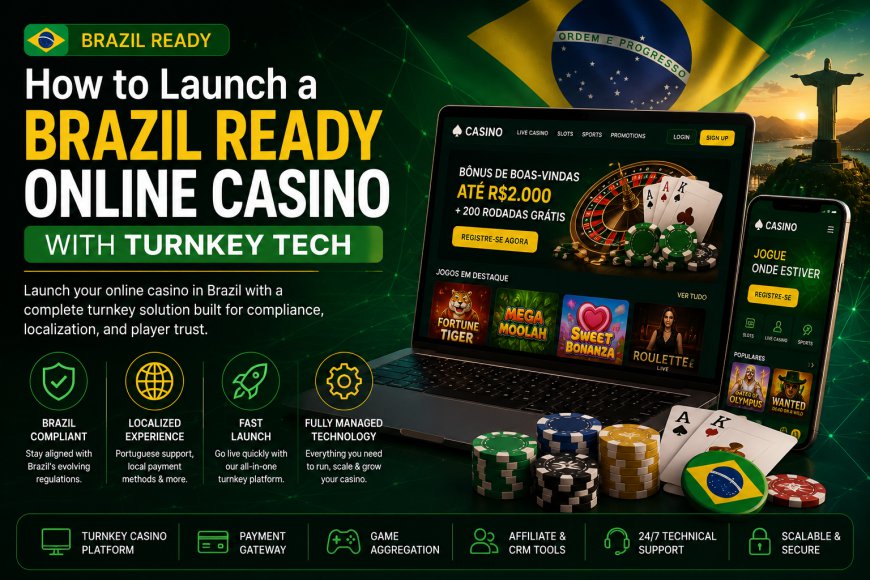
Launching an online casino in Brazil is not simply a matter of adding games to a website. Operators need a legal route to market, stable technology, local payment support, Portuguese content, mobile performance, responsible gaming controls, and a clear plan for acquiring and retaining players.
Brazil now operates a regulated federal framework for fixed-odds betting and online games. The Secretariat of Prizes and Betting, known as SPA, is the authority responsible for authorisation, regulation, monitoring, supervision, and enforcement. Since 1 January 2025, only authorised companies can operate nationally, and federally authorised betting sites use the “.bet.br” domain extension.
This guide explains how to plan a Brazil-ready casino brand using a turnkey casino solution. It focuses on the practical decisions that affect compliance, customer experience, search visibility, and long-term commercial performance.
Quick Answer: What Do You Need to Launch an Online Casino in Brazil?
To launch an online casino in Brazil, an operator needs:
-
A valid legal and regulatory route.
-
A reliable casino platform.
-
Certified games and secure integrations.
-
Local payment methods.
-
Portuguese-language content and support.
-
Know Your Customer checks, which verify player identity.
-
Anti-Money Laundering controls, which help detect suspicious activity.
-
Responsible gaming features.
-
A mobile-first website.
-
A player acquisition and retention strategy.
A turnkey platform can provide much of the technical foundation. However, it does not replace licensing, legal advice, local operations, marketing, or ongoing compliance.
Why Brazil Requires a Local-First Casino Strategy
Brazil offers a large digital audience, but operators should not treat it as a translated version of another market. Player expectations, payment habits, language, support needs, promotional preferences, and regulatory requirements must shape the product from the start.
A successful launch therefore needs two connected plans:
-
A market-entry plan that covers legal structure, compliance, payments, and operations.
-
A growth plan that covers positioning, search visibility, affiliates, content, customer relationship management, and retention.
The technology must support both plans. A platform that launches quickly but cannot localise payments, promotions, reporting, or responsible gaming controls may create expensive problems later.
For broader market-entry considerations, read this complete operator guide to launching an online casino brand in Brazil. It explains why localisation, mobile design, trusted payments, customer support, and market-specific promotion matter for Brazilian users.
Step 1: Confirm the Legal Route Before Choosing Technology
The first decision is not the colour of the website or the size of the game library. It is whether the business can legally operate in the target market.
Brazil’s Ministry of Finance states that companies need prior SPA authorisation to operate fixed-odds betting nationally. The official framework is based on Law No. 13,756/2018, Law No. 14,790/2023, and related regulations. Each federal authorisation can cover up to three brands, with each authorised brand operating through its own “.bet.br” site.
Before signing a platform agreement, operators should obtain qualified Brazilian legal and compliance advice on:
-
Corporate structure and local presence.
-
Authorisation requirements.
-
Technical certification.
-
Permitted games and content.
-
Player registration and identity checks.
-
Financial controls and transaction monitoring.
-
Advertising and promotional restrictions.
-
Data protection.
-
Responsible gaming obligations.
-
Reporting and record keeping.
Regulations can change. The SPA legislation page continued to publish new measures during 2026, which shows why operators need an active compliance process rather than a one-time pre-launch review.
Practical rule: Do not buy technology first and ask legal questions later. Define the regulatory requirements, then test every shortlisted platform against them.
Step 2: Choose the Right Turnkey Casino Solution
A turnkey casino solution is a pre-built platform that can be configured, branded, integrated, tested, and launched without developing the complete system from the ground up.
A full solution usually combines:
-
Player registration and account management.
-
Game integrations.
-
Payment connections.
-
A casino back office.
-
Bonus and promotion tools.
-
Customer relationship management, often shortened to CRM.
-
Affiliate tracking.
-
Content management.
-
Security controls.
-
Compliance tools.
-
Reporting and analytics.
-
Hosting and technical support.
The main value is not only launch speed. It is operational integration. Teams can manage players, transactions, promotions, content, and performance from connected systems instead of building separate tools for every function.
To understand the model in more detail, read this turnkey casino solution guide. It covers platform components, launch steps, cost factors, provider selection, and the differences between turnkey, white label, application programming interface integrations, and custom development.
Turnkey, White Label, or Custom Development?
A turnkey model is usually suitable for operators that want their own brand, stronger operational control, and a faster route to market than custom development.
A white label model may offer an even faster setup, but the operator often has less control over technology, commercial terms, branding, or licensing structure.
Custom development offers maximum technical freedom, but it requires more capital, more time, specialist staff, security testing, integrations, maintenance, and ongoing development.
The correct choice depends on the operator’s licence position, budget, launch target, technical capabilities, and long-term strategy.
Step 3: Check Whether the Platform Is Truly Brazil-Ready
A platform may work well in Europe or another Latin American country and still be unsuitable for Brazil. “Multi-market” is not enough. The provider should demonstrate how the product supports Brazil in practice.
1. Portuguese Content Management
Operators should be able to manage all customer-facing content in Brazilian Portuguese, including:
-
Registration instructions.
-
Payment pages.
-
Bonus terms.
-
Game descriptions.
-
Responsible gaming information.
-
Help centre articles.
-
Transaction emails.
-
On-site messages.
-
Customer support scripts.
Translation should sound natural and local. Direct word-for-word translation often creates confusing or untrustworthy copy.
2. Mobile-First Performance
Many users will visit, register, deposit, and play on a smartphone. The website should therefore load quickly and remain easy to use on smaller screens.
Test the complete mobile journey:
-
Landing page to registration.
-
Registration to identity verification.
-
Verification to first deposit.
-
Deposit to game launch.
-
Game session to withdrawal request.
-
Support request to resolution.
A mobile homepage can look attractive while the payment or verification process remains difficult. Test the whole journey, not only the first screen.
3. Local Payment Support
Payments strongly influence conversion and trust. Operators should offer convenient local methods, clear processing information, secure transaction flows, and an easy withdrawal experience.
Ask the platform provider:
-
Which Brazilian payment methods are already integrated?
-
Which payment partners support regulated gaming businesses?
-
How are failed deposits handled?
-
Can the back office identify payment problems in real time?
-
What fraud controls are included?
-
How are withdrawals reviewed and approved?
-
Can support agents see a clear transaction history?
-
How quickly can new payment methods be added?
Do not assume that an integration is ready because a provider displays a payment logo. Request technical documentation, processing rules, test access, and references from existing clients.
4. Game and Content Management
A large library can help, but relevance matters more than a large number on a sales page. Operators need the ability to organise games based on local interest, device performance, supplier, category, and commercial value.
Useful controls include:
-
Custom game categories.
-
Featured and trending sections.
-
Provider filters.
-
Mobile-specific placement.
-
Search and recommendations.
-
Game availability by market.
-
Performance reporting.
-
Removal of low-performing or restricted content.
5. Back-Office Visibility
The back office is the control centre used by operations, payments, customer support, risk, compliance, marketing, and management teams.
It should provide clear information about:
-
Registrations.
-
Identity verification status.
-
Deposits and withdrawals.
-
Player activity.
-
Bonus use.
-
Game performance.
-
Customer support history.
-
Risk alerts.
-
Responsible gaming actions.
-
Affiliate performance.
-
Revenue and cost trends.
Request a live demonstration using realistic operator tasks. A polished sales presentation is not a substitute for daily usability.
Step 4: Build Compliance and Responsible Gaming Into the Product
Responsible gaming should be part of the platform design, not a footer link added before launch.
Brazil’s SPA describes responsible gaming as a way to promote safe, healthy, and conscious participation while preventing harm and protecting vulnerable users. The regulator has issued specific rules covering player protection and operator responsibilities.
A suitable platform should support controls such as:
-
Age and identity verification.
-
Deposit and spending limits.
-
Session reminders.
-
Cooling-off periods.
-
Self-exclusion.
-
Risk monitoring.
-
Restricted account access.
-
Clear support information.
-
Responsible promotional rules.
-
Full action logs for audit purposes.
Operators also need trained people and documented procedures. Software can identify a risk signal, but the business must decide who reviews it, how quickly the case is handled, what action is taken, and how the decision is recorded.
Step 5: Create a Distinct Brand Position
A new casino cannot compete only by offering the same games and a similar welcome bonus. Operators need a clear reason for Brazilian players to remember and trust the brand.
A useful positioning statement answers four questions:
-
Who is the brand for?
-
What experience does it provide?
-
Why is it different?
-
Why should players trust it?
Possible points of difference include:
-
Fast and transparent payments.
-
Simple mobile navigation.
-
Strong live casino discovery.
-
Clear and fair promotions.
-
Portuguese-first customer support.
-
A focused game selection.
-
Helpful educational content.
-
Strong player protection.
-
A specific entertainment style.
Avoid claims such as “the best casino in Brazil” unless there is strong, verifiable evidence. Clear, specific value propositions are more credible than broad superlatives.
Step 6: Build SEO Before the Website Goes Live
Search engine optimisation should start during platform planning. It is harder and more expensive to repair site structure, page speed, indexing, and duplicate content after launch.
Create a Search-Friendly Site Structure
A clear structure helps users and search engines understand the website.
A practical structure may include:
-
Home.
-
Casino games.
-
Slots.
-
Live casino.
-
Table games.
-
Game providers.
-
Promotions.
-
Payment methods.
-
How-to guides.
-
Responsible gaming.
-
Help centre.
-
About the brand.
-
Contact and support.
-
Legal and policy pages.
Every important page should have a specific purpose. Avoid creating hundreds of thin pages that repeat the same content with different keywords.
Match Content to Search Intent
Search intent means the reason behind a search.
Common intent types include:
-
Informational: The user wants an explanation or guide.
-
Commercial: The user is comparing options.
-
Navigational: The user wants a specific brand or page.
-
Transactional: The user wants to register, deposit, or play.
A guide about casino payment methods should educate. A game category page should help users discover suitable games. A registration page should make the next action clear.
Build Topic Clusters
A topic cluster is a group of connected pages that cover one subject in depth.
For example, a payments cluster could include:
-
Casino payment methods in Brazil.
-
How deposits work.
-
How withdrawals work.
-
Payment security.
-
Common payment problems.
-
Verification requirements.
-
Responsible spending controls.
The main guide links to the supporting articles, and the supporting articles link back to the main guide. This structure improves navigation and demonstrates subject depth.
Strengthen E-E-A-T Signals
E-E-A-T stands for experience, expertise, authoritativeness, and trustworthiness.
For an iGaming website, useful trust signals include:
-
Named authors with relevant experience.
-
Reviewer information for legal or compliance content.
-
Clear publication and update dates.
-
Accurate company information.
-
Transparent terms and policies.
-
Responsible gaming resources.
-
Contact and support details.
-
Sources for legal or statistical claims.
-
Content correction procedures.
-
Secure browsing and payment pages.
Do not publish legal claims without review. Add a clear note explaining that content is general information and not legal advice.
Step 7: Optimise for AEO and Generative Search
Answer Engine Optimisation, or AEO, helps content provide clear answers for search features, voice assistants, and question-based results.
Generative Engine Optimisation, or GEO, focuses on making content easy for artificial intelligence-based search systems to understand, verify, and cite.
The practical methods are similar:
-
Answer the main question near the top.
-
Use descriptive headings.
-
Define specialist terms.
-
Keep important answers concise.
-
Add useful tables and checklists.
-
Cite authoritative sources.
-
Use consistent company and product information.
-
Include original experience and expert review.
-
Add a well-structured FAQ section.
-
Update time-sensitive content regularly.
For example, instead of opening with a long market history, answer the key question immediately:
“An operator needs authorisation, compliant technology, local payments, Portuguese support, responsible gaming controls, and a growth strategy.”
This direct format is easier for users, search engines, and artificial intelligence systems to process.
Step 8: Plan Acquisition and Retention Together
Player acquisition attracts new customers. Retention gives them reasons to return. Both should be planned before launch.
Organic Search
Build useful content around real user questions, payment concerns, game discovery, responsible play, platform features, and brand trust.
Affiliate Partnerships
Affiliates can introduce the brand to relevant audiences. Operators need clear partner terms, accurate tracking, compliant creative materials, and ongoing quality checks.
Paid Media
Paid campaigns must follow applicable Brazilian advertising rules and platform policies. Campaign teams should coordinate with legal and compliance specialists before publishing advertisements or promotions.
Customer Relationship Management
Customer relationship management helps operators communicate with different player groups.
A good CRM system can support:
-
Welcome journeys.
-
Deposit reminders.
-
Game recommendations.
-
Service updates.
-
Responsible gaming messages.
-
Re-engagement campaigns.
-
Loyalty communication.
-
Customer feedback requests.
Messages should be relevant, permission-based, and compliant. More messages do not automatically create better retention.
Metrics That Matter After Launch
Operators should avoid judging success only by registrations or deposits. A healthy reporting framework covers acquisition, conversion, player value, operations, risk, and retention.
| Area | Useful Metrics |
|---|---|
| Acquisition | Organic traffic, affiliate traffic, cost per registration, cost per first depositor |
| Conversion | Registration completion, identity verification completion, first-deposit rate |
| Payments | Deposit success rate, withdrawal processing time, failed payment rate |
| Engagement | Active players, session frequency, game category use |
| Retention | Returning player rate, 7-day retention, 30-day retention |
| Marketing | Campaign conversion, bonus cost, affiliate quality |
| Operations | Support response time, resolution time, platform uptime |
| Compliance | Verification exceptions, responsible gaming actions, risk alerts |
Every metric should lead to a possible action. For example, a low registration completion rate may require fewer form fields, clearer instructions, or better mobile design.
A Practical 90-Day Launch Framework
Days 1 to 30: Strategy and Validation
-
Confirm the legal route and compliance requirements.
-
Define the target audience.
-
Set the brand position.
-
Select the platform shortlist.
-
Review payments, games, reporting, and support.
-
Map the website structure.
-
Build the SEO keyword and content plan.
-
Define launch metrics.
Days 31 to 60: Configuration and Content
-
Configure the platform.
-
Apply brand design.
-
Integrate approved payments.
-
Select and organise games.
-
Create Portuguese content.
-
Configure customer support tools.
-
Set responsible gaming controls.
-
Build tracking and reporting.
-
Prepare affiliate and marketing assets.
Days 61 to 90: Testing and Controlled Launch
-
Test registration and verification.
-
Test deposits and withdrawals.
-
Test games across devices.
-
Review all terms and promotions.
-
Check page speed and search indexing.
-
Train support and operations teams.
-
Run security and compliance checks.
-
Launch to a controlled audience.
-
Fix issues before wider promotion.
The actual timeline depends on authorisation, certification, supplier approvals, payments, and operational readiness. A turnkey platform can shorten technical setup, but it cannot remove external legal and commercial dependencies.
Common Mistakes to Avoid
Choosing a Provider Only on Price
A low platform fee may hide limited payment support, weak reporting, slow technical support, or expensive add-ons.
Assuming Turnkey Means Fully Managed
The technology may be ready, but the operator remains responsible for strategy, compliance, customer service, marketing, finance, and daily operations.
Launching With Generic English Content
A translated site without natural Brazilian Portuguese, local support, and market-relevant information will struggle to build trust.
Focusing Only on Bonuses
Bonuses can attract attention, but payments, support, product quality, and transparent terms often have a stronger effect on long-term trust.
Ignoring Withdrawal Experience
A smooth deposit flow cannot compensate for confusing or slow withdrawals.
Publishing Thin SEO Pages
Large numbers of low-value pages can weaken site quality. Prioritise useful, accurate, complete content.
Delaying Analytics Setup
Without reliable tracking, teams cannot understand where users leave, which channels deliver value, or which operational issues need attention.
How to Evaluate a Turnkey Casino Provider
Ask every shortlisted provider the same questions:
-
Which Brazilian regulatory and technical requirements does the platform support?
-
Which functions require third-party products?
-
Which Brazilian payment methods are live today?
-
Which game providers and titles are available for the market?
-
How are identity verification and transaction monitoring handled?
-
Which responsible gaming controls are included?
-
Can we manage Portuguese content without developer support?
-
What reports are available in real time?
-
What is the support model after launch?
-
What are the setup, monthly, transaction, and revenue-based costs?
-
How is data exported if we change providers?
-
Can the platform support additional brands or products later?
Request written answers, product demonstrations, service-level commitments, security documentation, and client references. Compare total operating value, not only the initial quote.
Final Thoughts
A successful online casino launch in Brazil depends on alignment between regulation, technology, localisation, trust, marketing, and operations.
A turnkey casino solution can reduce technical complexity and help an operator launch faster. However, the platform should be selected only after the business has defined its legal route, target audience, payment needs, product strategy, content plan, and operational responsibilities.
The best approach is simple:
-
Start with compliance.
-
Choose technology that supports Brazil in practice.
-
Build for mobile users.
-
Localise every important customer interaction.
-
Make payments and withdrawals easy to understand.
-
Treat responsible gaming as a core product function.
-
Publish useful, expert-reviewed content.
-
Measure the full customer journey.
-
Improve continuously after launch.
Operators that follow this process can build a stronger foundation for trust, search visibility, player satisfaction, and sustainable growth.
Frequently Asked Questions
What is a turnkey casino solution?
A turnkey casino solution is a ready-built platform that includes the main technology needed to operate an online casino. It can include player accounts, games, payments, promotions, reporting, compliance tools, content management, and technical support.
Can a turnkey platform guarantee legal entry into Brazil?
No. A platform provides technology. The operator must still meet Brazilian legal, corporate, authorisation, certification, compliance, and operational requirements.
What makes an online casino platform suitable for Brazil?
A Brazil-ready platform should support local regulatory requirements, Brazilian Portuguese, mobile users, suitable payment methods, identity checks, responsible gaming controls, localised content, and clear operational reporting.
Is SEO important before an online casino launches?
Yes. SEO affects site structure, page speed, content planning, internal linking, indexing, and trust signals. Planning these elements before launch reduces later rework.
What is the difference between acquisition and retention?
Acquisition brings new players to the platform. Retention encourages suitable existing players to return through a strong product, reliable service, relevant communication, and responsible engagement.
How often should regulatory content be updated?
Operators should review time-sensitive regulatory content whenever rules change and on a scheduled basis. Every legal or compliance page should show its last review date and the person or team responsible for checking it.
Does a large game library guarantee success?
No. Game quality, local relevance, mobile performance, discovery, payments, support, trust, and retention are also important. A smaller, well-organised library can perform better than a large, confusing one.
What should an operator do before requesting a platform quote?
Prepare a brief that covers the target market, legal status, brands, products, expected launch date, payment needs, game categories, languages, support model, marketing plan, reporting needs, and growth goals.
Compliance note: This article provides general business and marketing information. It is not legal advice. Operators should obtain advice from qualified Brazilian legal, tax, regulatory, and compliance professionals before entering the market.