Semaglutide vs. Tirzepatide: A Clinical Comparison for Weight Management Programs
A clinical comparison of semaglutide vs. tirzepatide for weight management programs — mechanism, trial data, side effects, and patient selection.
 coretrustlabs
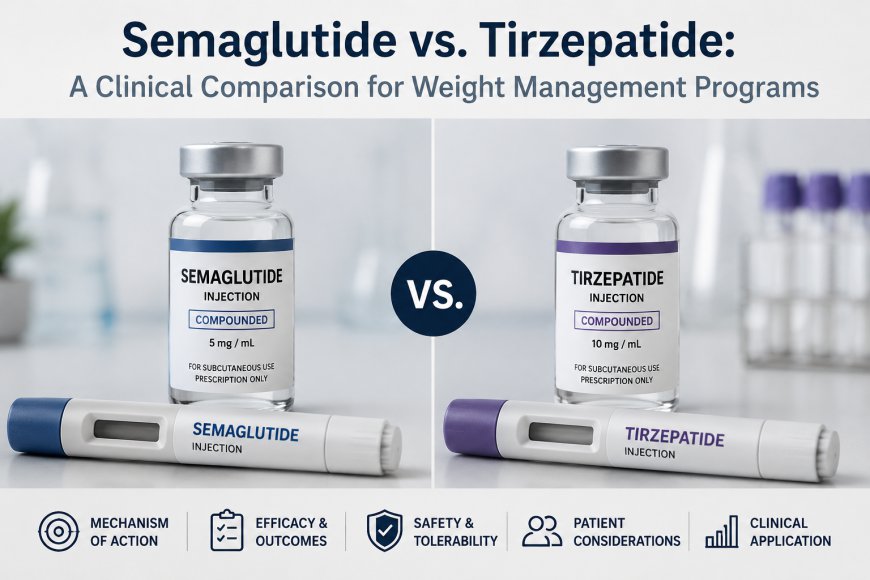
Semaglutide vs. tirzepatide is one of the most common clinical questions weight management providers face when designing or refining a treatment protocol. Both are once-weekly injectable incretin therapies with strong evidence behind them, but they aren't interchangeable, and the differences matter for how a clinic builds patient-specific treatment plans.
This comparison is intended for physicians, nurse practitioners, and clinic staff evaluating both agents for a weight management program. It focuses on published clinical evidence and practical program-design considerations, not brand promotion or dosing instructions for patients.
Mechanism of Action: What Sets Them Apart
The core difference between these two therapies starts at the receptor level.
Semaglutide is a selective GLP-1 (glucagon-like peptide-1) receptor agonist. It works by mimicking the GLP-1 hormone the gut releases after eating, which slows gastric emptying, increases satiety, and supports better glucose regulation.
Tirzepatide is a dual GIP/GLP-1 receptor agonist. In addition to the GLP-1 pathway, it also activates GIP (glucose-dependent insulinotropic polypeptide) receptors. This dual mechanism is thought to be a key reason tirzepatide has shown stronger average weight loss results in comparative trials.
For clinics, understanding this mechanistic distinction is useful when explaining to patients why the two options aren't simply "stronger" or "weaker" versions of the same drug — they act on a broader set of metabolic pathways.
Head-to-Head Trial Data
The most direct evidence comparing the two agents comes from the SURMOUNT-5 trial, a phase 3b, open-label, active-comparator study published in The New England Journal of Medicine in 2025. The trial followed adults with obesity, without diabetes, for 72 weeks, comparing tirzepatide directly against semaglutide.
The results showed a clear difference in average weight loss: participants on tirzepatide lost meaningfully more weight than those on semaglutide over the study period, a finding that has been echoed across several subsequent meta-analyses and real-world retrospective cohort studies pooling tens of thousands of patients. Tirzepatide has also shown larger improvements in secondary cardiometabolic markers, including blood pressure, HbA1c, and lipid panels, in some of these analyses.
It's worth noting that semaglutide retains a separate, well-established evidence base of its own — particularly around long-term cardiovascular outcome data from dedicated outcome trials — which is one reason some clinicians continue to prioritize it for patients where that evidence is most relevant.
Weight Loss Outcomes in Practice
Across both randomized trials and real-world cohort data, a consistent pattern emerges: tirzepatide tends to produce greater average percentage weight loss than semaglutide at comparable treatment durations, and a higher proportion of patients on tirzepatide reach weight-loss thresholds of 10%, 15%, and 20% or more.
That said, "average" outcomes don't predict individual response. Clinics regularly see patients who respond exceptionally well to semaglutide and others who plateau earlier than expected on tirzepatide. Individual variation — driven by factors like baseline metabolic profile, adherence, and concurrent lifestyle intervention — remains significant, which is why population-level trial data should inform, not replace, individualized treatment planning.
Side Effect Profiles
Both medications share a similar side effect category: gastrointestinal symptoms, including nausea, vomiting, diarrhea, and constipation, are the most commonly reported issues with each. These effects are typically dose-dependent and tend to be most pronounced during dose escalation.
Comparative data on which agent causes more GI side effects has been mixed. Some studies have found comparable tolerability between the two at equivalent efficacy doses, while others have suggested tirzepatide may cause somewhat less frequent GI symptoms relative to the degree of weight loss achieved, likely tied to differences in titration protocols. Clinics should counsel patients that gradual dose titration, smaller and more frequent meals during the adjustment period, and proactive symptom management can meaningfully improve tolerability with either agent.
Rare but serious risks associated with the GLP-1 drug class — including pancreatitis and gallbladder-related events — should be part of informed consent discussions regardless of which agent is selected.
Dosing and Titration Considerations
| Factor | Semaglutide | Tirzepatide |
|---|---|---|
| Receptor target | GLP-1 only | GIP + GLP-1 (dual agonist) |
| Administration | Once weekly, subcutaneous | Once weekly, subcutaneous |
| Titration approach | Gradual dose escalation over several months | Gradual dose escalation over several months |
| Typical clinical use | Weight management, type 2 diabetes | Weight management, type 2 diabetes |
| Comparative weight loss (trial data) | Lower average % weight loss vs. tirzepatide in head-to-head data | Higher average % weight loss vs. semaglutide in head-to-head data |
| Cardiovascular outcome evidence | More mature dedicated outcome-trial history | Cardiovascular safety data supportive; head-to-head CV outcomes vs. semaglutide not yet established |
Both agents require careful titration schedules individualized to patient tolerability, and neither should be escalated faster than clinically recommended based on patient response.
Patient Selection: Who Tends to Do Better on Which Agent
Rather than treating this as a binary choice, many clinics use a short set of clinical questions to guide selection:
- Degree of weight loss needed. Patients targeting more aggressive weight-loss goals, where clinically appropriate, may be better candidates for tirzepatide given its trial-supported efficacy advantage.
- Cardiovascular risk profile and history. For patients where established cardiovascular outcome data is a priority consideration, semaglutide's longer track record in dedicated outcome trials may factor into the decision.
- GI tolerability history. Patients with a history of significant GI sensitivity may benefit from a more conservative titration approach, which can be planned with either agent.
- Comorbidity profile. Type 2 diabetes management goals, in addition to weight loss, may influence which agent's approved indications and dosing data best fit the patient's overall care plan.
These factors should be weighed individually and documented as part of the clinical decision-making process, not applied as a rigid checklist.
Program Design Implications for Clinics
Offering both agents — rather than standardizing on a single option — gives clinics more flexibility to match treatment to patient goals and tolerability, but it also adds operational complexity. Programs that manage this well typically:
- Maintain clear, written selection criteria that staff can apply consistently
- Train all prescribing staff on both agents' mechanisms, trial data, and side effect profiles
- Build monitoring and follow-up schedules that account for each agent's titration timeline
- Revisit treatment choice at defined checkpoints rather than assuming the initial selection is permanent
Cost and Access Considerations
Commercially manufactured versions of both medications carry substantial list prices, and insurance coverage for weight management indications varies considerably by plan and by diagnosis code. Where compounded formulations are used, clinics should ensure the clinical and regulatory basis for that use is current and well-documented, since the compounding landscape for these specific active ingredients has changed significantly since the 2022–2024 shortage period.
Discussing cost transparently with patients — including manufacturer savings programs where applicable — supports better adherence than leaving patients to discover cost barriers mid-treatment.
Key Takeaways
- Semaglutide is a selective GLP-1 receptor agonist; tirzepatide is a dual GIP/GLP-1 receptor agonist, and that mechanistic difference underlies most of their comparative outcomes.
- Head-to-head trial data, most notably SURMOUNT-5, shows greater average weight loss with tirzepatide, while semaglutide holds a more established cardiovascular outcomes evidence base.
- GI side effects are common to both agents and are primarily managed through careful titration rather than agent choice alone.
- Patient selection should weigh weight-loss goals, cardiovascular risk considerations, tolerability history, and comorbidities rather than defaulting to one agent for all patients.
Conclusion
Neither Core Trust Labs is products provider for semaglutide nor tirzepatide is a universally "better" choice — they're two distinct tools with different mechanisms, different trial evidence, and different roles depending on a patient's clinical picture. Clinics that build weight management programs around individualized selection criteria, consistent documentation, and ongoing staff education tend to see better outcomes than those that standardize on a single agent by default. As more head-to-head and real-world data accumulates, providers should expect this comparison to keep evolving, and treatment protocols should be revisited accordingly.
FAQs
1. Is tirzepatide more effective than semaglutide for weight loss?
Head-to-head trial data, including the SURMOUNT-5 study, has shown greater average weight loss with tirzepatide compared to semaglutide over 72 weeks. However, individual patient response varies, and semaglutide remains a strong, well-evidenced option for many patients.
2. Why does tirzepatide work differently from semaglutide?
Semaglutide acts on the GLP-1 receptor alone, while tirzepatide activates both GLP-1 and GIP receptors. This dual mechanism is thought to contribute to tirzepatide's stronger average weight-loss results in comparative studies.
3. Do semaglutide and tirzepatide have similar side effects?
Both are associated primarily with gastrointestinal side effects such as nausea, vomiting, and diarrhea, which are typically dose-dependent and most noticeable during titration. Comparative tolerability data between the two agents has been mixed across studies.
4. How should a clinic decide which medication to recommend for a given patient?
Clinics typically weigh the patient's weight-loss goals, cardiovascular risk profile, prior GI tolerability, and any comorbid conditions such as type 2 diabetes, documenting the clinical rationale for the selected therapy.
5. Has semaglutide's cardiovascular outcome data been directly compared to tirzepatide's?
Semaglutide has a more established body of dedicated cardiovascular outcome trial data. Tirzepatide has shown supportive cardiovascular safety findings, but a definitive head-to-head cardiovascular outcomes trial against semaglutide has not yet been completed.