How Unity Augmented Reality Help Build Interactive Experiences in the Real World
 mages-institute
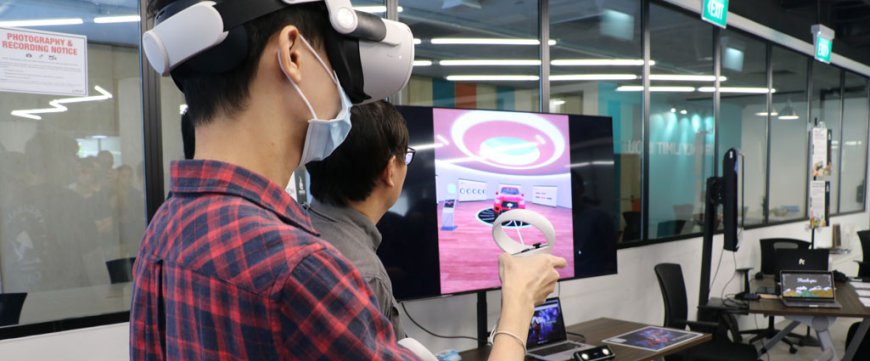
Digital experiences are no longer limited to screens-or even fully virtual worlds. With Augmented Reality (AR), digital elements are layered onto the real environment, blending the physical and digital in real time.
At the center of many AR experiences today is Unity, one of the most widely used engines for building interactive 3D applications.
A Unity Augmented Reality course focuses on teaching how to create these real-world interactive experiences—where users don’t just view content, but engage with it in their surroundings.
Why Unity for Augmented Reality?
Unity has become a leading platform for AR development due to its flexibility, cross-platform support, and strong developer ecosystem.
- Over 70% of the top 1,000 mobile games are made with Unity, highlighting its dominance in interactive development (Unity reports)
- Unity supports AR frameworks like ARKit (iOS) and ARCore (Android), enabling cross-device experiences
- It allows creators to build once and deploy across multiple platforms
This makes Unity a practical starting point for anyone looking to enter AR development.
Where Augmented Reality Is Being Used Today
AR is already shaping how industries interact with users:
- Retail: IKEA Place app lets users visualize furniture in their homes
- Gaming: Pokémon GO brought AR into mainstream interaction
- Education: AR apps create interactive learning experiences
- Marketing: Brands use AR filters and experiences to engage users
- The global AR market is expected to reach $75.9 billion by 2030, driven by mobile and enterprise adoption (Statista)
- Over 1.4 billion devices are AR-enabled worldwide, making it highly accessible (Statista)
This growth is increasing demand for developers who understand both technology and user experience.
What You Learn in a Unity Augmented Reality Course
A structured course focuses on both development and design—because AR is not just about placing objects, but making them interact meaningfully with the real world.
You learn how to:
- Build AR applications using Unity
- Integrate ARKit and ARCore for mobile AR
- Understand spatial tracking and real-world mapping
- Create interactive 3D objects and UI elements
- Optimize performance for mobile devices
More importantly, you learn how to design experiences that feel natural in a real-world context.
The Shift: From Screens to Real-World Interaction
Designing for AR requires a different mindset.
You are no longer designing for a fixed screen—you are designing for an environment that constantly changes.
This means:
- Lighting and surfaces affect your design
- User movement is unpredictable
- Interactions must feel intuitive and immediate
For example, in apps like IKEA Place, objects must scale correctly, respond to real-world surfaces, and appear realistic in different lighting conditions.
Who Should Learn Unity AR?
Unity AR is suitable for both technical and creative individuals who want to work on next-generation experiences.
It’s especially relevant for:
- Developers exploring AR/VR technologies
- Game designers expanding into AR
- 3D artists and designers
- Creatives interested in interactive media
Even beginners can start with guided learning and structured projects.
How MAGES Helps You Build AR Skills
At MAGES Institute, learning is focused on building practical, real-world skills.
Students:
- Develop AR applications using Unity
- Work on hands-on, project-based assignments
- Learn industry workflows and tools
- Build a portfolio aligned with AR job roles
The goal is to help students move from experimentation to professional capability.
Career Opportunities in Unity AR
With AR adoption growing, new roles are emerging across industries.
Potential career paths include:
- AR Developer
- Unity Developer
- Interactive Media Designer
- XR (Extended Reality) Specialist
As AR becomes more integrated into everyday applications, these roles are expected to grow in demand.
Final Thought
Augmented Reality is changing how we interact with the world—not by replacing it, but by enhancing it.
Unity provides the tools to build these experiences.
A Unity Augmented Reality course is where you learn to combine creativity, technology, and real-world interaction-turning ideas into experiences people can see, touch, and explore around them.