Instant Rice: The Smart Kitchen Staple for Modern Living
 anekpatel25
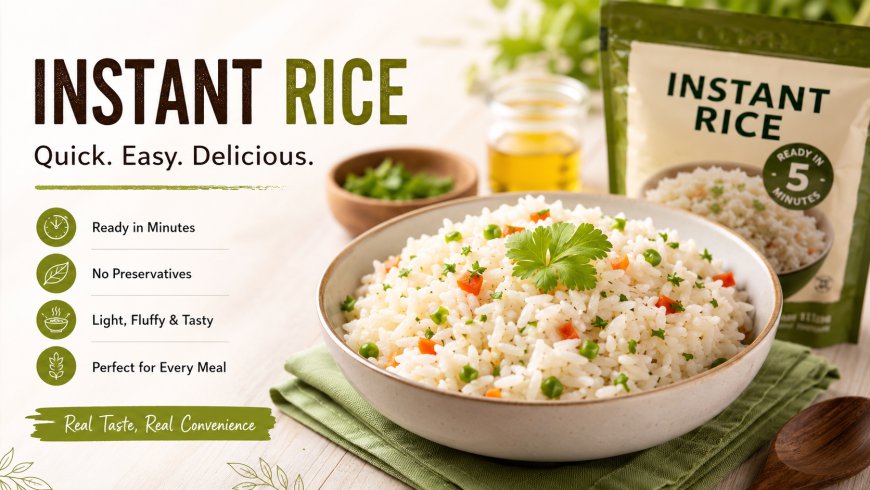
In today's fast-paced world, convenience has become an essential part of everyday cooking. Whether you're a busy professional, a student living away from home, a parent managing multiple responsibilities, or simply someone who enjoys quick and hassle-free meals, instant rice has earned a well-deserved place in modern kitchens. It offers a practical solution for preparing wholesome meals in just a few minutes without sacrificing taste or versatility.
Unlike traditional rice that often requires washing, soaking, and careful cooking, instant rice is designed to simplify the process. Thanks to advancements in food processing and packaging, consumers can enjoy ready-to-cook rice that fits seamlessly into busy lifestyles while still serving as a satisfying base for countless dishes.
What Is Instant Rice?
Instant rice is rice that has already been fully cooked, dehydrated, and then packaged for convenience. Since it has undergone cooking before reaching consumers, it only needs a brief period of heating or rehydration before it is ready to eat.
The process begins with high-quality rice grains that are cleaned and cooked under controlled conditions. The cooked rice is then carefully dried using specialized techniques that remove moisture while preserving the grain's structure. When hot water or microwave heat is applied later, the rice quickly absorbs moisture and returns to its original texture.
This approach significantly reduces cooking time compared to conventional rice while maintaining much of its flavor and appearance.
Why Instant Rice Has Become So Popular
The growing popularity of instant rice reflects changing consumer habits rather than simply a preference for convenience. People today are looking for foods that save time without making meal preparation complicated.
Several factors contribute to its increasing appeal:
- Busy work schedules that leave little time for lengthy cooking.
- Growing demand for quick home-cooked meals.
- Expansion of single-person households.
- Rising interest in meal preparation and portion-controlled eating.
- Increasing travel and outdoor activities where simple cooking solutions are preferred.
Instant rice eliminates much of the guesswork involved in cooking rice while providing consistent results every time.
How Instant Rice Is Made
The manufacturing process combines food science with quality control to ensure consistency.
The typical production stages include:
- Selection of premium rice varieties.
- Thorough cleaning to remove impurities.
- Controlled cooking using steam or boiling methods.
- Moisture removal through dehydration.
- Rapid cooling and packaging under hygienic conditions.
- Quality testing before distribution.
Modern production facilities focus on maintaining food safety, texture, and shelf stability throughout every stage.
Different Types of Instant Rice
One of the biggest advantages of instant rice is the wide variety available for different cuisines and dietary preferences.
White Instant Rice
The most common variety, white instant rice has a mild flavor and fluffy texture. It pairs well with curries, stir-fries, grilled meats, soups, and vegetable dishes.
Brown Instant Rice
Brown instant rice retains its bran layer, offering a slightly nuttier taste and firmer texture. Many people choose it because it contains more dietary fiber than white rice.
Basmati Instant Rice
Known for its long grains and distinctive aroma, basmati instant rice is frequently used in Indian, Middle Eastern, and Mediterranean recipes.
Jasmine Instant Rice
Popular in Southeast Asian cuisine, jasmine rice offers a delicate floral fragrance and soft texture that complements seafood, vegetables, and spicy dishes.
Flavored Instant Rice
Some manufacturers offer seasoned varieties that include herbs, vegetables, spices, or savory sauces, allowing consumers to prepare complete side dishes within minutes.
Nutritional Considerations
Instant rice generally provides carbohydrates that serve as an important source of energy. Depending on the variety, it may also contain small amounts of protein, vitamins, and minerals.
Many consumers assume that instant rice is significantly less nutritious than traditionally cooked rice. In reality, the nutritional differences are often modest, particularly when the product contains minimal additives. Whole-grain versions such as brown instant rice usually provide additional fiber compared to refined white rice.
Reading product labels remains important, especially for flavored varieties, which may contain higher levels of sodium, seasonings, or preservatives.
Benefits of Using Instant Rice
Saves Valuable Time
Perhaps the greatest advantage is speed. Instead of waiting 20 to 40 minutes for rice to cook, instant rice can often be prepared within five minutes or less.
Consistent Cooking Results
Even inexperienced cooks can achieve reliable results since much of the cooking process has already been completed during manufacturing.
Convenient Storage
Instant rice typically has a long shelf life and requires no refrigeration until prepared, making it suitable for pantry storage.
Portion Flexibility
Many products are available in individual serving packs, reducing food waste while simplifying meal planning.
Easy Meal Preparation
It serves as a convenient base for a wide range of dishes, allowing users to create balanced meals with minimal effort.
Popular Ways to Use Instant Rice
Instant rice is remarkably versatile and fits into numerous cuisines around the world.
It works well in:
- Vegetable stir-fries
- Chicken and rice bowls
- Burritos and wraps
- Fried rice
- Rice salads
- Stuffed vegetables
- Soups
- Curry dishes
- Grain bowls
- Casseroles
Many home cooks also combine instant rice with beans, roasted vegetables, grilled fish, tofu, or eggs to create nutritious meals in minutes.
Instant Rice and Modern Lifestyles
The rise of hybrid work arrangements, online education, and flexible schedules has changed the way many people prepare meals. Instead of spending long periods in the kitchen, consumers increasingly prefer ingredients that reduce preparation time while still allowing them to cook at home.
Instant rice fits naturally into this trend. It enables people to prepare lunch between meetings, make a quick dinner after commuting, or assemble healthy meals without relying entirely on restaurant food or takeout.
Fitness enthusiasts also appreciate its convenience when preparing meals in advance. Combined with lean protein and vegetables, instant rice becomes a practical component of balanced meal-prep routines.
Common Misconceptions
Despite its popularity, several myths continue to surround instant rice.
"It isn't real rice."
Instant rice starts as regular rice. The primary difference is that it has already been cooked and dehydrated before packaging.
"It always contains preservatives."
Many plain instant rice products contain only rice, without artificial preservatives. Consumers should always review ingredient labels for confirmation.
"It tastes inferior."
Modern processing techniques have significantly improved texture and flavor, and many consumers find high-quality instant rice comparable to freshly cooked rice, especially when incorporated into complete meals.
Tips for Getting the Best Results
Although instant rice is easy to prepare, a few simple practices can improve the final dish.
- Follow the recommended water ratio on the package.
- Allow the rice to rest briefly after heating to improve texture.
- Fluff the grains gently with a fork before serving.
- Enhance flavor with fresh herbs, spices, or citrus juice.
- Add cooked vegetables or proteins for a more complete meal.
- Avoid overheating, which may cause the rice to become overly soft.
Small additions like garlic, butter, sesame oil, or fresh parsley can elevate even the simplest bowl of instant rice.
Looking Ahead
Consumer expectations continue to evolve, encouraging food manufacturers to develop healthier, more diverse, and more sustainable instant rice products. New offerings increasingly feature whole grains, organic ingredients, globally inspired flavors, and recyclable packaging. There is also growing interest in plant-based meal solutions, where instant rice serves as a convenient foundation for nutritious recipes.
As technology advances, improvements in dehydration methods and packaging are expected to further enhance texture, flavor retention, and shelf life while reducing environmental impact.
Conclusion
Instant rice has transformed from a simple convenience food into a versatile kitchen essential that meets the needs of modern lifestyles. By combining speed, reliability, and adaptability, it allows people to prepare satisfying meals without spending excessive time in the kitchen. Whether used as the base for a hearty dinner, a quick lunch, or an easy meal-prep recipe, instant rice continues to prove that convenience and quality can go hand in hand.
As households increasingly seek practical cooking solutions, instant rice is likely to remain a trusted pantry staple, offering flexibility for busy schedules while inspiring creative meals across a wide range of cuisines.