KSA Data Centers Secure Access Control to ensure Peak Uptime
As the KSA increases its standing as a digital hub for the region data centers are now the core of cloud services banks, government platforms as well as the smart urban infrastructure. Ensure that operations are uninterrupted is crucial as even a small security flaw can cause the cost of delays. That's why data center security in the KSA is a major focus on the latest access control techniques that secure both digital and physical assets and ensures maximum performance.
 exparmaan
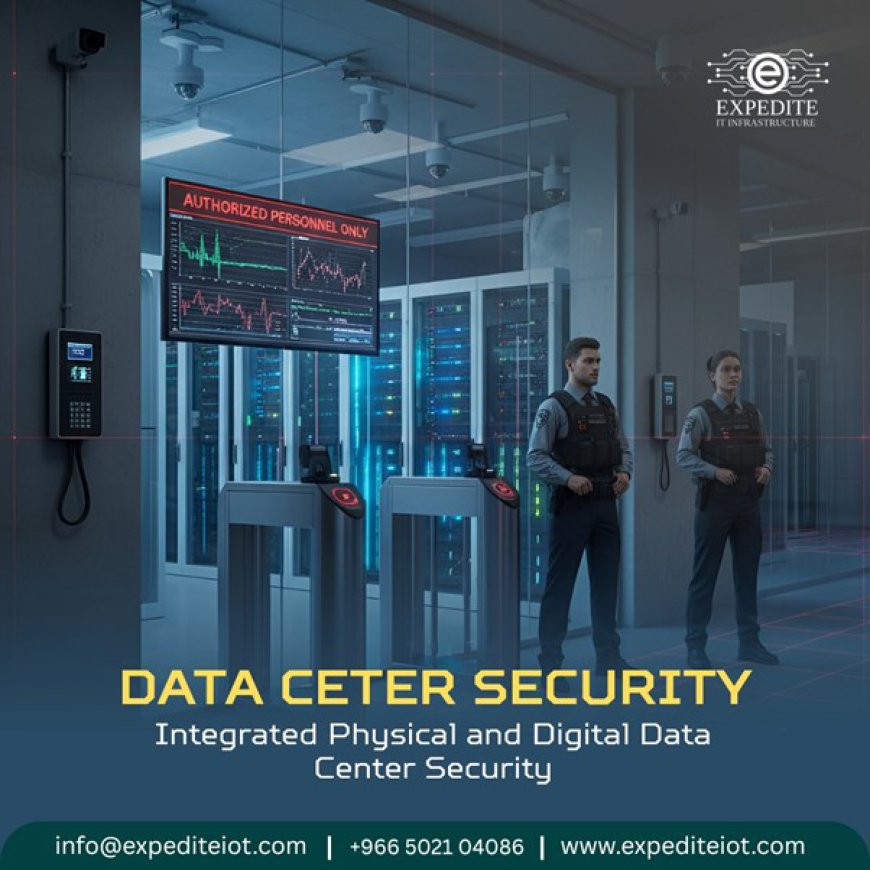
Data centers of the future require an integrated, smart security system that integrates technologies, automation and continuous monitoring in order to secure critical infrastructure.
The significance of Access Control in KSA Data Centers
Data centers contain sensitive information along with high-value equipment and the vital infrastructures for network operations. The KSA, where regulatory compliance and accessibility to services are of paramount importance, data center access control is specifically designed to block access to only authorized individuals and guarantee full traceability of each access activity.
Modern access control systems reduce human errors, eliminate intrusions from inside, and guarantee the operational areas like areas for control and server rooms and backup rooms are secure throughout the day.
Multi-Layered Physical Security Framework
Perimeter-Level Protection
The primary protection begins by implementing data center perimeter security and is designed to secure boundaries with intelligent fencing, controlled entry points, as well as automated gates. The AI-powered access systems that use movement patterns to identify suspect activity before it gets out of hand.
In limiting access around the boundaries, KSA data centers significantly lower the possibility of unauthorized entry, and possibly disrupting service.
Monitor and Surveillance
Monitoring is continuous and essential to keeping the efficiency of your facility. data center surveillance systems that are equipped with AI-driven video analytics give continuous monitoring of facilities in real time. The systems are able to detect suspicious activities, objects that are not monitored, or restrictions on the area, which allows rapid intervention.
Monitoring data can often be combined together with access logs, to make a comprehensive security overview to aid in reports on compliance and audits.
Intrusion Detection and Threat Response
Beyond the visual monitor, Data center intrusion detection systems have a significant role to play in determining forced entry attempts or unusual access behaviour. AI is useful in intrusion detection by learning normal working patterns and signalling on these occasions.
This preventive framework ensures that any threats which may be presented are promptly neutralized through securing infrastructure with no accessibility to services being compromised.
Advanced Authentication to access Critical Zones
Biometric Security measures
The traditional PIN and card do not work anymore in security-conscious settings. Data center's biometric security utilizes finger prints, facial recognition or iris scanning, to ensure that only authorized individuals have access to restricted areas.
Biometric identification is one method of preventing sharing of credentials and enhances accountability. This is more so to the KSA data centers, which run on high compliance requirements. Role Based and Time-Based Access
AI -powered access control systems by dynamically give permissions in accordance with the job role, shift times as well as operational demands. This makes sure that technicians or administrators as well as suppliers can only enter restricted areas within the approved timings, thus reducing the risk of internal security without impacting operation.
Integration of Physical and Network Security
Modern data centers need a unidirectional integration between access control for physical devices as well as IT infrastructure security. Network Security for Data Centers integrates with physical security systems to make sure access to servers as well as networks is controlled physically and electronically.
Where the sequence of events, which require physical access, is correlated with the network, security specialists can better understand the risks that may occur, which can respond faster and more accurately in cases of incidents.
AI-Driven Threat Detection for Maximum Uptime
AI is a key element in identifying threats before they can impact the operations. Data center threat detection systems analyse data from access reports, surveillance feeds and network activity, to identify and stop security-related incidents.
If they can spot anomalies in the early stages, KSA data centers can prevent downtime, safeguard service level agreements and keep the trust of customers.
Assuring Compliant with Operational Continuous
KSA data centers have to be in compliance with international and local requirements for data protection security, privacy and infrastructure resilience. Modern access control systems ensure the compliance of data centers by keeping detailed audit trails, automatic reports and alerts in real time.
This does not just improve security, but also assures seamless processes, effective incident handling and long-term scaling.
Conclusion
Access control that is robust is essential to ensure maximum availability for KSA the data center. Through combining data center security, data center access control, data center perimeter security, data center surveillance, data center intrusion detection, data center biometric security, network security for data centers, and data center threat detection, companies can create a robust secure, future-proof security structure. A sophisticated, multi-layered security system guarantees uninterrupted operation as well as regulatory compliance and longer-term security in the KSA's fast-growing digital economy.
FAQs
1.Why is access control critical for data center uptime?
Access Controlling access prevents unauthorised access, decreases errors made by humans, and decreases the possibility of disruptions which may cause downtime.
2. How can biometric security enhance security for data centers?
Data Center Biometric Security guarantees accurate identity verification, preventing credential abuse and enhancing the accountability of data centers.
3. Are access control and surveillance system work in tandem?
Absolutely by integrating data center surveillance with access control allows for real-time monitoring as well as thorough audit tracks.
4. What role can AI contribute to security of the data center?
AI enhances data center threat detection by spotting anomalies earlier and prompting proactive responses to the risk of potential.
5. What is the role of network security in physical access controls?
Network security for data centers guarantees that even granted physical access will not cause unauthorized digital access providing end-to-end security.
For more information contact us on:
Expedite IT
+966 502104086
Office No 01, Conference Building (Kirnaf Finance), Abi Tahir Al Dhahabi Street,
Al Mutamarat, Riyadh 12711, Saudi Arabia
Or click on the below link for more information:
https://www.expediteiot.com/data-center-perimeter-security-in-saudi-arabia/