How to Choose the Right Laminate for Your Home: A Complete Guide to Finish, Texture, and Thickness
Not sure which laminate to choose? This guide covers finish, texture, and thickness — matte, wooden, fluted, 1mm and 0.8mm — explained simply.
 Ogaan Laminates
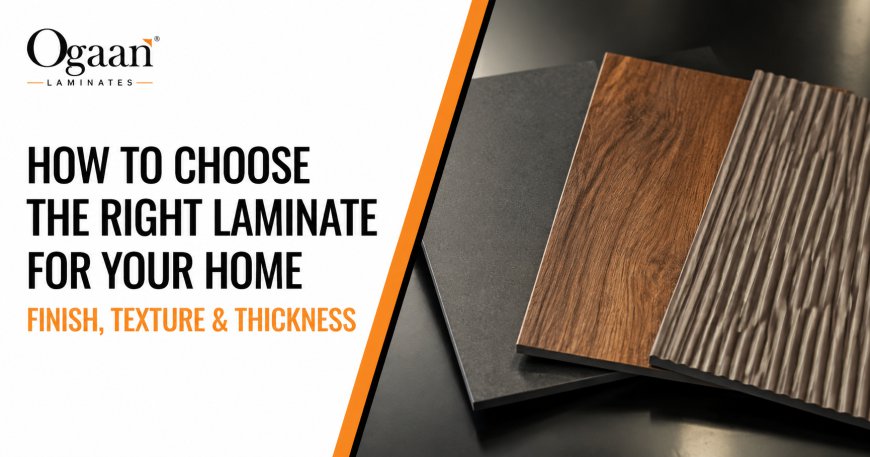
Walk into any laminate showroom, and you'll see hundreds of sample boards lined up wall to wall. Most people walk out more confused than when they walked in — not because the laminates are bad, but because nobody explains what actually separates one sheet from another. It isn't just the picture printed on the surface. It's the finish, the texture, and the thickness, and each one plays a completely different role in how that laminate looks, feels, and holds up over the years.
This guide covers all three in full — what each one actually changes, where they come from in manufacturing, how to combine them for a real project, what affects durability beyond the obvious, and the questions that come up most often once the sample boards are put away and the actual buying decision has to be made.
What is Laminate?
Before getting into finish, texture, and thickness, it helps to know what's happening underneath the surface. Laminate sheets are built by pressing multiple layers of kraft paper soaked in resin together under high heat and pressure. On top sits a printed decorative layer carrying the design or texture, sealed in by a protective overlay. Everything that follows — how glossy or matte it looks, what pattern it carries, how thick it is — comes down to how these layers are built and finished during that pressing process.
This is also why two laminates can look nearly identical on a sample board and still perform very differently once installed. The quality of the resin, the consistency of the kraft paper, and how evenly the sheet is pressed all matter as much as the numbers on the spec sheet.
How to Choose the Best Laminate for Your Home Interiors
Deciding the Finish
Finish is what your hand feels and what light does to the surface. It changes the entire personality of a room without changing the design underneath it.
A Matt Laminate is the quiet, understated option. It carries almost no shine, so it doesn't reflect room lighting or throw glare the way a glossy surface does. This is exactly why it's become the default choice for modern, minimal interiors — it hides fingerprints and light surface marks far better than gloss, and gives a soft, calm look that doesn't compete with the rest of a room's décor. Wardrobes, office furniture, and wall panels in contemporary homes lean heavily on matte finishes for this reason.
High gloss and metallic finishes exist too, and they earn their place in kitchens and statement pieces where a reflective, polished look is the goal. Suede finishes sit somewhere in between — a soft, velvety touch that isn't fully matte but still avoids the mirror-like reflection of gloss. For everyday furniture that needs to look good for years without constant wiping and touch-up, though, matte remains the more practical, lower-maintenance choice.
Deciding the Texture
Texture is where the visual identity of a space actually comes from. Two finishes can be equally matte, but a wood-grain texture and a ribbed panel texture will make a room feel completely different from one another.
Wooden Laminate is the most enduring choice in the entire category, and for good reason. It brings warmth and familiarity into a space without the cost or maintenance of actual timber. Wood grain works across almost every style of interior — classic, transitional, or modern — because it reads as timeless rather than trend-driven. Wardrobes, bedroom furniture, and dining tables are where this texture gets used the most, simply because it never feels out of place, regardless of how the rest of a home is styled.
Fluted Laminate is the newer favourite, especially in living rooms and feature walls. It carries a grooved, ribbed surface that adds depth and shadow lines to an otherwise flat panel, giving furniture and walls an architectural, almost carpentered look without needing that carpentry work done. TV units, wardrobe shutters, and accent wall panels are where fluted laminate is being used most right now, because it turns a plain surface into a design feature on its own.
Beyond these two, the category also includes leather, fabric, concrete, marble, and stone textures, each aimed at a different aesthetic — leather and fabric for a softer, upholstered feel in feature panels; concrete and stone for an industrial or contemporary edge. But wood grain and fluted textures remain the two most commonly specified across residential projects, because they cover both the classic and the contemporary end of interior design without either one going out of style.
Where wooden laminate gives a room warmth, fluted laminate gives it dimension. Many interiors end up using both — wood grain on the main furniture, fluted panelling as an accent wall or a wardrobe centre panel — and the contrast between a flat texture and a grooved one is often what makes a room feel designed rather than default.
Deciding the Thickness
Finish and texture decide how a laminate looks. Thickness decides how long it lasts and where it can safely go.
1mm Laminate is the thicker of the two standard options, built for surfaces that face constant contact — kitchen countertops, dining tables, main doors, and any furniture edge that gets touched, wiped, or leaned on every day. The extra body in the sheet gives it noticeably better resistance to knocks and scratches over time, which matters most on flat, high-traffic surfaces.
0.8mm Laminate is thinner and more flexible, making it the better fit for wardrobe interiors, cabinet linings, drawer interiors, and any curved or postformed shutter edge that needs to bend without cracking. It's also the more budget-friendly option, which matters on surfaces that don't face heavy daily wear in the first place.
Neither is the "better" laminate in general terms. One is built for exposure and impact, the other for protection, flexibility, and cost efficiency — the surface itself decides which one is right, not the price tag or the perceived premium-ness of one over the other.
A Room-by-Room Guide to Choosing the Right Laminate
Here's where finish, texture, and thickness actually come together on a real project, room by room:
- Kitchen Countertops & Shutter Fronts: Kitchen countertops and shutter fronts facing the room should be 1mm, since this is the highest-contact zone in most homes. Wood grain or solid finishes both work well here. Matte is popular for shutters because it hides daily fingerprints from cooking and handling, while gloss remains a common choice for a brighter, more reflective kitchen.
- Wardrobes: Outer shutters benefit from 1mm laminate, especially if they're finished in wood grain or fluted designs with detailing. Interior panels, drawer linings, and shelf backs are almost always 0.8mm, since there's no functional reason to spend more on surfaces that aren't touched directly.
- Living Room & TV Units: TV unit tops and other surfaces handled every day are better suited to 1mm laminate. Fluted laminate is especially popular as an accent, whether on the TV unit itself or as a feature wall panel. Decorative wall panels are typically 0.8mm, since they don't experience the same impact as tabletops.
- Bedroom Furniture: Wood grain in a matte finish is the most common combination for bed frames, side tables, dressers, and wardrobes. It suits almost every bedroom style and ages well without showing everyday scuffs and marks.
- Office Furniture: Desktops and other high-use edges should be finished with 1mm laminate, typically in matte or wood grain for a professional, non-reflective appearance under office lighting. Side panels, cabinets, and storage units can comfortably use 0.8mm laminate.
- Bathroom Vanities: Countertops and shutter fronts exposed to moisture and daily use should be 1mm, installed on a moisture-resistant substrate with properly sealed edges. Wood grain and fluted textures both work well here, depending on the overall bathroom design.
- Commercial & Hospitality Spaces: Hotel counters, restaurant tables, retail displays, and other high-traffic surfaces see far more daily wear than residential furniture. In these settings, it's best to use 1mm laminate on every touchpoint surface—the extra cost is minimal compared to the expense of repairing or refinishing a worn commercial installation.
What Affects Durability Beyond Thickness
Two sheets can carry the same thickness, finish, and texture, and still age completely differently once installed. That's because durability isn't decided by any single spec — it comes from several factors working together:
- Resin content and core quality — a densely and evenly resin-impregnated core resists moisture and delamination far better than a poorly saturated one, regardless of thickness.
- Kraft paper consistency — uneven paper leads to uneven pressing and weak spots that surface as warping over time.
- Finish type — gloss finishes show scratches more visibly than matte or textured finishes, simply because reflective surfaces expose surface imperfections more readily.
- Adhesive and bonding — even a high-quality sheet will delaminate early if it's bonded with a poor adhesive or inconsistent pressing during installation.
- Substrate choice — plywood generally holds laminate better over time than particleboard or MDF, especially in humid conditions, regardless of which laminate sits on top.
In India, decorative laminates are manufactured against IS 2046, the Bureau of Indian Standards specification for resin-bonded laminated sheets, which sets out testing requirements for scratch resistance, staining, and general wear. A well-made laminate built on a strong core and properly installed will consistently outperform a laminate that only looks premium on the sample board.
The Real Cost Picture Across All Three Decisions
Cost changes with all three choices, not just thickness. Gloss and metallic finishes typically cost more than matte due to the additional processing involved. Textured finishes like fluted laminate can cost slightly more than a flat wood grain or solid colour due to the tooling involved in creating the grooved surface. And 1mm costs more than 0.8mm because it uses more raw material per sheet.
None of this means defaulting to the cheaper option everywhere. The smarter approach is spending where a surface actually needs it — 1mm on a countertop, gloss in a kitchen that wants a bright reflective look — and saving where it doesn't add functional value, such as 0.8mm on a wardrobe interior nobody sees or touches directly.
Maintenance Across Finishes and Textures
Cleaning requirements shift slightly depending on finish, though the basics stay the same for every laminate:
- Wipe with a soft cloth and a mild detergent solution for regular cleaning
- Avoid abrasive scrubbers and harsh acidic or alkaline cleaners, which wear down the surface layer over time on any finish
- Gloss surfaces show streaks and fingerprints more readily and may need more frequent wiping to stay looking clean
- Matte and textured surfaces like fluted panels hide daily marks better but should still be dusted regularly, since grooved surfaces can collect dust in the recesses
- Check edge-banding periodically on all laminate furniture, since moisture entering through an unsealed edge is a far more common cause of damage than wear on the face of the sheet
Common Misconceptions Worth Clearing Up
- "Glossy laminate always looks more premium than matte" — not true anymore. Matte and textured finishes are now the preferred choice in a large share of modern interior design projects precisely because they read as more refined and less showroom-like.
- "Fluted laminate is only for feature walls" — it's increasingly used on wardrobe shutters, TV units, and even door panels, not just wall panelling.
- "Thicker laminate always means better quality" — thickness affects impact resistance and flexibility, not overall quality. A well-made 0.8mm sheet used correctly can outlast a poorly made 1mm sheet used anywhere.
- "Wood grain laminate looks fake compared to real wood" — modern printing and embossing technology has closed this gap considerably; well-made wood grain laminate is often difficult to distinguish from real timber at a glance, at a fraction of the cost and maintenance.
A Simple Decision Checklist
Before finalising laminate for any project, run each surface through these questions:
- What look does this space need — reflective and bold, or calm and understated? That decides the finish.
- What visual character suits the room — warm and classic, or textured and architectural? That decides wood grain, fluted, or another texture.
- How much daily contact will this surface see? That decides 1mm or 0.8mm.
- Is this a commercial space with high footfall? Default to 1mm on every touchpoint regardless of finish or texture.
Running each panel of a project through these four questions, rather than picking one combination for an entire piece of furniture, is how experienced designers and carpenters end up with results that are both cost-efficient and durable exactly where it matters.
Conclusion
Choosing laminate doesn't have to feel like picking blindly from an endless catalogue of sample boards. Once finish, texture, and thickness are treated as three separate, simple decisions — rather than one overwhelming choice — the right sheet for any surface becomes clear almost immediately, and the room ends up looking exactly the way it was meant to, for a lot longer than expected.
Frequently Asked Questions
Is matte laminate harder to clean than glossy laminate?
No, if anything, it's easier to maintain day to day. Matte surfaces show fingerprints, light scratches, and water marks far less than gloss, which makes them lower-maintenance for frequently touched furniture.
Can wooden laminate and fluted laminate be used in the same room?
Yes, and it's a common design approach. Wood grain works well on the main furniture pieces, while fluted panelling is often used as an accent wall or a feature panel to add contrast and depth.
Does the finish of a laminate affect its durability?
Finish affects appearance and how visible daily wear is, but durability against impact and scratching comes mainly from the core thickness and resin quality, not the finish itself.
Should wardrobe interiors and exteriors use the same laminate thickness?
Not necessarily. Exteriors that face daily handling generally benefit from 1mm, while protected interior panels can use 0.8mm without any real trade-off, which also helps manage overall project cost.
Is fluted laminate suitable for high-moisture areas like bathrooms?
Fluted laminate can be used in bathrooms, provided it's installed on a suitable moisture-resistant substrate and the edges are properly sealed; the same precaution is needed for any laminate in a wet area.
Does laminate thickness affect which finishes or textures are available?
No. Both 1mm and 0.8mm are available across the same range of finishes and textures, so choosing a thickness never limits design options.
How do I know if a laminate is genuinely durable and not just well-finished?
Check for the manufacturer's certification and test reports for scratch, stain, and impact resistance rather than relying on how the sample board looks or feels. A credible manufacturer will provide this documentation on request.
Can I mix finishes within the same room, like matte cabinets with a gloss countertop?
Yes, this is a common and effective design choice. Contrasting a matte body with a glossy or textured accent, such as a fluted panel, often creates more visual interest than a single uniform finish throughout.
What substrate should laminate be bonded to for the best results?
Plywood generally holds laminate better over time than particleboard or MDF, particularly in humid conditions, regardless of the finish, texture, or thickness chosen.
Is a 15-year warranty realistic for laminate furniture?
Warranties of this length are common in the industry and reflect confidence in resin quality and manufacturing consistency, provided the laminate is installed correctly and maintained with basic care.