: Morning Habits of Highly Productive People
Discover the morning habits of highly productive people and how a free online alarm clock can help you build a routine that actually sticks
 James_Walker
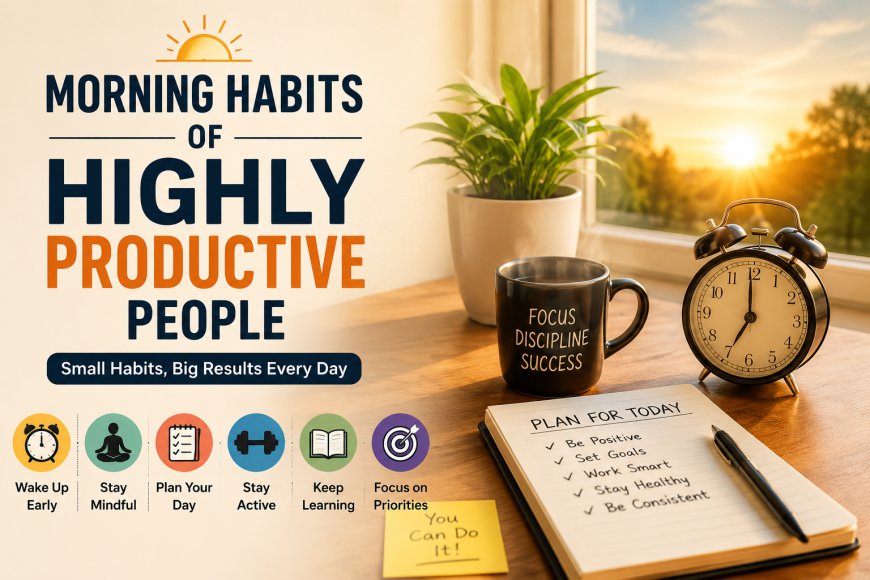
Why Mornings Matter More Than You Think
The first hour after you wake up quietly shapes everything that follows. Your energy, focus, and mood are still forming, which makes this window unusually easy to influence.
Highly productive people rarely leave this window to chance. They treat it as the foundation of the entire day, not a warm-up act before "real work" begins.
If your mornings currently feel rushed or chaotic, you're not lacking willpower. You're likely missing a repeatable structure — and that structure often starts with something as simple as a reliable online alarm clock.
The Science Behind a Strong Morning Routine
Behavioral research consistently points to one theme: decision fatigue drains willpower faster than almost anything else. Every small choice you make in the morning — what to wear, whether to check your phone, when to start working — uses up mental energy you'll need later.
Productive people reduce these decisions by automating them. A fixed wake-up time, a set sequence of actions, and a clear starting cue (like an alarm clock) remove the guesswork entirely.
This isn't about discipline in the traditional sense. It's about designing a system where the right behavior becomes the default one.
Habit 1: Waking Up at a Consistent Time
Irregular wake-up times confuse your circadian rhythm, which leads to grogginess even after a full night's sleep. Highly productive people wake up at roughly the same time daily, weekends included.
A free online alarm clock makes this easier than a physical clock because it's accessible from any browser, requires no setup, and can be adjusted instantly if your schedule shifts.
Practical tip: Set your alarm 10 minutes earlier each week until you reach your target wake-up time, rather than jumping straight there.
Habit 2: Avoiding the Snooze Button
Snoozing fragments sleep and leaves you groggier than skipping it entirely. This grogginess, known as sleep inertia, can linger for up to 30 minutes.
Productive people treat the first alarm as final. Some place their digital alarm clock across the room; others use a browser alarm clock on a second screen so it isn't tied to a device they can silence half-asleep.
Habit 3: Planning the Day Before It Starts
Deciding what to do while trying to do it is one of the biggest productivity killers. Successful people plan their top three priorities the night before or immediately after waking.
This habit pairs naturally with time management tools like a countdown timer for planning sessions — five focused minutes is usually enough.
Habit 4: Using a Digital Alarm Clock Instead of a Phone
Reaching for your phone to turn off an alarm almost guarantees you'll check notifications, email, or social media before you're even out of bed. This single habit can derail an otherwise strong morning routine.
Switching to a dedicated online alarm clock in your browser removes this temptation. There's no inbox, no feed, and no app icons — just the tool you opened it for.
Why This Small Switch Makes a Big Difference
- No notification pop-ups competing for attention
- No accidental app-switching after silencing the alarm
- Full-screen clock display keeps focus on the time, not the device
- Works on any device with a browser — no downloads required
Habit 5: Starting With a Quick Win
Momentum matters. Productive people often begin with a small, low-effort task — making the bed, a short walk, or a quick stretch — before tackling anything demanding.
This creates an early sense of accomplishment that carries into bigger tasks later in the day.
Habit 6: Protecting the First Hour From Distractions
The first hour is when willpower and focus are at their peak. Productive people guard it fiercely, often using a Pomodoro timer or focus timer to structure uninterrupted work blocks.
A simple approach: 25 minutes of focused work, a 5-minute break, repeat. This technique, often paired with a study timer or work timer, trains your brain to associate mornings with deep, distraction-free effort.
Comparison: Productive Mornings vs. Reactive Mornings
| Factor | Productive Morning | Reactive Morning |
|---|---|---|
| Wake-up time | Consistent, planned | Random, based on last night |
| First action | Fixed routine or quick win | Checking phone notifications |
| Alarm method | Dedicated online alarm clock | Phone alarm with snooze |
| Planning | Done night before | Decided on the spot |
| Focus | Protected first hour | Immediately reactive |
| Energy by noon | Steady | Already depleted |
Expert Tips for Building a Morning Routine
- Keep your alarm clock online open in a browser tab overnight for instant access without app downloads.
- Pair your wake-up alarm with natural light exposure to reinforce your circadian rhythm.
- Use a countdown timer for transition tasks (getting dressed, breakfast) to avoid time slipping away unnoticed.
- Review your top three priorities using a digital clock or full screen clock display for a distraction-free visual cue.
- Avoid checking email until your first focused work block is complete.
Common Mistakes to Avoid
- Relying on your phone as your only alarm — it invites distraction the moment you silence it.
- Setting multiple snooze alarms — this fragments sleep rather than helping you wake up refreshed.
- Skipping the planning step — mornings without a plan default to reactive, low-value tasks.
- Overloading the first hour — cramming too much in early creates stress instead of momentum.
- Inconsistent wake-up times — even on weekends, large shifts disrupt your rhythm.
Best Practices for Long-Term Consistency
Sustainable routines beat intense ones that fizzle out after two weeks. Start with one habit — ideally, a consistent wake-up time using a reliable online alarm clock — and add others only once it feels automatic.
Track your mornings for two weeks. Small, visible progress is often the strongest motivator for sticking with a new routine.
FAQs
1. What's the best free online alarm clock for mornings? Any browser-based online alarm clock that lets you set precise times without requiring downloads or account creation works well for daily use.
2. How early should productive people wake up? There's no universal number — consistency matters more than the exact time. Choose a wake-up time you can maintain daily, including weekends.
3. Does using a digital alarm clock really improve focus?
Yes. Avoiding your phone as an alarm reduces early-morning distractions, which helps preserve focus for the first hour of the day.
4. What is the ideal length for a Pomodoro timer session?
The traditional format is 25 minutes of focused work followed by a 5-minute break, though some people extend sessions to 50 minutes for deep work.
5. Should I plan my day in the morning or the night before?
Night-before planning is generally more effective since it removes decision-making from your groggy early-morning brain.
6. How do I stop hitting snooze every morning?
Place your alarm out of arm's reach, or use a browser alarm clock on a nearby screen so you have to get up to silence it.
7. Can a countdown timer help with morning routines?
Yes. A countdown timer keeps transition tasks like getting ready on schedule, preventing time from slipping away unnoticed.
8. Is it better to check email first thing in the morning?
No. Productive people delay email until after their first focused work block to avoid reactive, low-value mornings.
9. What's the difference between a study timer and a work timer?
They function the same way — timed focus intervals — but are labeled differently based on context, whether for study sessions or professional tasks.
10. Do productive people wake up at the same time on weekends?
Most do, since irregular wake times disrupt circadian rhythm and can lead to grogginess even after adequate sleep.
Conclusion
Highly productive people don't rely on motivation alone — they rely on systems. A consistent wake-up time, a distraction-free alarm clock, and a protected first hour form the foundation of a morning that sets the tone for everything after it.
Start small. Swap your phone alarm for a dedicated online alarm clock, plan tomorrow's priorities tonight, and protect your first hour from notifications. These small shifts compound into real, lasting productivity gains.