NDIS Tutoring: Understanding Learning Supports for NDIS Participants | Advanced Education SA
 johnmarker
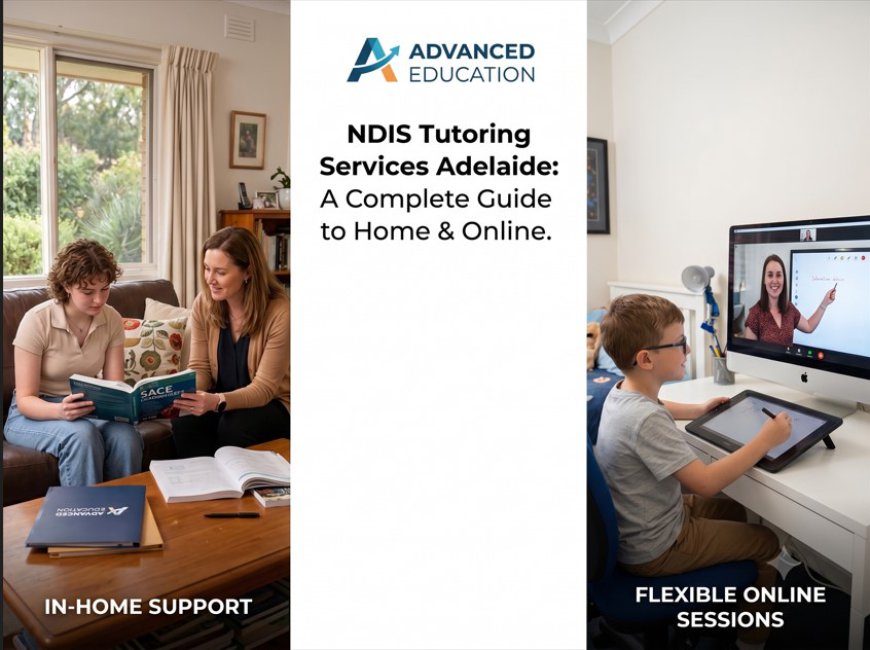
Education helps people build knowledge, confidence, and the skills needed to participate more independently in everyday life. Every learner approaches education differently, and some people benefit from personalised support that considers their individual strengths, challenges, and goals. At Advanced Education SA, we provide personalised educational support designed around each learner while helping families better understand how NDIS tutoring fits within the National Disability Insurance Scheme.
Understanding what the NDIS does and does not fund is important before arranging learning support. Many families assume the NDIS automatically pays for tutoring, but this is not usually the case. Knowing the difference between educational tutoring and disability-related capacity building can help participants make informed decisions about the support they seek.
What Is NDIS Tutoring?
The phrase NDIS tutoring is commonly used to describe learning support for NDIS participants. However, under current NDIS guidelines, standard educational tutoring is generally considered part of the education system rather than the responsibility of the NDIS.
The NDIS primarily funds supports that are considered reasonable and necessary and directly relate to the participant's disability and approved goals. This means the purpose of any learning-related support is usually to build functional capacity rather than simply improve school grades.
Every NDIS plan is different, so eligibility depends on the participant's individual circumstances and approved funding.
Educational Tutoring vs Disability Supports
One of the biggest misconceptions surrounding NDIS tutoring is that all tutoring can be claimed through an NDIS plan.
Generally, the NDIS does not fund:
- School tutoring
- Homework assistance
- Exam preparation
- ATAR coaching
- General academic tuition
These services are typically regarded as educational responsibilities rather than disability supports.
However, where a learning support directly addresses the functional impact of a participant's disability and aligns with their NDIS goals, it may be considered as part of a broader capacity-building approach. Funding decisions are always made individually by the NDIA.
How Personalised Learning Can Support Capacity Building
At Advanced Education SA, personalised learning focuses on helping participants develop skills that support greater independence.
Depending on individual goals, educational support may contribute to developing:
- Communication skills
- Functional literacy
- Functional numeracy
- Organisation
- Planning
- Executive functioning
- Problem-solving
- Digital confidence
- Independent learning strategies
- Everyday decision-making
Rather than focusing solely on academic achievement, the emphasis is on building practical abilities that participants can use throughout daily life.
Every Learner Has Different Goals
No two participants have exactly the same educational journey.
Some learners benefit from visual teaching methods, while others respond better to practical demonstrations, structured routines, or repeated practice.
Before learning begins, our educators take time to understand:
- Current abilities
- Individual strengths
- Learning preferences
- Areas requiring support
- Personal interests
- Communication style
- Capacity-building goals
- Long-term aspirations
This allows every learning plan to reflect the participant's unique circumstances.
Literacy Development
Literacy supports independence in almost every aspect of life.
Participants may work on:
- Reading confidence
- Reading comprehension
- Vocabulary development
- Grammar
- Spelling
- Functional writing
- Everyday reading skills
- Communication through written language
Developing literacy skills can increase confidence at home, within the community, and in future educational settings.
Numeracy Skills for Everyday Living
Mathematics extends well beyond the classroom.
Participants often use numeracy when:
- Managing money
- Reading timetables
- Measuring ingredients
- Shopping
- Following directions
- Organising appointments
Our personalised learning approach helps participants understand mathematical concepts through practical, everyday examples that encourage confidence and independence.
Developing Independent Learning Habits
Building independent learning skills can benefit participants throughout life.
Our educators encourage learners to develop:
- Planning skills
- Organisation
- Time management
- Study routines
- Goal setting
- Self-confidence
- Concentration
- Positive learning habits
These abilities help participants become more confident learners regardless of their educational pathway.
Communication Skills
Strong communication skills improve participation in education, employment, and community life.
Learning activities may focus on:
- Expressing ideas clearly
- Listening skills
- Vocabulary development
- Everyday conversations
- Written communication
- Social interaction
- Building confidence
Improved communication often creates opportunities for greater independence.
Digital Literacy
Technology has become an essential part of modern education and employment.
Participants may develop confidence using:
- Computers
- Educational software
- Online learning platforms
- Internet safety practices
- Digital organisation tools
- Basic productivity applications
Digital literacy can increase independence while supporting future educational and employment opportunities.
Flexible Learning That Fits Individual Needs
Every participant has different routines and responsibilities.
Flexible learning options may include:
- Individual sessions
- Online learning
- Home-based learning
- Community-based sessions
- Daytime appointments
- After-school availability
- Weekend learning
Providing flexible options allows participants to learn in environments where they feel comfortable and supported.
Working Together With Families
Meaningful progress often happens when everyone involved shares the same goals.
Where appropriate, we work alongside:
- Parents
- Carers
- Teachers
- Support Coordinators
- Allied health professionals
- Family members
Regular communication helps maintain consistency while supporting ongoing learning.
Why Families Choose Advanced Education SA
Advanced Education SA believes education should be personalised, respectful, and focused on long-term outcomes.
Families choose us because we offer:
- Individual learning plans
- Experienced educators
- Flexible lesson delivery
- Inclusive teaching approaches
- Capacity-building focus
- Practical skill development
- Participant-centred learning
- Ongoing progress reviews
- Supportive learning environments
- Collaborative communication
Every participant receives education designed around their own abilities and aspirations.
Questions to Ask Before Arranging NDIS Tutoring
Before organising learning support, consider asking:
- Does this support relate directly to my disability?
- Does it align with my NDIS goals?
- Is it considered reasonable and necessary?
- Have I discussed it with my Support Coordinator or Plan Manager?
- How will this support improve my independence?
These conversations can help ensure participants understand how learning supports fit within their individual plan.
Speak With Your NDIS Team
If you are exploring NDIS tutoring, it is important to seek guidance before making funding assumptions.
Your:
- Plan Manager
- Support Coordinator
- Local Area Coordinator (LAC)
- NDIA representative
can explain whether a proposed learning support aligns with your approved NDIS plan and funding.
Supporting Your Learning Journey
At Advanced Education SA, we believe every participant deserves personalised education that respects their goals, abilities, and aspirations. While the NDIS generally does not fund standard school tutoring, personalised learning that supports disability-related capacity building may be appropriate in some circumstances where it aligns with an individual's plan.
Our team is committed to creating engaging learning experiences that help participants strengthen literacy, numeracy, communication, digital skills, and independent learning strategies. By focusing on practical outcomes and participant-centred education, we help learners build confidence that extends well beyond the classroom.