Online MBA vs Traditional MBA: Which One is Right for You?
Choosing between an Online MBA and a Traditional MBA can impact your career growth, networking, and ROI. Explore features, costs, flexibility, and career outcomes to determine which MBA format suits your goals.
 itssuhanigarg
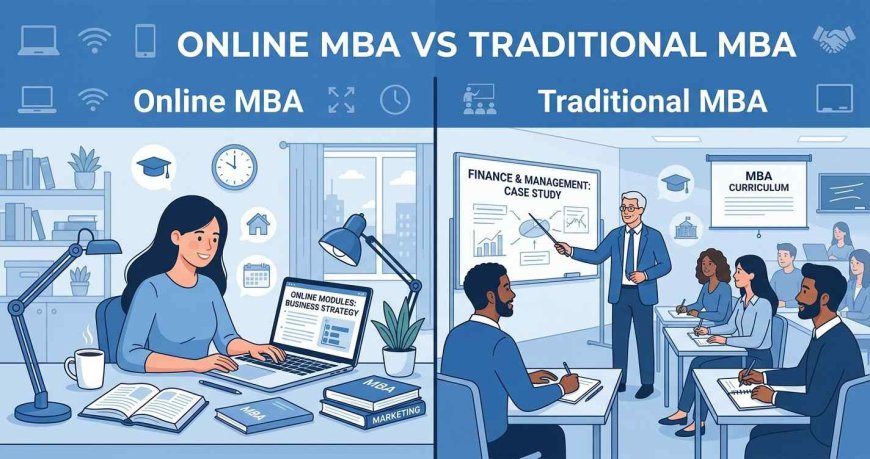
Choosing the right MBA program can shape your professional future. With multiple program formats available, it’s crucial to understand the major differences between an Online MBA and a Traditional MBA. These differences go beyond where you attend classes—they impact your learning style, career path, costs, networking opportunities, and return on investment (ROI).
This comprehensive guide will help you evaluate which format best aligns with your goals, professional stage, lifestyle, and learning preferences.
What is an Online MBA?
An Online MBA (Master of Business Administration) is a graduate‑level management degree delivered primarily through digital platforms. Students interact with course materials, participate in virtual lectures, and complete assignments through Learning Management Systems (LMS) or online classrooms, often without needing to attend a physical campus. Online MBAs have gained acceptance as quality professional credentials and are offered by many reputable universities globally.
Online MBA programs are designed especially for working professionals, busy adults, and career changers who aim to develop business leadership skills while continuing with jobs, family responsibilities, or entrepreneurship.
Features of Online MBA
Online MBA programs have several distinct features that set them apart:
1. Flexibility in Learning: You can access lectures, discussions, and academic content at your convenience. Students can rewind, pause, or rewatch recorded lectures, making it suitable for busy schedules.
2. Technology‑Driven Delivery: These programs leverage interactive digital platforms, webinars, group chats, and online discussion boards to create engaging learning experiences.
3. Global Accessibility: Students from different regions—whether urban or rural—can enroll in programs from international universities without relocating.
4. Cost Efficiency: Online programs generally cost significantly less than traditional campus MBAs due to lower tuition fees and the absence of relocation or commuting expenses.
5. Career Continuity: Many online MBA students continue working while studying, eliminating the opportunity cost associated with full‑time programs.
Who Should Opt for an Online MBA?
An Online MBA is often a strong choice for:
-
Working professionals aiming to balance education with employment.
-
Entrepreneurs or business owners who need flexibility.
-
Individuals aiming for skill enhancement, specialization, or promotions without career breaks.
-
Self‑motivated learners who can manage time independently.
This format is particularly valuable for mid‑career professionals with 2–10+ years of experience who are looking to advance or pivot within their industries.
What is a Traditional MBA?
A Traditional MBA is a full‑time, on‑campus postgraduate management degree that emphasizes face‑to‑face interaction, structured schedules, teamwork, and immersive campus life. In this format, students participate in lectures, case studies, group projects, internships, career fairs, and networking events in person.
Traditionally, this remains the most widely recognized MBA format for early career candidates and those seeking international job placements or significant corporate recruitment opportunities.
Features of Traditional MBA
Traditional MBA programs are defined by:
1. Structured Academic Schedule: Fixed classes, strict course timelines, and academic milestones.
2. On‑Campus Networking: Students build personal connections with peers, professors, alumni, and recruiters through campus events, clubs, and mentorship programs.
3. Campus Resources: Access to physical libraries, research labs, entrepreneurship hubs, and career services enhances the overall experience.
4. Experiential Learning: Traditional MBAs often include internships, live business projects, industry visits, and in‑person case discussions, which help students gain real‑world exposure.
5. Reputation and Brand Value: Degrees from established business schools frequently carry higher global recognition, especially among traditional employers.
Who Should Opt for a Traditional MBA?
Traditional MBAs are typically best for:
-
Fresh graduates seeking immersive full‑time education.
-
Students planning a career change or global placements.
-
Individuals who benefit from structured learning and networking.
-
Those who can commit full‑time to their studies without balancing external jobs.
Key Differences Between Online and Traditional MBA
Understanding the distinctions can help you make an informed decision. Here’s a deep dive into their core differences:
Learning Experience
Online MBAs emphasize digital interaction with recorded lectures, discussion boards, and virtual collaboration. Students often need strong self‑discipline to stay motivated. Traditional MBAs provide in‑person classes, group discussions, and physical presence in collaborative spaces, which many learners find engaging and immersive.
Flexibility
Online MBA programs are typically more flexible, allowing you to study around your schedule. This is ideal if you continue earning or have family commitments. Traditional MBAs usually follow a rigid timetable and require students to be on campus for classes and activities.
Cost
Financially, online MBAs are more affordable. Tuition fees are generally lower, and additional costs like commuting, accommodation, and living expenses are eliminated. In contrast, traditional programs often include significant extra costs that can total several lakhs depending on the institution and location.
Networking Opportunities
Traditional MBAs hold an advantage in personal networking through campus events and direct interaction with classmates, faculty, and alumni. Online programs provide virtual networking tools, but these may not fully replicate face‑to‑face relationship building.
Admissions and Competitiveness
Online MBA admissions tend to be more flexible, with rolling applications and a focus on professional experience. Traditional MBA programs often emphasize GMAT/GRE scores and competitive selection processes, particularly at top global business schools.
Career Outcomes and ROI
Both formats can lead to career growth, but outcomes differ by goal:
-
Traditional MBA careers: Often lead to strong placement support, internship opportunities, and accelerated paths into management, consulting, finance, or leadership roles.
-
Online MBA careers: Allow learners to apply what they learn immediately in their current jobs, which can accelerate promotions, skill upgrades, and salary increases without leaving their roles.
Return on Investment (ROI): Online MBAs often deliver faster ROI because you continue earning while studying. Traditional MBAs may yield higher long‑term earnings due to brand value and corporate placements, but require higher initial investment and potential lost income during study.
Decision‑Making Checklist
Before choosing your MBA program, ask yourself:
-
Career stage: Are you just starting or experienced?
-
Time availability: Can you commit full‑time or need flexibility?
-
Budget constraints: What’s your tuition and living cost tolerance?
-
Networking needs: How crucial is in‑person connection?
-
Learning preferences: Do you thrive with structured schedules or self‑paced study?
Your answers will guide your choice.
Conclusion
There’s no universally “best” MBA. An Online MBA is perfect for professionals seeking flexibility, work–study balance, and affordable skill enhancement. A Traditional MBA offers immersive experiences, structured learning, rich networking, and strong placement opportunities. Assess your goals, personal commitments, and career priorities to choose the format that best suits you.
Frequently Asked Questions
1. What is the difference between an Online MBA and a Traditional MBA?
Answer: A Traditional MBA is a full-time, on-campus program with in-person lectures, networking, and internships. An Online MBA is delivered virtually, offering flexibility to study from anywhere while continuing work.
2. Are Online MBAs recognized by employers?
Answer: Yes. Many top universities now offer accredited online MBAs, and employers increasingly value them, especially if the institution is reputable. Credibility depends on the university and program.
3. Which MBA is more expensive: Online or Traditional?
Answer: Traditional MBAs are usually more expensive due to tuition, relocation, and living costs. Online MBAs tend to be more cost-efficient while maintaining academic rigor.
4. Can I pursue an Online MBA while working full-time?
Answer: Absolutely. Online MBAs are designed for working professionals and offer flexible schedules, self-paced modules, and digital learning platforms.
5. Do Online MBAs provide networking opportunities?
Answer: Yes, through virtual events, webinars, discussion forums, and alumni groups. However, networking may be less personal than face-to-face interactions in traditional MBAs.
6. How long does it take to complete each program?
Answer: Both Traditional and Online MBAs typically take 2 years. Some programs offer accelerated or flexible timelines, allowing completion in 1–4 years depending on pace.
7. Which MBA is better for career advancement?
Answer: It depends. Traditional MBAs may provide stronger corporate placement opportunities and faster promotions due to immersive networking. Online MBAs are ideal for upskilling while staying employed.
8. Are Online MBAs less rigorous than Traditional MBAs?
Answer: No. Accredited online programs maintain the same curriculum and learning outcomes as traditional MBAs, including case studies, projects, and assessments.
9. Can I specialize in my area of interest in an Online MBA?
Answer: Yes. Many online MBAs offer specializations in finance, marketing, operations, IT, healthcare, and entrepreneurship, similar to traditional programs.
10. How do I choose between Online and Traditional MBA?
Answer: Consider your career stage, budget, time availability, learning style, and networking needs. Online MBAs suit professionals seeking flexibility, while Traditional MBAs benefit those valuing immersive, in-person learning experiences.