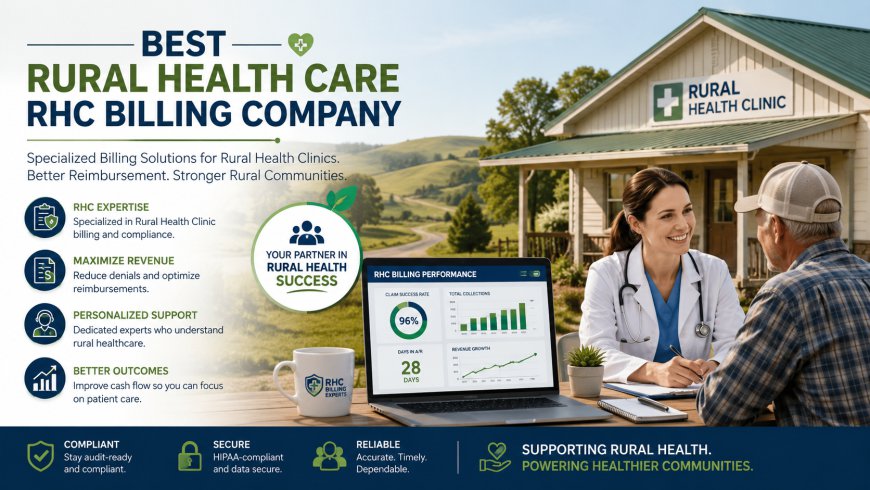
Rural Health Care RHC Billing Massachusetts: A Complete Guide for Providers

This guide breaks down the essentials of RHC billing in Massachusetts, including compliance requirements, common challenges, and practical strategies to improve revenue cycle performance. Whether you are a clinic administrator, billing manager, or healthcare provider, understanding these aspects can help you optimize reimbursements and reduce administrative burden.

Rural Health Care RHC Billing Massachusetts: A Complete Guide for Providers

Introduction

Rural Health Clinics (RHCs) play a critical role in ensuring access to primary care services in underserved and rural regions. In a state like Massachusetts, where healthcare delivery is highly regulated and patient demand is diverse, managing billing efficiently becomes just as important as delivering quality care.

However, rural health care RHC billing Massachusetts is not always straightforward. Clinics must navigate Medicare and Medicaid regulations, encounter frequent coding updates, and ensure strict compliance with reimbursement guidelines. Even small errors in billing can lead to delayed payments or revenue loss, which can significantly impact the sustainability of rural healthcare providers.

This guide breaks down the essentials of RHC billing in Massachusetts, including compliance requirements, common challenges, and practical strategies to improve revenue cycle performance. Whether you are a clinic administrator, billing manager, or healthcare provider, understanding these aspects can help you optimize reimbursements and reduce administrative burden.


Understanding Rural Health Care (RHC) Billing in Massachusetts

Rural Health Clinics are designed to improve healthcare access in geographically isolated or medically underserved areas. In Massachusetts, RHCs often serve patients who rely heavily on Medicare and Medicaid programs, making accurate billing essential for financial stability.

RHC billing differs from standard physician billing in several key ways. Instead of billing per individual service using the traditional fee-for-service model, RHCs are typically reimbursed under an All-Inclusive Rate (AIR) or an Alternative Payment Methodology (APM) depending on payer arrangements. This bundled payment structure covers most primary care services provided during a patient visit.

In Massachusetts, providers must also comply with both federal CMS guidelines and state-specific Medicaid rules. Each encounter must meet the definition of a qualifying visit, meaning it includes face-to-face medical, mental health, or qualified preventive services.

Another important aspect is documentation. Proper charting, accurate CPT/HCPCS coding, and correct use of ICD-10 diagnosis codes are essential for claim approval. Since RHCs often handle high patient volumes with limited administrative staff, maintaining accuracy in billing can be challenging without structured processes or automation tools.

Ultimately, effective RHC billing ensures that rural healthcare facilities receive fair reimbursement for the essential services they provide to their communities.


Key Compliance and Coding Requirements for RHC Billing Massachusetts

Compliance is the foundation of successful rural health care RHC billing Massachusetts operations. Without proper adherence to CMS guidelines, clinics risk claim denials, audits, or even penalties.

One of the primary requirements is ensuring that all services billed qualify as RHC encounters. This includes medically necessary face-to-face visits with physicians, nurse practitioners, physician assistants, or other qualified providers. Services such as lab work, injections, or procedures may be included only when they are part of a qualifying encounter.

Coding accuracy is equally important. RHC billing uses a combination of:

  • ICD-10 codes for diagnosis reporting
  • HCPCS codes for certain services and supplies
  • Revenue codes for encounter-based billing

Unlike traditional billing systems, RHCs do not always bill each service separately. Instead, claims must reflect a bundled encounter rate, which requires careful documentation alignment.

Another compliance factor in Massachusetts is payer coordination. RHCs must correctly differentiate between Medicare, Medicaid (MassHealth), and commercial insurance billing rules. Each payer may have unique submission requirements and reimbursement methodologies.

Timely filing is also critical. Claims must be submitted within payer-defined deadlines, and any delay can result in denied reimbursement. Additionally, RHCs are subject to periodic audits, making it essential to maintain complete and accurate medical records for every patient visit.

Staying compliant not only protects revenue but also strengthens the clinic’s credibility with federal and state healthcare programs.


Common Challenges in Rural Health Care RHC Billing and How to Overcome Them

Despite its importance, rural health care RHC billing Massachusetts comes with several operational challenges that can affect revenue flow and efficiency.

One of the most common issues is claim denials due to incorrect coding or missing documentation. Since RHC billing rules differ from standard medical billing, even experienced staff can make mistakes when applying encounter guidelines or selecting appropriate codes.

Another challenge is managing payer complexity. Massachusetts RHCs often deal with multiple payers, each with different billing formats and reimbursement structures. Keeping up with these variations can overwhelm in-house billing teams.

Staff shortages and lack of specialized billing expertise also create bottlenecks. Rural clinics typically operate with limited administrative resources, making it difficult to maintain consistent billing accuracy and follow-up processes.

Delayed reimbursements are another concern. When claims are rejected or require resubmission, cash flow is directly impacted. This can strain clinic operations, especially in smaller rural facilities that rely heavily on timely payments.

To overcome these challenges, many clinics are adopting structured revenue cycle management systems, improving staff training, and leveraging automated billing tools. Regular audits and denial analysis can also help identify recurring errors and prevent future issues.

Outsourcing billing functions to experienced professionals is another effective solution, especially for clinics that want to focus more on patient care rather than administrative complexities.


Best Practices to Improve RHC Billing Revenue Cycle in Massachusetts

Improving revenue cycle performance in rural health care RHC billing Massachusetts requires a combination of process optimization, staff training, and technology integration.

One of the most effective strategies is implementing standardized documentation practices. When providers consistently document patient encounters in detail, billing teams can accurately code services and reduce claim rejections.

Regular training sessions for billing and clinical staff also play a key role. Since RHC regulations frequently change, ongoing education ensures that everyone stays updated on CMS guidelines, coding updates, and payer policy changes.

Another best practice is using electronic health record (EHR) systems integrated with billing software. This reduces manual errors, improves claim accuracy, and speeds up submission timelines.

Denial management should also be a priority. Clinics should track denied claims, identify root causes, and implement corrective actions. Over time, this significantly improves first-pass claim acceptance rates.

Revenue cycle monitoring through key performance indicators (KPIs) such as days in accounts receivable (A/R), claim denial rates, and reimbursement timelines helps administrators make data-driven decisions.

Finally, outsourcing or partnering with specialized billing teams can streamline operations. Experts familiar with RHC billing regulations can help maximize reimbursements while ensuring compliance with both federal and Massachusetts-specific requirements.


FAQ: Rural Health Care RHC Billing Massachusetts

1. What is RHC billing in Massachusetts?
RHC billing refers to the reimbursement system used by Rural Health Clinics under Medicare and Medicaid guidelines, typically based on an all-inclusive encounter rate rather than individual service billing.

2. How is RHC billing different from standard medical billing?
Unlike fee-for-service billing, RHC billing uses bundled payments for qualifying patient encounters, covering multiple services under a single reimbursement rate.

3. What services qualify as RHC encounters?
Face-to-face visits with qualified healthcare providers, including primary care, mental health services, and preventive care, typically qualify as RHC encounters.

4. Why do RHC claims get denied frequently?
Common reasons include incorrect coding, incomplete documentation, missing encounter criteria, or payer-specific billing errors.

5. Can outsourcing help improve RHC billing efficiency?
Yes, outsourcing to experienced billing professionals can reduce errors, improve claim approvals, and enhance overall revenue cycle performance.


Conclusion

Efficient management of rural health care RHC billing Massachusetts is essential for the financial health and sustainability of rural clinics. From accurate coding and compliance adherence to effective denial management and process optimization, every step in the billing cycle directly impacts reimbursement outcomes.

By implementing structured workflows, investing in staff training, and leveraging technology, healthcare providers can significantly improve billing accuracy and reduce revenue leakage. For clinics looking to simplify operations and ensure consistent cash flow, partnering with professional Medical Billing Services can provide the expertise and support needed to navigate complex RHC billing requirements with confidence.