Solar Panel Recycling Market Size, Trends, and Growth Forecast 2026-2033
 coherentmarket
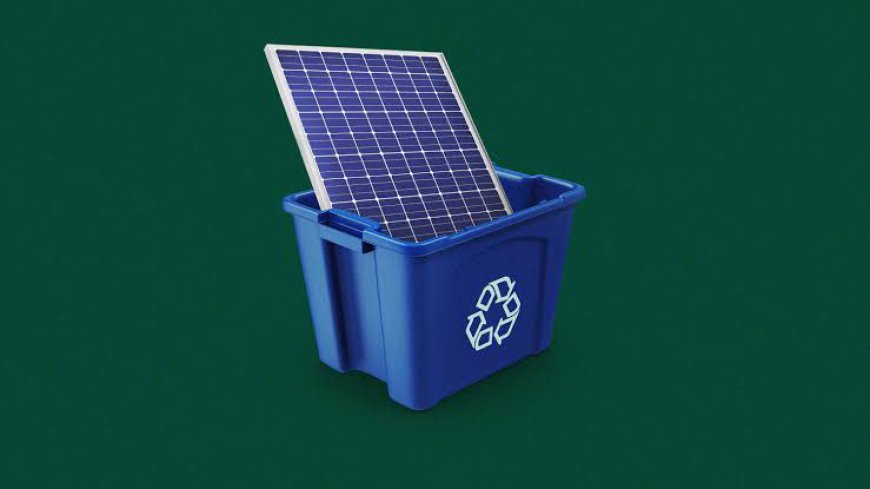
The solar panel recycling industry is rapidly evolving, driven by increasing solar panel deployment and the urgent need for sustainable end-of-life management solutions. As solar energy installations expand globally, efficient recycling of photovoltaic panels is becoming critical to manage electronic waste and recover valuable materials, shaping the future landscape of this market.
Market Size and Overview
The solar panel recycling market size is expected to reach US$ 1526.1 Mn by 2032, from US$ 428.4 Mn in 2025, exhibiting a compound annual growth rate (CAGR) of 19.9% during the forecast period.
This substantial Solar Panel Recycling Market Growth is fueled by stringent environmental regulations and rising awareness about resource recovery. The evolving market dynamics reflect increased investments in recycling technologies, supporting the circular economy while addressing the surge in solar panel decommissioning.
Market Segments
The Solar Panel Recycling Market is segmented primarily by technology, type, and end-user application. Under technology, key sub-segments include mechanical, thermal, and chemical recycling methods, with chemical recycling emerging as the fastest-growing due to its higher material recovery rates demonstrated in 2024 pilot projects in Europe. By type, mono-crystalline and poly-crystalline panel recycling dominate, with mono-crystalline recycling showing accelerated growth attributed to its rising installation share globally. The end-user segment comprises solar power plants, photovoltaic module manufacturers, and waste management firms, where solar power plants represent the dominant segment due to their bulk recycling volumes.
Market Drivers
A pivotal market driver is the introduction of stringent environmental policies across North America and Europe aimed at e-waste reduction, notably the EU’s Waste Electrical and Electronic Equipment (WEEE) Directive updates in 2024, which have driven the adoption of advanced solar panel recycling solutions. In 2025, several countries tightened regulations mandating recovery rates above 85% of materials from end-of-life panels, directly increasing market revenue and expanding market opportunities for recycling service providers.
Segment Analysis
Focusing on technology, chemical recycling stands out as the dominant and fastest-growing sub-segment, capturing significant market revenue in 2025. Innovations in chemical processes, such as solvent-based separation of silicon and rare metals, enabled better recovery yields, as evidenced by Silcontel’s pilot plant results. Meanwhile, mechanical recycling remains a steady, cost-effective segment favored by regional recyclers but lacks the same growth momentum. These trends highlight the shifting market dynamics and underline the relevance of continuous research and development in improving recycling efficiency.
Consumer Behaviour Insights
Market behavior in 2024-2025 shows an increasing preference for customized recycling service contracts among solar plant operators that integrate lifecycle panels management into power purchase agreements. Additionally, pricing sensitivity toward recycling services has intensified, prompting market players to optimize cost structures through automation and digital tracking technologies. Sustainability preferences have also strengthened, with 68% of surveyed stakeholders prioritizing recyclers demonstrating transparent environmental compliance, fostering trust and long-term partnerships in the solar panel recycling market.
Key Players
Prominent market companies in the solar panel recycling space include Reclaim PV Recycling, Silcontel, Rinovasol, Reiling Glass Recycling, and RecyclePV among others. In 2024-2025, key players launched innovative recycling facilities and expanded capacities; for example, Rinovasol increased its processing capabilities by 40% in mid-2025, resulting in a substantial uplift in market revenue. Additionally, Reclaim PV Recycling successfully entered new regional markets, enhancing its industry size contribution and leveraging government incentives for circular economy initiatives.
Key Winning Strategies Adopted by Key Players
Among impactful strategies, Reclaim PV Recycling’s 2025 investment in AI-driven quality assessment technologies significantly reduced processing times by 25%, enhancing operational efficiency and customer satisfaction. Silcontel’s strategic alliance with solar module manufacturers in 2024 allowed in-built recycling considerations during panel design, promoting ease of disassembly and higher recycling outputs, which proved a competitive differentiator. Lastly, Rinovasol’s pioneering adoption of blockchain for supply chain transparency in 2025 improved material traceability, establishing stronger buyer confidence and opening lucrative partnerships.
FAQs
1. Who are the dominant players in the Solar Panel Recycling Market?
Dominant players include Reclaim PV Recycling, Silcontel, Rinovasol, Reiling Glass Recycling, and RecyclePV, who have driven market growth through capacity expansions and technology innovation during 2024 and 2025.
2. What will be the size of the Solar Panel Recycling Market in the coming years?
The market size is expected to grow from USD 428.4 million in 2026 to approximately USD 1,526.1 million by 2033, reflecting a CAGR of 19% due to increasing regulatory initiatives and technological advancements.
3. Which end-user industry has the largest growth opportunity?
Solar power plants represent the largest growth opportunity, benefiting from scaling installations and integrating panel recycling into their sustainable operation models.
4. How will market development trends evolve over the next five years?
Market trends will favor chemical recycling innovations, regulatory-driven material recovery targets, and digital transformation in recycling logistics, which will collectively drive market revenue and business growth.
5. What is the nature of the competitive landscape and challenges in the Solar Panel Recycling Market?
The competitive landscape is marked by technological innovation and regional expansion; however, challenges include high processing costs and evolving regulatory compliance, requiring continuous adaptation from market companies.
6. What go-to-market strategies are commonly adopted in the Solar Panel Recycling Market?
Key strategies include forming partnerships with solar panel manufacturers, investing in AI and blockchain technologies for process optimization, and expanding geographically to capitalize on emerging recycling mandates.
➣ Get more insights on: Solar Panel Recycling Market
➣ Get this Report in Japanese Language: 太陽光パネルリサイクル市場
➣ Get this Report in Korean Language: 태양광패널재활용시장
➣ Read More Related Articles: Global Oxygen Scavenger: Ensuring Safety and Quality Across Industries
About Author:
Sakshi Suryawanshi is a Research Consultant with 6 years of extensive experience in market research and consulting. She is proficient in market estimation, competitive analysis, and patent analysis. Sakshi excels in identifying market trends and evaluating competitive landscapes to provide actionable insights that drive strategic decision-making. Her expertise helps businesses navigate complex market dynamics and achieve their objectives effectively.