How to Start and Grow a Successful AI Company in 2026
Learn how to start and grow a successful AI company in 2026 with proven strategies, tools, and scaling tips for long-term business success.
 KriraAI Private Limited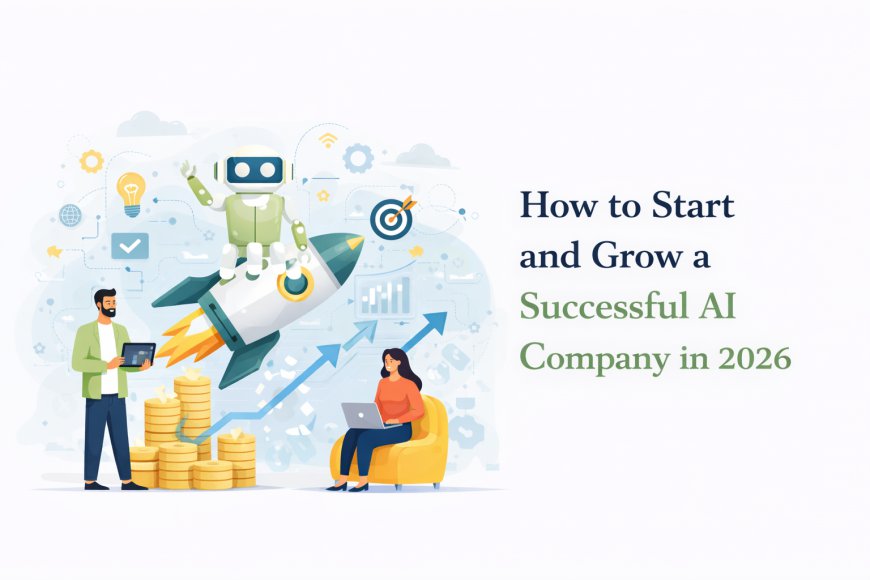
How to Start and Grow a Successful AI Company in 2026
Starting an AI Company in 2026 is one of the most powerful opportunities for entrepreneurs looking to build scalable, future-ready businesses. With rapid advancements in artificial intelligence, startups now have access to tools that were once limited to large enterprises. Whether you're launching your first AI Company or planning to scale an existing venture, understanding the right strategies, frameworks, and technologies is essential for long-term success in a competitive market.
Why 2026 is the Perfect Time to Launch an AI Company
Artificial Intelligence is no longer a trend—it’s the backbone of modern business operations. From automation to predictive analytics, AI is transforming industries at an unprecedented pace. Businesses are actively seeking AI solutions to improve efficiency, reduce costs, and enhance customer experiences.
In 2026, the demand for AI-powered tools, SaaS platforms, and automation services is at an all-time high. This creates a massive opportunity for startups to enter the market with innovative solutions. However, success doesn’t come from just building AI products—it comes from implementing a strong ai-first business scaling blueprint 2026.
Step 1: Identify a Profitable AI Niche
The first step in building a successful AI company is choosing the right niche. Instead of trying to solve everything, focus on a specific industry or problem.
Popular AI Niches in 2026:
-
AI for healthcare diagnostics
-
AI-powered marketing automation
-
Conversational AI (chatbots & voice agents)
-
AI for eCommerce personalization
-
AI-driven SaaS tools for businesses
Your goal is to find a niche where demand is high but competition is still manageable.
Step 2: Build a Strong AI Business Model
To succeed in today’s market, you need a sustainable and scalable business model. One of the most effective approaches is the dual discovery seo ai business model 2026.
What is Dual Discovery?
It combines:
-
User Discovery – Understanding your target audience deeply
-
Search Discovery – Optimizing your content and services for search engines
This model ensures that your AI product is both useful and discoverable.
Step 3: Develop a Unique Value Proposition
Your AI company must stand out. With thousands of startups entering the market, differentiation is key.
Ask yourself:
-
What problem does your AI solve better than others?
-
How is your solution faster, cheaper, or smarter?
-
What makes your technology unique?
A clear value proposition helps in branding, marketing, and customer acquisition.
Step 4: Implement the Agentic AI Startup Growth Framework 2026
One of the most powerful strategies for scaling is the agentic ai startup growth framework 2026.
What is Agentic AI?
Agentic AI refers to autonomous systems that can make decisions, execute tasks, and improve over time without constant human input.
How to Use This Framework:
-
Automate customer onboarding
-
Build AI agents for sales and support
-
Use AI workflows for operations
-
Create self-learning systems
This reduces operational costs and increases scalability dramatically.
Step 5: Focus on Product Development & MVP Launch
Instead of building a perfect product, launch a Minimum Viable Product (MVP) quickly.
MVP Strategy:
-
Start with core features
-
Gather user feedback
-
Improve continuously
Speed is critical in AI startups. The faster you launch, the faster you learn.
Step 6: Use Generative Engine Optimization for Growth
Traditional SEO is evolving. In 2026, AI companies must adopt generative engine optimization for ai companies.
What is Generative Engine Optimization?
It focuses on optimizing your content for AI-driven search engines like ChatGPT, Google SGE, and voice assistants.
Key Strategies:
-
Create AI-friendly content
-
Use structured data
-
Optimize for conversational queries
-
Focus on semantic relevance
This helps your brand appear in AI-generated answers and increases visibility.
Step 7: Build a Semantic AI Growth Strategy
A strong semantic ai growth strategy for startups is essential for long-term success.
What is Semantic Growth?
It focuses on meaning, context, and user intent rather than just keywords.
How to Implement:
-
Create topic clusters
-
Build content around user intent
-
Use natural language optimization
-
Focus on long-tail keywords
This approach improves search rankings and user engagement.
Step 8: Create a Powerful AI-Driven Authority Building System
To become a market leader, you must establish authority. The best way to do this is through an ai-driven authority building system for tech startups.
Authority Building Tactics:
-
Publish high-quality blogs
-
Create case studies
-
Share AI insights and research
-
Build backlinks through guest posting
-
Leverage social media and communities
Authority increases trust, which directly impacts conversions and revenue.
Step 9: Customer Acquisition & Scaling
Once your product is ready, focus on acquiring customers.
Effective Strategies:
-
Content marketing
-
Paid advertising
-
LinkedIn outreach
-
Email marketing
-
Influencer collaborations
Scaling requires a combination of marketing, automation, and data analysis.
Step 10: Build a Strong Team & Infrastructure
Your team plays a crucial role in your company’s success.
Key Roles:
-
AI Engineers
-
Data Scientists
-
Product Managers
-
Marketing Experts
-
Sales Professionals
Invest in the right talent and tools to ensure smooth operations.
Step 11: Monetization Strategies
Your revenue model should align with your product and market.
Common AI Monetization Models:
-
Subscription (SaaS)
-
Pay-per-use
-
Licensing
-
Enterprise solutions
Choose a model that ensures recurring revenue and scalability.
Step 12: Leverage Internal Linking for SEO Growth
To boost your website’s SEO, use internal linking effectively. For example, linking to your AI Company services page or showcasing your expertise as the Best AI Company helps improve rankings and user navigation.
Internal linking:
-
Improves crawlability
-
Increases time on site
-
Boosts keyword rankings
Step 13: Focus on Data & Analytics
Data is the backbone of any AI business.
Track Key Metrics:
-
Customer acquisition cost (CAC)
-
Lifetime value (LTV)
-
Conversion rates
-
User engagement
Use data to make informed decisions and optimize your strategies.
Step 14: Stay Updated with AI Trends
The AI industry evolves rapidly. To stay competitive:
-
Follow industry news
-
Experiment with new tools
-
Adapt to emerging technologies
Continuous learning is essential for long-term success.
Common Mistakes to Avoid
Many AI startups fail due to avoidable mistakes:
-
Building without market research
-
Ignoring user feedback
-
Overcomplicating products
-
Poor marketing strategies
-
Lack of scalability planning
Avoiding these mistakes can significantly increase your chances of success.
Future of AI Companies in 2026 and Beyond
The future of AI companies is incredibly promising. Businesses will continue to rely on AI for automation, decision-making, and innovation.
Key trends include:
-
Autonomous AI agents
-
Hyper-personalization
-
AI-powered decision systems
-
Industry-specific AI solutions
Companies that adapt quickly will dominate the market.
Final Thoughts
Starting and growing a successful AI company in 2026 requires more than just technical skills it demands a strategic approach, innovative thinking, and consistent execution. By implementing the ai-first business scaling blueprint 2026, leveraging the agentic ai startup growth framework 2026, and adopting modern strategies like generative engine optimization for ai companies, you can build a powerful and scalable business.
Focus on delivering value, building authority, and continuously optimizing your strategies. With the right approach, your AI startup can become a market leader and achieve long-term success in the rapidly evolving AI landscape.