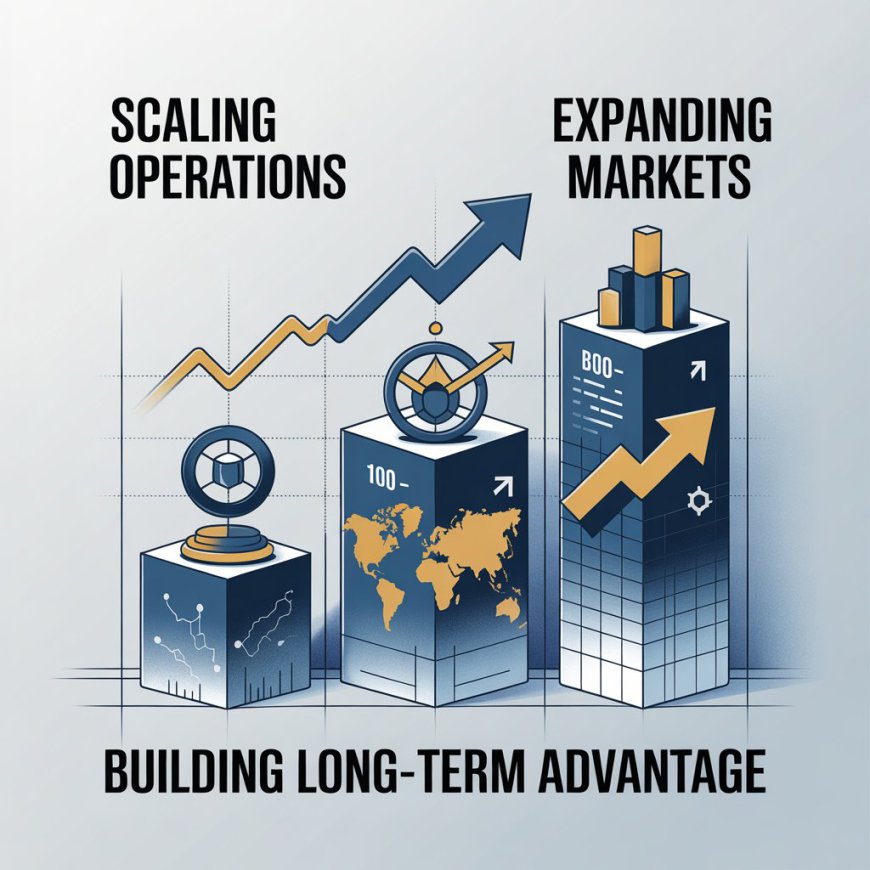
Strategic Growth Frameworks for Canadian Businesses in 2026: Scaling Operations, Expanding Markets, and Building Long-Term Advantage
 johnkay1998123
The Real Problem: Growth Without Structure Fails Fast
Many Canadian companies are growing—but not sustainably. Revenue increases, teams expand, and new markets are explored, yet profitability remains inconsistent and operations become harder to manage.
The issue is not effort or ambition. It is the absence of structured strategy.
In 2026, businesses are operating in an environment shaped by economic shifts, regional differences, talent shortages, and increased competition. Without a clear framework guiding decisions, growth turns into operational pressure rather than progress.
Why Strategy Has Become a Core Business Function
Strategy is no longer a yearly exercise. It is an ongoing process that influences every major decision—from hiring to expansion to capital investment.
Canadian companies now require:
-
Data-backed decision-making
-
Flexible planning models
-
Clear execution frameworks
-
Continuous performance tracking
This shift is why demand for business strategy services continues to grow across startups and established enterprises.
The Key Drivers of Business Growth in Canada
Market Positioning and Competitive Clarity
Companies that clearly define their position in the market outperform those that try to compete broadly. Understanding customer segments, pricing strategy, and differentiation is critical.
Operational Efficiency
Growth without efficiency leads to increased costs. Streamlined processes improve margins and scalability.
Financial Discipline
Strong financial planning ensures sustainable expansion and reduces risk during uncertain market conditions.
Talent Strategy
Hiring the right people and retaining them has become a competitive advantage, especially in cities like Toronto, Vancouver, and Calgary.
Where Most Companies Get Strategy Wrong
Over-Reliance on Assumptions
Many strategies are built on outdated data or optimistic projections rather than real market conditions.
Lack of Execution Planning
Even strong strategies fail without clear implementation steps and accountability.
Ignoring Regional Differences
Canada’s provinces operate differently. A strategy that works in Ontario may fail in Quebec or Alberta.
Poor Resource Allocation
Investing in the wrong areas at the wrong time slows growth and increases operational risk.
Real-World Example: Scaling a Mid-Market Company
A mid-sized logistics company in Ontario aimed to expand nationally. Their initial plan focused on rapid expansion without addressing internal inefficiencies.
After restructuring their strategy:
-
Operations were optimized before expansion
-
Costs were reduced significantly
-
Expansion was phased based on readiness
Within two years, the company achieved stable growth across multiple provinces.
The Role of Structured Consulting in Growth
Professional consulting provides an external perspective that internal teams often lack. It helps businesses align strategy with execution.
Saz Square Business Consultant works with Canadian companies to build practical, results-driven strategies tailored to real market conditions.
What Makes an Effective Strategy Framework
Capability-Based Planning
Strategies should be built around what a company can execute effectively, not just what it aims to achieve.
Phased Expansion Approach
Growth should follow a structured sequence rather than aggressive, unplanned scaling.
Scenario Planning
Preparing for multiple outcomes allows businesses to adapt quickly to market changes.
Measurable Outcomes
Clear metrics ensure that progress can be tracked and adjusted when necessary.
Market Expansion in Canada: A Strategic Challenge
Expanding across Canada requires more than scaling operations.
Each province presents unique challenges:
-
Regulatory differences
-
Talent availability
-
Customer behavior
-
Cost structures
Successful expansion strategies treat each region as a separate market entry.
The Importance of Execution Discipline
Strategy without execution is ineffective.
Businesses must focus on:
-
Clear leadership alignment
-
Defined roles and responsibilities
-
Performance tracking systems
-
Regular strategic reviews
Execution discipline ensures that plans translate into results.
Trends Shaping Strategy Development in 2026
Data-Driven Decision Making
Companies rely more on analytics to guide strategy and measure outcomes.
Agile Planning Models
Strategies are updated more frequently to adapt to changing conditions.
Digital Integration
Technology plays a central role in operations, marketing, and customer engagement.
Cross-Functional Alignment
Successful companies align strategy across departments rather than operating in silos.
Cost vs Value of Strategic Investment
Many businesses hesitate to invest in structured strategy due to cost concerns.
However, the value includes:
-
Improved efficiency
-
Better resource utilization
-
Reduced risk
-
Stronger market positioning
Poor strategy often leads to higher long-term costs than professional guidance.
Common Mistakes Businesses Should Avoid
-
Expanding without operational readiness
-
Ignoring financial planning
-
Delaying strategic decisions
-
Relying solely on internal perspectives
Avoiding these mistakes improves long-term performance.
Final Thoughts
In Canada’s evolving business landscape, growth requires more than ambition. It requires structure, clarity, and execution.
Companies that invest in well-defined strategies are better positioned to scale, compete, and adapt to change.
Saz Square Business Consultant supports this process by helping organizations build strategies that are practical, measurable, and aligned with real-world conditions.
FAQ
What are business strategy services?
They involve analyzing business performance, identifying opportunities, and developing structured plans to achieve growth and efficiency.
When should a company invest in strategy development?
When facing growth challenges, entering new markets, or improving operations, structured strategy becomes essential.
How does strategy improve business performance?
It provides clear direction, improves decision-making, and ensures resources are used effectively.