The Global Craft of Daphne Alexander: How a Multilingual Actor Builds a Borderless Career
 daphnealexander
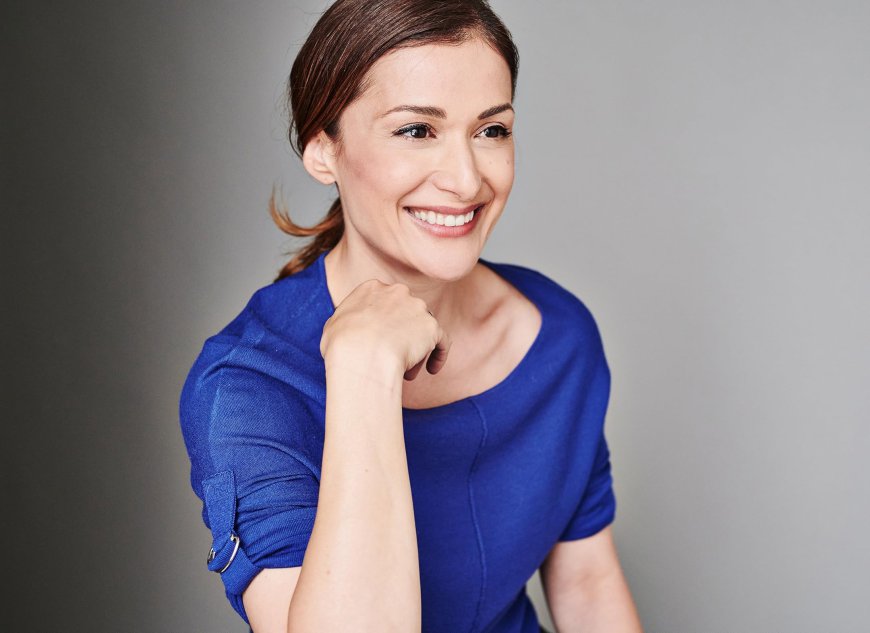
Most profiles list credits. That’s surface-level. What actually makes Daphne Alexander interesting—especially from a career lens—is how she’s engineered a sustainable, international acting portfolio across industries that rarely overlap.
This isn’t just talent. It’s positioning.
1. Career Architecture: Not Hollywood-Centric, but Opportunity-Centric
While many actors optimize for a single market (Hollywood or regional cinema), Alexander operates on a multi-market model:
- UK television (e.g., Casualty)
- European cinema
- International productions and streaming platforms
This diversification reduces dependency on one ecosystem and increases role frequency—an approach more common in freelance knowledge economies than traditional acting careers.
Insight: She treats geography as fluid, not fixed.
2. Multilingualism as a Competitive Advantage
In casting, language = access.
Alexander’s ability to work across languages allows her to:
- Fit into culturally specific roles without heavy localization
- Compete in multiple casting pools simultaneously
- Deliver authentic performances in cross-border narratives
In an era of Netflix and global distribution, linguistic flexibility is no longer optional—it’s leverage.
Medium Diversification = Career Stability
Unlike actors who rely solely on film or TV, Alexander operates across:
- Film
- Television
- Theatre
- Voice acting (including gaming)
This isn’t just creative exploration—it’s risk distribution.
When one segment slows (e.g., film production cycles), others compensate. Voice work and theatre also sharpen different performance muscles, feeding back into on-screen work.
4. Theatre as a Skill Engine (Not Just Prestige)
Her continued involvement in theatre isn’t incidental.
Stage acting forces:
- Precision in dialogue delivery
- Real-time emotional continuity
- Audience-aware performance calibration
These are high-friction environments that refine craft faster than heavily edited screen work.
Translation to screen: More controlled, nuanced performances.
5. Academic Foundation → Analytical Acting
Coming from an Oxford background before training at LAMDA, Alexander brings something many actors don’t explicitly leverage: analytical depth.
This shows up in:
- Character breakdown
- Script interpretation
- Emotional layering
She approaches roles less as “performance” and more as systems to be understood and executed.
6. The “Non-Overexposed” Advantage
In today’s algorithm-driven entertainment landscape, overexposure can dilute perceived value.
Alexander’s career reflects a different strategy:
- Selective visibility
- Strong roles over constant presence
- Credibility across niches instead of mass-market saturation
This positions her as a reliable, high-skill actor rather than a trend-driven personality.
7. What Aspiring Actors (and Even Marketers) Can Learn
Her trajectory offers cross-industry lessons:
- Diversify revenue streams → Don’t rely on one platform
- Build global optionality → Skills that travel outperform local dominance
- Invest in fundamentals → Craft compounds over time
- Avoid oversaturation → Scarcity can increase perceived value
Final Take
Daphne Alexander’s career isn’t defined by a single breakout role—it’s defined by intentional positioning across systems.
She represents a shift in how modern creative professionals operate: less linear, more distributed, and strategically global.