The Power of a Paraphrase Tool, Summarizer, and Punctuation Checker in Academic Writing
Creating high-quality content requires clarity, accuracy, and proper structure. A paraphrase tool helps rewrite text while preserving its meaning, a summarizer condenses lengthy information into concise points, and a punctuation checker ensures error-free writing. Together, these tools improve readability, save time, and enhance productivity for students, bloggers, marketers, and professional writers. Learn how combining a paraphrase tool, summarizer, and punctuation checker can streamline your writing process and help you produce polished content with confidence.
 rephrase
The Power of a Paraphrase Tool, Summarizer, and Punctuation Checker in Academic Writing
Academic writing is one of the most demanding forms of communication. Students, researchers, professors, and scholars are expected to present ideas clearly, support arguments with evidence, and follow strict writing standards. Whether writing a research paper, thesis, dissertation, literature review, or academic report, producing high-quality content requires significant effort.
One of the biggest challenges in academic writing is managing large amounts of information. Writers must read multiple sources, analyze findings, organize data, and transform complex information into a clear and structured document. This process can take many hours or even weeks depending on the scope of the project.
Modern writing tools have become valuable resources for students and researchers who want to improve efficiency without sacrificing quality. Among the most useful are the paraphrase tool, summarizer, and punctuation checker. These tools support different stages of the writing process and help writers create stronger academic content.
A summarizer is especially important because academic writing begins with research. Students often spend more time reading and analyzing information than actually writing. By helping writers process information faster, a summarizer can significantly improve productivity and organization.
Understanding how these tools contribute to academic writing can help students and researchers produce clearer, more professional, and better-structured work.
Why Academic Writing Is More Challenging Than Other Types of Writing
Academic writing requires a level of precision that is not always necessary in everyday communication.
Writers must:
-
Conduct extensive research
-
Evaluate sources critically
-
Organize information logically
-
Maintain an academic tone
-
Support claims with evidence
-
Avoid plagiarism
-
Follow formatting requirements
Each of these responsibilities adds complexity to the writing process.
Unlike casual writing, academic content must be both informative and credible. Every statement should contribute to the overall argument or objective of the paper.
Because of these expectations, students often spend a significant amount of time researching, revising, and proofreading their work.
The Growing Importance of Research Efficiency
Research forms the foundation of academic writing.
Before creating a paper, students may need to review:
-
Journal articles
-
Academic books
-
Research studies
-
Government publications
-
Conference papers
-
Industry reports
The amount of information available today is enormous.
While access to information is beneficial, it also creates a challenge. Students often struggle to identify the most relevant information among hundreds of pages of content.
This is where a summarizer becomes highly valuable.
What Is a Summarizer?
A summarizer is a tool that condenses lengthy content into a shorter version while preserving the most important information.
Instead of reading every detail repeatedly, writers can quickly identify the key points of a document.
A summarizer does not replace research. Rather, it helps researchers process information more efficiently by highlighting essential concepts and findings.
For students working on multiple assignments, this can save considerable time.
How a Summarizer Improves Academic Research
Research often represents the most time-consuming stage of academic writing.
A summarizer helps streamline this process by making information easier to understand and organize.
Some of the primary benefits include:
-
Faster review of academic sources
-
Improved understanding of key concepts
-
Better information management
-
Reduced reading time
-
More efficient note-taking
By quickly identifying the central ideas within a source, students can determine whether it is relevant to their research objectives.
This prevents wasted time on materials that may not contribute meaningful value to the project.
Using a Summarizer for Literature Reviews
Literature reviews require students to evaluate and compare multiple sources.
This task can become overwhelming when dealing with dozens of journal articles and research papers.
A summarizer helps writers identify:
-
Research objectives
-
Major findings
-
Methodologies
-
Conclusions
-
Supporting evidence
These insights make it easier to compare sources and organize information effectively.
As a result, students can create stronger and more comprehensive literature reviews.
The Role of a Summarizer in Note-Taking
Many students spend hours creating research notes.
While note-taking is important, it can also become inefficient if writers attempt to record every detail.
A summarizer helps students focus on the most relevant information.
Instead of capturing entire paragraphs, writers can identify:
-
Core arguments
-
Significant statistics
-
Important findings
-
Relevant conclusions
This creates concise notes that are easier to review during the writing process.
Why Academic Writers Need a Paraphrase Tool
After gathering information, students must explain ideas in their own words.
This is a fundamental requirement of academic writing.
Simply copying information from sources can lead to plagiarism concerns and weaken the overall quality of a paper.
A paraphrase tool helps writers express ideas differently while maintaining the original meaning.
It supports clearer communication and encourages originality.
How Paraphrasing Improves Academic Writing
Effective paraphrasing offers several benefits.
It helps writers:
-
Avoid repetitive language
-
Improve readability
-
Demonstrate understanding
-
Simplify complex concepts
-
Strengthen sentence variety
Academic writing often contains technical language and complicated explanations.
Paraphrasing helps make these ideas more accessible while preserving accuracy.
Demonstrating Understanding Through Paraphrasing
Professors want students to engage with information rather than simply repeat it.
Paraphrasing requires students to process ideas and explain them using their own language.
This demonstrates comprehension and analytical thinking.
Strong paraphrasing also improves the flow of a paper because ideas can be integrated more naturally into the writer’s argument.
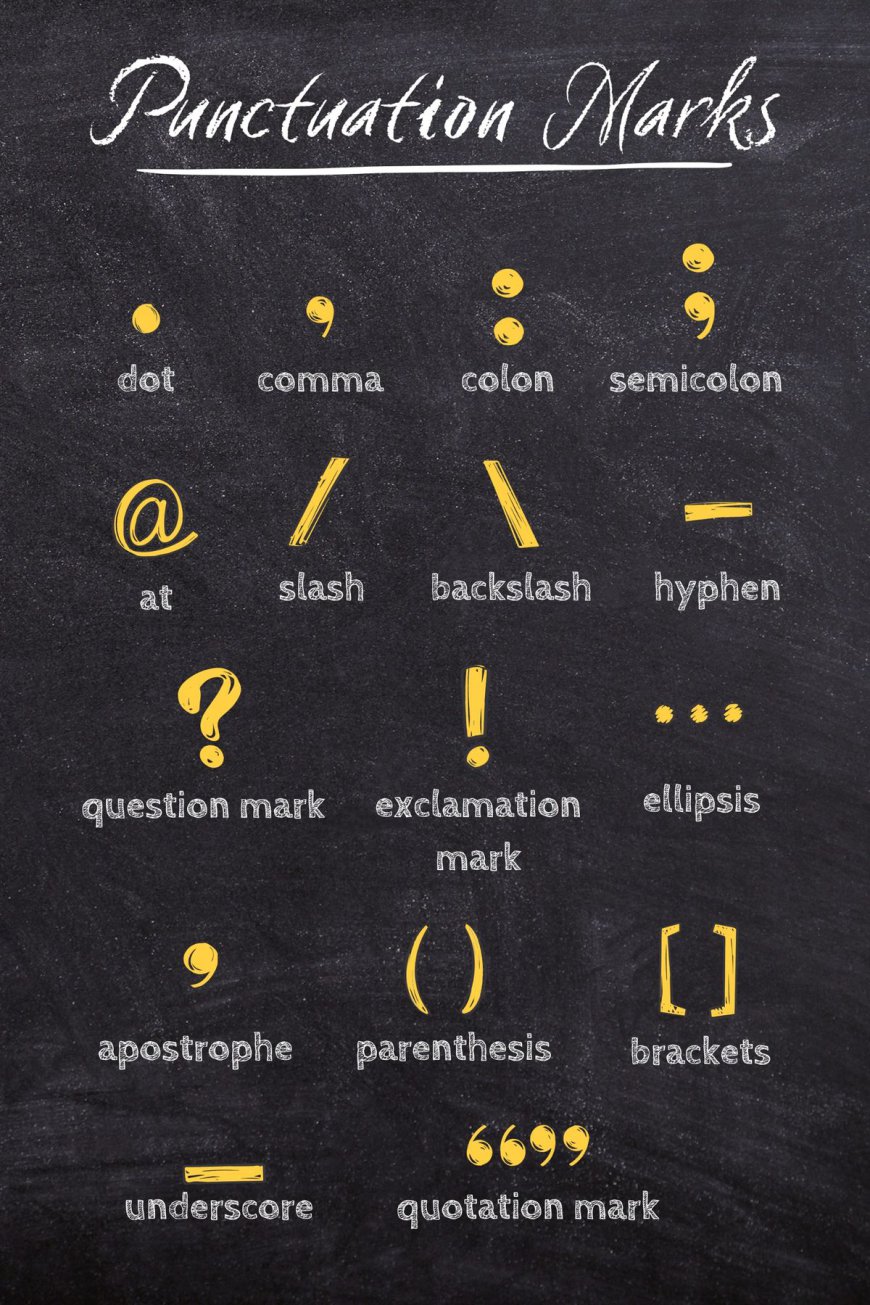
The Importance of Punctuation in Academic Writing
While research and paraphrasing receive significant attention, punctuation remains a critical component of academic communication.
Punctuation helps readers understand sentence structure and meaning.
Even small punctuation errors can affect how information is interpreted.
Proper punctuation contributes to:
-
Clarity
-
Readability
-
Organization
-
Professionalism
-
Accuracy
Well-structured punctuation makes academic content easier to follow and understand.
Common Punctuation Mistakes in Academic Papers
Many students make punctuation errors that reduce the quality of their work.
Some of the most common include:
Missing Commas
Missing commas can make sentences difficult to understand.
Run-On Sentences
Without proper punctuation, multiple ideas may become merged into one sentence.
Incorrect Apostrophe Usage
Apostrophe mistakes can damage credibility and professionalism.
Misused Semicolons
Many writers use semicolons incorrectly, resulting in awkward sentence structures.
Inconsistent Punctuation
Switching between different punctuation styles can create confusion for readers.
Correcting these mistakes significantly improves readability.
How a Punctuation Checker Supports Academic Success
A punctuation checker automatically identifies punctuation-related issues.
Benefits include:
-
Faster proofreading
-
Better consistency
-
Improved sentence clarity
-
Reduced editing time
-
Enhanced professionalism
Students often overlook small punctuation errors during manual reviews.
A punctuation checker helps catch mistakes that might otherwise remain unnoticed.
How These Tools Work Together
The real strength of these tools emerges when they are used together.
Each tool addresses a different stage of academic writing.
A summarizer supports research.
A paraphrase tool improves expression.
A punctuation checker enhances accuracy.
Together, they create a more efficient workflow.
A Practical Academic Writing Process
Students can use the following approach to improve productivity:
-
Collect research materials.
-
Use a summarizer to identify important information.
-
Create research notes.
-
Develop an outline.
-
Write the first draft.
-
Use paraphrasing techniques to improve clarity.
-
Review punctuation and formatting.
-
Complete final proofreading.
This structured process reduces confusion and improves overall writing quality.
Key Benefits for Students and Researchers
Advantages of Using These Tools
-
Faster research analysis
-
Improved information retention
-
Better organization
-
Reduced repetition
-
Stronger readability
-
More effective note-taking
-
Enhanced punctuation accuracy
-
Reduced editing time
-
Improved academic performance
-
Greater writing confidence
These benefits help students manage complex assignments more effectively.
Improving Academic Productivity
One of the greatest challenges facing students is time management.
Assignments often require balancing research, writing, editing, and revision.
A summarizer reduces the time spent reviewing sources.
Paraphrasing improves content quality without extensive rewriting.
Punctuation correction speeds up proofreading.
Together, these tools allow students to focus more on learning and critical thinking.
The Future of Academic Writing Tools
Technology continues to reshape the academic writing process.
Future developments may include:
-
More accurate summarizer capabilities
-
Better contextual understanding
-
Advanced paraphrasing suggestions
-
Smarter punctuation analysis
-
Improved readability recommendations
These innovations will continue supporting students and researchers as academic demands evolve.
However, critical thinking, analysis, and original interpretation will remain essential human skills.
Technology can improve efficiency, but it cannot replace genuine academic understanding.
Conclusion
Academic writing requires careful research, clear communication, and strong attention to detail. Students and researchers must process large amounts of information while maintaining accuracy and professionalism throughout their work.
A summarizer helps simplify research by identifying the most important information from lengthy sources. A paraphrase tool improves clarity, originality, and sentence variety. A punctuation checker strengthens readability and ensures consistent writing standards.
Together, these tools create a more efficient academic writing process. By supporting research, drafting, and editing, they help students save time, improve productivity, and produce stronger academic content. As educational expectations continue to increase, mastering these tools can provide a significant advantage for anyone seeking to improve academic writing quality.
FAQs
1. What is a summarizer in academic writing?
A summarizer condenses lengthy academic content into shorter versions that highlight the most important information.
2. How does a summarizer help students?
A summarizer helps students review research faster, identify key findings, and organize information more efficiently.
3. Why is paraphrasing important in academic papers?
Paraphrasing helps writers explain ideas in their own words, demonstrate understanding, and reduce repetitive language.
4. What does a punctuation checker do?
A punctuation checker identifies punctuation errors and helps improve clarity, consistency, and readability.
5. Can these tools replace academic skills?
No. These tools improve efficiency and support the writing process, but critical thinking, analysis, and subject knowledge remain essential.