The Real Cost of Additive Manufacturing: What Businesses Need to Know
Discover the real cost of additive manufacturing, including materials, machine time, design, post-processing, and production factors. Learn how businesses can reduce costs, improve efficiency, and maximize the value of 3D printing with expert manufacturing solutions from Forge Labs.
 forgelabs
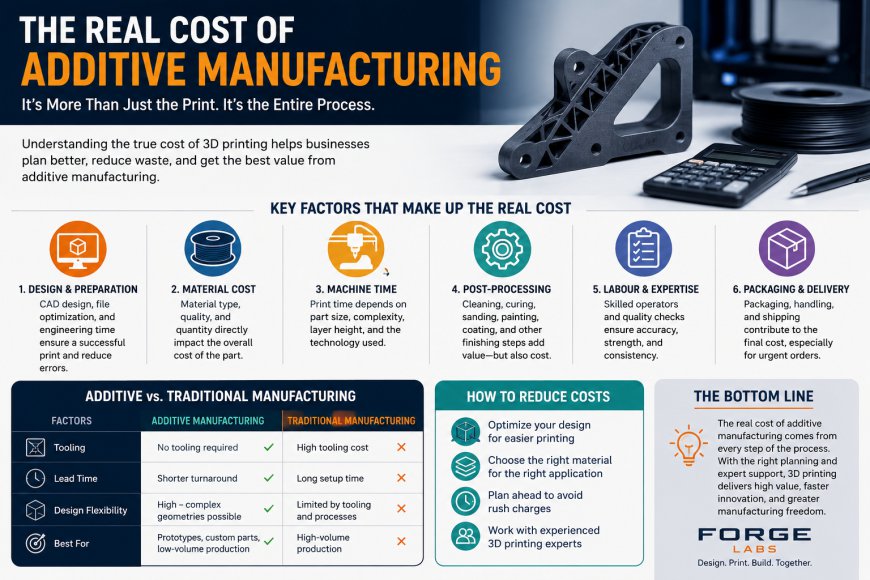
Additive manufacturing, commonly known as 3D printing, has transformed the way businesses develop products, create prototypes, and manufacture custom parts. While many companies are attracted by the promise of faster production and lower upfront costs, understanding the real cost of additive manufacturing is essential before investing in a project.
The true cost goes beyond the price of materials or machine time. Factors such as design preparation, material selection, post-processing, production volume, and labour all contribute to the overall expense. By understanding these elements, businesses can make better manufacturing decisions and maximise return on investment.
Looking Beyond Material Costs
One of the biggest misconceptions about additive manufacturing is that cost is determined only by the amount of material used.
In reality, professional 3D printing projects involve several cost components:
- Design and engineering work
- Material consumption
- Machine operating time
- Post-processing and finishing
- Quality inspection
- Assembly and packaging
- Delivery and logistics
Ignoring these factors can lead to inaccurate budgeting and unexpected expenses.
Design and Preparation Costs
Every successful additive manufacturing project begins with a well-prepared digital model.
Before printing starts, businesses may need:
- CAD design services
- File optimisation
- Reverse engineering
- Design validation
- Prototype testing
Investing in proper design preparation often reduces manufacturing errors and improves final product performance, saving money over time.
Material Selection and Its Impact on Cost
Materials play a significant role in additive manufacturing pricing.
Common options include:
- PLA and ABS plastics
- Engineering-grade nylon
- Resin materials
- Carbon-fibre composites
- Metal powders
While basic plastics are relatively affordable, advanced engineering materials and metals increase production costs due to their performance characteristics and specialised handling requirements.
The right material should balance performance, durability, and budget rather than focusing solely on the lowest price.
Machine Time Matters
Unlike traditional manufacturing, additive manufacturing often charges based on machine usage.
Several factors influence machine time:
- Part size
- Print resolution
- Design complexity
- Support structures
- Printing technology
Larger and more detailed parts require longer production times, increasing overall costs.
For many projects, machine time can represent a significant portion of the final price.
Post-Processing Costs Are Often Overlooked
Printing is only one stage of production.
Many parts require additional finishing to achieve the desired appearance and functionality.
Common post-processing services include:
- Sanding
- Painting
- Polishing
- Vapour smoothing
- Surface coating
- Assembly
These services improve product quality but add labour and production costs.
Businesses should account for finishing requirements during project planning.
Production Volume Changes the Economics
Additive manufacturing excels at low-volume production and custom manufacturing.
For:
- Prototypes
- Product testing
- Small production runs
- Custom parts
3D printing is often more cost-effective than traditional manufacturing.
However, as production volumes increase, processes such as injection moulding may become more economical because tooling costs are spread across larger quantities.
Understanding production requirements is essential when comparing manufacturing methods.
The Hidden Cost of Poor Design
A poorly designed part can significantly increase manufacturing expenses.
Design issues may lead to:
- Excessive support structures
- Longer print times
- Material waste
- Increased finishing work
- Higher failure rates
Optimising a design before production often reduces both cost and lead time.
Experienced providers such as Forge Labs help businesses improve manufacturability before printing begins, reducing unnecessary expenses and improving production efficiency.
Comparing Additive Manufacturing with Traditional Manufacturing
One of the biggest advantages of additive manufacturing is the elimination of tooling costs.
Traditional manufacturing often requires:
- Moulds
- Tooling
- Custom fixtures
- Setup charges
These upfront investments can be expensive, especially for prototypes or low-volume projects.
Additive manufacturing allows businesses to produce parts directly from digital files, making design changes easier and reducing financial risk during product development.
Long-Term Value Beyond Cost
The real value of additive manufacturing extends beyond direct production expenses.
Benefits include:
- Faster product development
- Reduced time to market
- Greater design freedom
- Improved customisation
- Lower inventory requirements
- Reduced material waste
These advantages often generate savings that outweigh initial manufacturing costs.
Businesses that focus only on printing price may overlook the broader value that additive manufacturing provides.
How to Reduce Additive Manufacturing Costs
Businesses can optimise costs by:
- Simplifying designs
- Choosing appropriate materials
- Reducing unnecessary post-processing
- Planning production schedules in advance
- Working with experienced manufacturing partners
Small design improvements often produce significant cost savings throughout production.
Final Thoughts
The real cost of additive manufacturing involves much more than material and machine time. Design preparation, material selection, post-processing, production volume, and engineering expertise all contribute to the final project cost.
When used correctly, additive manufacturing can provide significant value through faster development, greater flexibility, and reduced production risk. Companies like Forge Labs help businesses maximise these benefits by providing expert guidance, design optimisation, and reliable manufacturing solutions tailored to specific project requirements.
Understanding the complete cost picture allows businesses to make smarter decisions and unlock the full potential of additive manufacturing.