The Science of Video Game Localisation: From Code to Culture in Global Game Development
 johnmarker
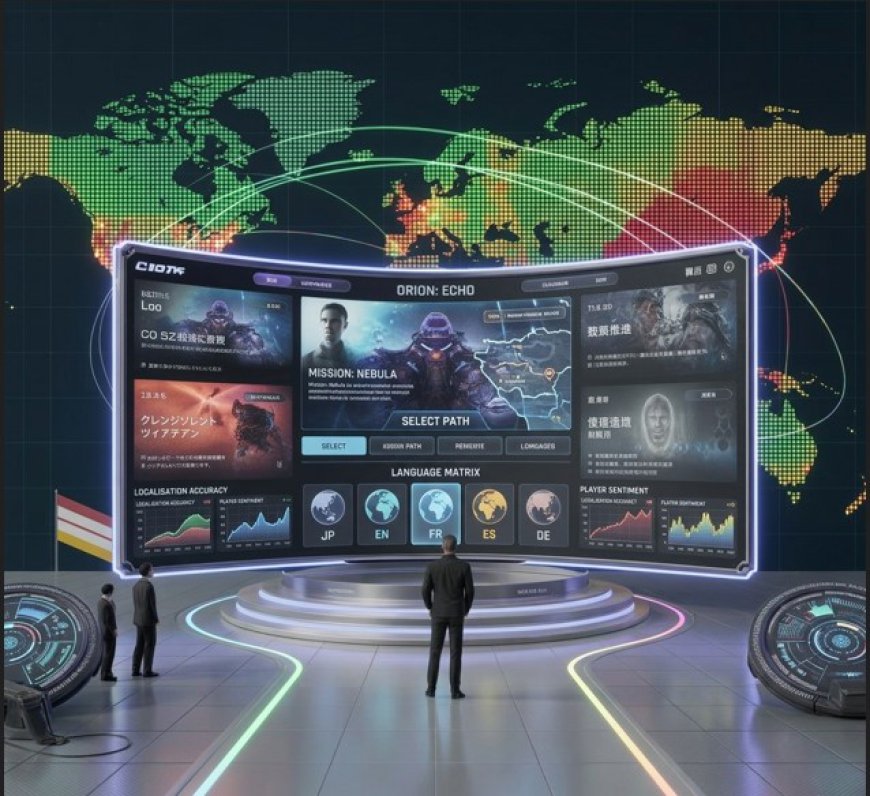
The global video game industry has reached a point where success is no longer determined solely by gameplay innovation or visual design. Instead, it is shaped by how effectively a game connects with players across languages, cultures, and regions. In this landscape, video game localisation has emerged as both a science and an art—one that bridges technical engineering with cultural storytelling.
By 2026, the gaming industry is projected to surpass $221 billion in global revenue, with video game localisation contributing up to 28% revenue uplift for titles that successfully expand beyond their original markets. At the same time, player expectations are increasingly sophisticated: 16.11% of Steam reviews mention localisation quality, and research shows that poor localisation—especially failures in LQA testing—can reduce player retention by 20–40%.
This shift reflects a deeper reality: players are no longer satisfied with translated content. They expect experiences that feel native. They expect immersion. And achieving that level of immersion requires a strategic, well-executed approach to video game localisation.
What Is Video Game Localisation?
Video game localisation is the comprehensive process of adapting a video game’s language, interface, narrative, and systems for different cultural and linguistic markets. It extends far beyond translation, incorporating transcreation, technical adaptation, and user experience design.
At the core of modern video game localisation lies the GILT process:
- Globalization: Designing games for international scalability
- Internationalization (i18n): Structuring code and UI to support multiple languages
- Localization: Adapting content for specific regions
- Translation: Converting text between languages
This framework ensures that video game localisation is integrated into development rather than added as a final step.
Why Video Game Localisation Defines Global Success
Expanding Market Access
Without video game localisation, even high-quality games remain restricted to limited audiences. Localisation enables developers to access global markets and maximize reach.
Enhancing Player Immersion
Players engage more deeply when a game feels culturally and linguistically familiar. Video game localisation ensures that gameplay, dialogue, and UI align with player expectations.
Driving Retention and Revenue
Localization directly impacts player retention. Poor localisation disrupts the experience, while high-quality localisation increases engagement and monetization.
Strengthening Cultural Relevance
Games are cultural products. Video game localisation ensures that narratives, humor, and symbols resonate across diverse audiences.
Translation vs Video Game Localisation
|
Aspect |
Translation |
Video Game Localisation |
|
Focus |
Language conversion |
Cultural + experiential adaptation |
|
Scope |
Text only |
Entire game ecosystem |
|
Output |
Literal translation |
Immersive experience |
|
Goal |
Understanding |
Engagement and authenticity |
Translation ensures clarity. Video game localisation ensures connection.
Core Components of Video Game Localisation
1. Narrative and Dialogue Adaptation
Storytelling is central to many games. Video game localisation uses transcreation to adapt dialogue while preserving tone, humor, and emotional depth.
2. UI and UX Localisation
Technical precision is critical in video game localisation:
- Flexible UI design supports text expansion
- Unicode support enables global language compatibility
- Layout adjustments ensure usability across regions
3. Voice-Over and Audio Localisation
Voice acting must align with cultural expectations and emotional tone. Lip-sync accuracy plays a key role in immersion.
4. Cultural Adaptation
Video game localisation ensures that:
- Humor translates effectively
- Cultural references are relevant
- Sensitive content is handled appropriately
5. Technical Localisation
Includes adapting systems such as:
- Currency formats
- Date formats
- Measurement units
- Legal compliance
The Video Game Localisation Workflow
Step 1: Content Analysis
Understanding the narrative, gameplay mechanics, and target audience.
Step 2: Localization Kit Development
A localization kit provides essential context:
- Screenshots
- Character profiles
- UI constraints
- Developer notes
Step 3: Glossary and Style Guide
Ensures consistency across all localisation elements.
Step 4: Translation and Transcreation
Content is adapted creatively while maintaining original intent.
Step 5: Integration
Localized assets are implemented into the game environment.
Step 6: LQA Testing
LQA testing ensures:
- Linguistic accuracy
- UI functionality
- Cultural appropriateness
Step 7: Continuous Localisation
Live-service games require ongoing updates and localisation support.
3 Localization Disasters (What the Industry Learned)
Case Study 1: Cyberpunk 2077
A complex video game localisation effort translated the game into 15 languages. French voice-over lip-sync issues reduced immersion by 22% in early reviews. Following enhanced LQA testing, player sentiment improved, highlighting the importance of technical accuracy.
Case Study 2: Genshin Impact
A leading example of effective video game localisation, this title expanded from Chinese into 13 languages. By introducing culturally specific content such as Japanese festivals, the developers achieved 35% higher retention, proving the effectiveness of transcreation.
Case Study 3: Pokémon GO
Inconsistent naming conventions during video game localisation led to confusion and backlash. This resulted in an estimated $50 million+ brand impact, emphasizing the importance of cultural alignment.
Technical Foundations of Video Game Localisation
Internationalization (i18n)
Strong video game localisation begins with internationalization (i18n):
- Externalized text systems
- Multi-language UI frameworks
- Locale-aware programming
Unicode Support
Essential for handling global character sets, ensuring compatibility across languages.
Flexible UI Design
Dynamic UI systems are critical for maintaining usability across different languages and text lengths.
Technology in Video Game Localisation
Translation Management Systems
Streamline workflows and improve efficiency in large-scale localisation projects.
Translation Memory
Ensures consistency and reduces redundant work.
AI-Assisted Localisation
AI accelerates translation processes but lacks cultural nuance—making human expertise essential.
Hybrid Workflows
Combining AI speed with human creativity represents the future of video game localisation.
Challenges in Video Game Localisation
Contextual Ambiguity
Lack of context leads to translation errors.
UI Constraints
Text expansion can disrupt layouts.
Cultural Sensitivity
Content must be adapted to avoid offense or misunderstanding.
Humor and Tone
Requires creative rewriting rather than direct translation.
Live-Service Complexity
Ongoing updates demand continuous localisation workflows.
Best Practices for Video Game Localisation
- Integrate localisation early through internationalization (i18n)
- Use comprehensive localization kits
- Prioritize transcreation
- Conduct rigorous LQA testing
- Build flexible UI systems
- Collaborate across teams
2026 Trends: AI + Real-Time L10n
The future of video game localisation is being shaped by rapid technological advancement.
Real-Time Localisation
Multiplayer games are beginning to implement real-time translation systems.
AI Integration
AI tools improve efficiency but require human refinement.
Continuous Localisation
Live-service games demand constant updates.
Voice AI
Synthetic dubbing enables scalable audio localisation.
Regional Personalization
Games will dynamically adapt content based on player location.
Strategic Role of Video Game Localisation
In today’s industry, video game localisation directly impacts:
- Global market expansion
- Player engagement
- Revenue growth
- Brand perception
It is no longer a support function—it is a core component of game development strategy.
Frequently Asked Questions (FAQs)
1. What is video game localisation?
Video game localisation is the process of adapting a game for different languages and cultures to ensure a seamless player experience.
2. Why is video game localisation important?
It expands global reach, improves engagement, and increases revenue.
3. What is the GILT process?
A framework including Globalization, Internationalization, Localization, and Translation.
4. What is LQA testing?
A quality assurance process that ensures localisation accuracy and functionality.
5. Can AI replace human localisation?
No—AI supports efficiency, but human expertise is essential for cultural nuance and creativity.
About the Author
Orion Translations is a trusted language partner for global game developers and publishers, having delivered video game localisation solutions for over 50 titles across AAA and indie productions. With expertise in multilingual UI systems, voice-over adaptation, and live-service localisation pipelines, Orion is trusted by Tier 1 publishers to deliver culturally immersive gaming experiences worldwide.
Explore detailed case studies and advanced localisation insights at www.oriontranslations.com.