Top Features Customers Expect in 2026 and How Web Design Services Help You Deliver
As consumer patience hits an all-time low, businesses must leverage advanced Web Design Services to stay competitive. Today’s users don't just "visit" a website; they expect a seamless, AI-driven experience that anticipates their needs before they even click.
 wowwwagency
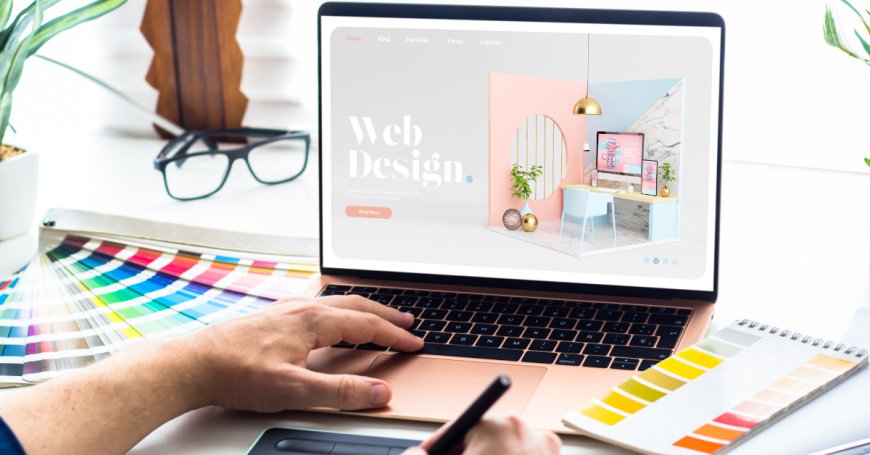
In 2026, the digital landscape has shifted from simple aesthetics to deeply immersive, hyper-personalized environments. As consumer patience hits an all-time low, businesses must leverage advanced Web Design Services to stay competitive. Today’s users don't just "visit" a website; they expect a seamless, AI-driven experience that anticipates their needs before they even click. If your platform feels like a relic of 2023, you aren't just losing traffic—you’re losing credibility. Here is what modern customers demand and how professional design ensures you meet those expectations.
1. Hyper-Personalization Through Predictive AI
Generic landing pages are a thing of the past. By 2026, customers expect "anticipatory design"—interfaces that change based on user behavior, location, and past interactions.
Contextual Content Delivery
Dynamic layouts now adjust in real-time. For example, a returning visitor might see a "Welcome Back" dashboard with personalized shortcuts, while a first-time user receives an educational walkthrough.
AI-Driven Accessibility
Modern Web Design Services now integrate automated accessibility features. This includes AI that adjusts color contrast for visually impaired users or simplifies navigation for those using assistive technologies, ensuring your site is inclusive by default.
2. Immersive Visuals: The Rise of Web-Based AR
Static images no longer cut it. Customers in 2026 want to interact with products in a 3D space without leaving their browser. Augmented Reality (AR) has moved from niche apps to the mobile web.
-
Virtual Try-Ons: Whether it’s furniture or fashion, "see it in your space" features are now a standard expectation.
-
3D Product Modeling: High-fidelity, 3D-rendered models allow users to inspect every angle of a product, significantly reducing return rates and increasing buyer confidence.
Professional designers use WebGL and specialized frameworks to ensure these heavy assets don't compromise your site's performance.
3. Ultra-Fast Performance and "Core Web Vitals 2.0"
Speed is no longer a "nice-to-have"; it is a vital sign. With the rollout of updated search engine metrics, "Instant Loading" is the new benchmark. Customers expect pages to be interactive within milliseconds of the first click.
Edge Computing and Clean Code
Optimized Web Design Services focus on "lightweight" builds. By utilizing edge computing and minimal JavaScript frameworks, designers can deliver complex visuals without the lag.
Sustainable Web Design
Efficiency also speaks to a new customer value: sustainability. Low-energy web design, which reduces data transfer and server load, is becoming a badge of honor for eco-conscious brands. Faster sites don't just please users; they please the planet.
4. Voice and Conversational UI Integration
As smart assistants become more sophisticated, voice search and conversational interfaces have become primary navigation tools. Users often "talk" to websites rather than typing into search bars.
-
VUI (Voice User Interface): Designers are now mapping sites for voice-first interactions, ensuring that site structure is easily "readable" by AI agents.
-
Advanced Chatbots: We have moved past "if-then" bots. Today's conversational UIs use Large Language Models (LLMs) to provide genuine support, solve complex problems, and guide users through the sales funnel naturally.
5. Trust Signals and Data Transparency
In an era of high-profile data breaches, customers are hyper-aware of their digital footprint. They expect "Privacy by Design."
Transparent Data Collection
Websites must now clearly communicate what data is being used and why. Design plays a huge role here—using clear, non-intrusive modals and "Privacy Dashboards" where users can manage their preferences easily.
Biometric Security Integration
The best Web Design Services are now implementing biometric "Passkeys" (FaceID or Fingerprint) for logins. This removes the friction of forgotten passwords while providing the highest level of security, a feature that 2026 consumers view as a mark of a premium brand.
6. Micro-Interactions and Emotional Design
Modern users crave feedback. Every action—a swipe, a click, or a scroll—should be met with a subtle micro-interaction that confirms the action and adds a layer of "delight" to the UX.
Feedback Loops
Whether it’s a subtle haptic vibration on mobile or a smooth color transition on a button hover, these small touches make a website feel "alive." They reduce cognitive load and guide the user toward the desired conversion goal.
Elevate Your Presence with Wowww Digital Marketing Agency
The digital standards of 2026 require a blend of technical precision and creative vision. Staying ahead of these trends isn't a DIY project; it requires a strategic partner who understands the intersection of UX and SEO. At Wowww Digital Marketing Agency, we specialize in cutting-edge Web Design Services that do more than just look good—they perform. We build high-speed, AI-integrated, and customer-centric websites designed to convert visitors into loyal advocates. If your site isn't meeting the expectations of today’s elite consumer, it’s time for a change.