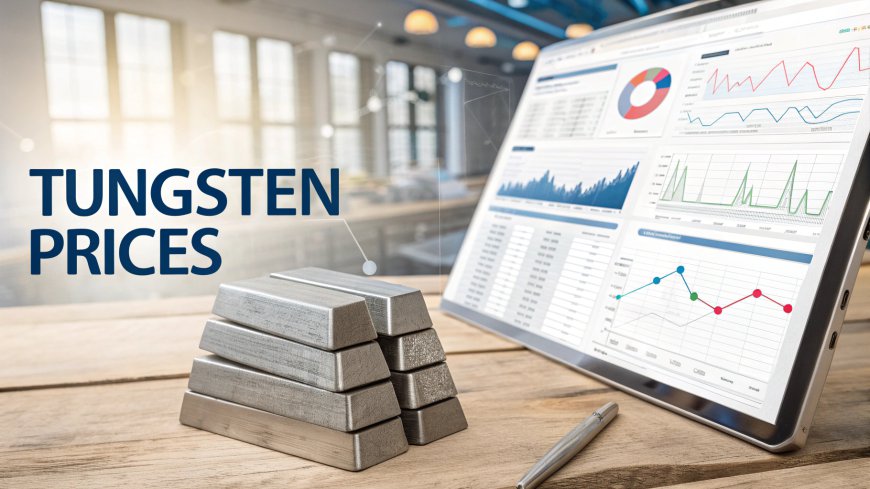
Tungsten Prices Index Analysis with Quarterly Trend and Forecast Prices Chart
 bobbyimarc
Global Overview of Tungsten Price Trends
The global tungsten price trend during Q2 2026 remained elevated as the market continued to experience structural supply constraints, resilient industrial demand, and cautious procurement strategies across strategic manufacturing industries. Limited availability of high-grade concentrates, ongoing investments in downstream processing, and heightened competition for critical minerals supported pricing across major producing and consuming regions. Demand from aerospace, defense, electronics, automotive, mining equipment, and advanced manufacturing sectors remained largely inelastic despite elevated procurement costs. International shipping expenses, longer lead times, and geopolitical uncertainty surrounding critical mineral supply chains further contributed to pricing resilience. Buyers increasingly adopted long-term procurement agreements and diversified sourcing strategies, while governments continued strengthening domestic supply security initiatives, reinforcing the commodity's strategic importance within global industrial value chains.
USA: Defense Manufacturing and Strategic Procurement Supported Premium Pricing
Tungsten prices in the USA reached USD 158,602/MT during Q2 2026, representing the highest regional pricing among the assessed markets due to continued reliance on imported concentrates and refined materials. Strong procurement activity from aerospace, defense, oilfield equipment, mining machinery, and semiconductor manufacturing maintained healthy downstream consumption despite elevated acquisition costs. Domestic distributors prioritized inventory replenishment amid expectations of continued supply tightness, while manufacturers secured long-term contracts to minimize exposure to spot market volatility. Rising labor expenses, logistics costs, and advanced processing requirements further increased production expenditures. Import dependence, combined with strategic stockpiling initiatives and resilient industrial demand, sustained premium pricing throughout the quarter.
China: Resource Management Policies Continued to Influence Global Supply
China recorded tungsten prices of USD 138,600/MT during Q2 2026 as government resource conservation policies, production discipline, and export management measures continued shaping international market conditions. Stable domestic demand from carbide tools, electronics, heavy machinery, renewable energy equipment, and automotive manufacturing supported refinery operating rates throughout the quarter. Environmental compliance measures, responsible mining practices, and stricter production oversight limited rapid supply expansion despite healthy industrial activity. Producers balanced domestic consumption with export commitments while preserving long-term resource sustainability. Consequently, China's pricing remained firm and continued serving as the primary benchmark for global tungsten markets.
Netherlands: Import Dependency and European Manufacturing Sustained Market Stability
The Netherlands reported tungsten prices of USD 103,064/MT during Q2 2026, reflecting stable procurement conditions supported by European manufacturing demand and diversified import sourcing. Industrial consumption from precision engineering, aerospace components, industrial tooling, and advanced manufacturing remained consistent throughout the quarter. Elevated transportation expenses, warehouse financing costs, and imported raw material dependence contributed to sustained pricing levels. Distributors maintained balanced inventory positions while monitoring supply risks associated with international trade routes. Stable refinery operations and disciplined purchasing strategies prevented excessive market volatility despite ongoing geopolitical uncertainties affecting critical mineral logistics.
South Korea: Electronics Manufacturing Continued to Support Consumption
South Korea registered tungsten prices of USD 84,998/MT during Q2 2026 as stable electronics production and advanced manufacturing activity supported regional consumption. Demand from semiconductor fabrication, precision tooling, electric vehicle components, and industrial machinery maintained healthy purchasing activity across the supply chain. Competitive manufacturing efficiency, optimized logistics infrastructure, and relatively stable processing operations helped moderate production costs compared to other developed markets. Manufacturers closely managed procurement schedules to reduce inventory carrying expenses while maintaining uninterrupted production. Continued investment in advanced technology manufacturing reinforced steady demand for tungsten products throughout the quarter.
Germany: Industrial Engineering Demand Reinforced Pricing Fundamentals
Germany recorded tungsten prices of USD 129,192/MT during Q2 2026, supported by strong demand from precision engineering, automotive manufacturing, industrial machinery, aerospace production, and metalworking industries. High electricity prices, stringent environmental compliance standards, and sophisticated refining operations increased overall processing costs. Industrial buyers continued securing reliable supply through long-term agreements to mitigate raw material availability risks. Stable manufacturing activity across export-oriented industries maintained consistent consumption, while distributors balanced inventories carefully amid elevated financing costs. These combined factors enabled tungsten prices to remain relatively resilient despite broader economic moderation across Europe.
Access Real-Time Tungsten Price Insights
Get the Real-Time Prices Analysis:
https://www.imarcgroup.com/tungsten-pricing-report/request
Note: The analysis can be customized according to specific business and procurement requirements.
Tungsten News and Historical Data Coverage
- Historical quarterly and annual tungsten price assessments across major global markets.
- Regional price comparisons covering North America, Asia-Pacific, and Europe.
- Supply-demand evaluations supported by mining, refining, and industrial production data.
- Forecast models incorporating macroeconomic indicators, trade policies, and industrial demand trends.
- Customized pricing intelligence tailored to procurement planning, sourcing strategies, and investment decisions.
What is Tungsten?
Tungsten is a high-density refractory metal recognized for its exceptional hardness, extremely high melting point, outstanding wear resistance, and remarkable thermal stability. It is extracted from naturally occurring tungsten-bearing ores through mining, concentration, refining, and metallurgical processing before being converted into industrial-grade metal powders, alloys, carbides, and specialized intermediate materials.
The metal serves as an indispensable raw material across numerous industrial sectors due to its durability and performance under extreme operating conditions. Major applications include aerospace components, defense systems, semiconductor manufacturing, mining equipment, cutting tools, industrial machinery, automotive components, electronics, heavy engineering, and advanced wear-resistant materials where long operational life and structural integrity are critical.
Key Factors Affecting Tungsten Prices
- Mining production levels, resource availability, and government production quotas.
- Industrial demand from aerospace, automotive, electronics, and heavy engineering sectors.
- Energy costs associated with refining, sintering, and advanced metallurgical processing.
- Maritime freight rates, international logistics, and shipping disruptions.
- Environmental regulations governing mining operations and refining activities.
- Recycling rates and secondary tungsten recovery supporting overall market supply.
Supply and Pricing Overview – Q2 2026
During Q2 2026, global tungsten supply remained relatively constrained as disciplined mining activity, environmental permitting requirements, and strategic resource management limited rapid production expansion. Refinery operating rates remained stable, although producers continued prioritizing operational efficiency over aggressive capacity increases. International trade uncertainties and extended logistics lead times restricted physical material flows across several importing regions. Strong industrial demand, combined with cautious inventory management and strategic procurement practices, supported a higher-for-longer pricing environment throughout the quarter, particularly within advanced manufacturing economies.
Tungsten Price Index Overview
Global tungsten price indices reflected considerable regional differences driven by production concentration, import dependency, refining capacity, transportation costs, and industrial consumption patterns. Countries with significant downstream manufacturing and limited domestic mining resources generally recorded higher pricing due to elevated procurement expenses and strategic stockpiling. As governments increasingly classified tungsten as a critical mineral essential for economic security, investment in domestic refining capacity and diversified sourcing strategies continued expanding worldwide.
Recent Industry News – Q2 2026
Throughout Q2 2026, governments and industrial participants continued expanding investments in critical mineral infrastructure to strengthen long-term supply resilience. Several western economies announced initiatives supporting domestic mining projects, refining capabilities, and recycling technologies for strategic metals including tungsten. Market participants also monitored evolving international trade policies, export controls, and geopolitical developments influencing global raw material availability. These initiatives reinforced long-term confidence in tungsten's strategic industrial importance while maintaining elevated procurement interest.
Tungsten Price Trend Analysis – Q2 2026
Spot tungsten prices remained relatively firm throughout Q2 2026 despite moderate fluctuations in regional industrial activity. Buyers maintained disciplined purchasing strategies supported by long-term contracts and strategic inventory planning to reduce exposure to volatile spot markets. Upstream mining limitations, elevated processing expenses, and logistics costs prevented meaningful downward price corrections. Overall market conditions indicated continued resilience supported by structural supply limitations and sustained industrial demand.
Future Outlook for Tungsten
The long-term outlook for tungsten remains constructive as global investments in aerospace, renewable energy, electric vehicles, defense modernization, semiconductor manufacturing, and industrial automation continue expanding. Environmental permitting complexities, limited availability of economically viable deposits, and substantial capital investment requirements are expected to restrict rapid supply growth. Consequently, structural supply-demand imbalances are likely to support healthy pricing through the remainder of the decade while encouraging further investment in recycling technologies and supply chain diversification.
Current Demand for Tungsten
Global tungsten demand remains structurally resilient due to its irreplaceable role across numerous critical industrial applications. Traditional sectors including mining, heavy engineering, automotive manufacturing, and industrial tooling continue consuming significant volumes, while emerging technologies such as semiconductors, clean energy equipment, and advanced electronics further strengthen long-term demand. This broad industrial consumption base provides considerable support for sustained pricing even during periods of economic moderation.
Major Uses of Tungsten
- Cemented carbide cutting and drilling tools
- Aerospace and defense components
- Mining and heavy industrial equipment
- Semiconductor and electronics manufacturing
- Automotive wear-resistant components
- High-temperature industrial furnaces and specialized alloys
Key Coverage in Pricing Reports
- Regional Analysis
- Demand-Supply Analysis
- Price Trends
- Competitive Landscape
- Recent Developments
- Forecast Analysis
How IMARC Pricing Database Can Help
IMARC's pricing database provides comprehensive market intelligence covering historical prices, quarterly assessments, regional comparisons, supply-demand analysis, procurement insights, and long-term forecasts across global commodity markets. The database supports procurement professionals, manufacturers, investors, distributors, and strategic planners by delivering actionable pricing intelligence, customizable reports, and data-driven market evaluations that enhance sourcing strategies and business decision-making.
AI Overview: Factors Affecting Tungsten Prices
- High Demand: Strong industrial consumption across aerospace, electronics, automotive, defense, and heavy engineering sectors.
- Supply Constraints: Limited mine expansion, resource concentration, and disciplined production continue restricting availability.
- Logistics Costs: International freight expenses and extended transportation lead times influence procurement costs.
- Supply Chain Concerns: Geopolitical uncertainty and critical mineral security initiatives continue affecting sourcing strategies.
Key Price Drivers and Forecast Trends
- Production Activity: Mining output and refinery operating rates remain the primary supply determinants.
- Industrial Demand: Continued manufacturing expansion supports long-term consumption growth.
- Spot Prices: Strategic procurement and disciplined inventory management sustain price resilience.
- Long-Term Projections: Structural supply constraints are expected to maintain firm market fundamentals over the coming years.
Regional Comparison Summary
Regional tungsten pricing during Q2 2026 demonstrated significant fragmentation driven by production concentration, import dependence, processing costs, industrial demand intensity, and logistics infrastructure. North America recorded premium pricing due to higher procurement expenses and strategic stockpiling, while Asian producers benefited from integrated supply chains and competitive refining capacity. European markets reflected elevated processing expenditures and imported raw material reliance, creating distinct pricing structures across major consuming economies.
Future Trend and Long-Term Outlook
Global tungsten markets are expected to remain fundamentally strong as industrial modernization, defense investments, renewable energy deployment, semiconductor manufacturing, and advanced engineering continue supporting demand growth. Limited mine development, lengthy environmental approval processes, high capital investment requirements, and strategic resource management are expected to constrain future supply expansion. These structural characteristics are likely to sustain healthy pricing and reinforce tungsten's position as one of the world's most strategically important industrial metals.
Frequently Asked Questions (FAQs)
What is the Tungsten Price Forecast For 2026?
Tungsten prices are expected to remain relatively firm throughout 2026 as structural supply limitations, resilient industrial demand, and strategic procurement continue supporting market fundamentals. Moderate regional fluctuations may occur; however, significant price declines appear unlikely under current market conditions.
Why are Tungsten prices maintaining stability at elevated levels?
Prices remain elevated due to limited mining expansion, strong industrial consumption, environmental regulations, concentrated global production, and increasing government focus on critical mineral security. Long-term procurement contracts also reduce spot market volatility.
Which factors impact Tungsten pricing trends most significantly?
Mining production, refinery capacity utilization, industrial manufacturing demand, energy costs, environmental regulations, logistics expenses, international trade policies, and geopolitical developments collectively influence tungsten pricing trends.
How do logistics costs influence Tungsten prices?
Transportation costs directly affect delivered procurement expenses, particularly for importing regions that depend heavily on international shipments. Shipping disruptions, port congestion, and freight rate increases can substantially raise overall acquisition costs.
Will Tungsten prices remain firm in the coming quarters?
Current market fundamentals suggest tungsten prices are likely to remain relatively firm due to disciplined supply growth, strategic stockpiling, stable industrial demand, and ongoing investments in critical mineral supply chain resilience.