The Ultimate Guide to Improving Local SEO Rankings Effectively
This guide explains practical and proven strategies to improve local SEO rankings, helping businesses increase online visibility, attract nearby customers, and grow their presence in local search results effectively.
 clarawhitmoree
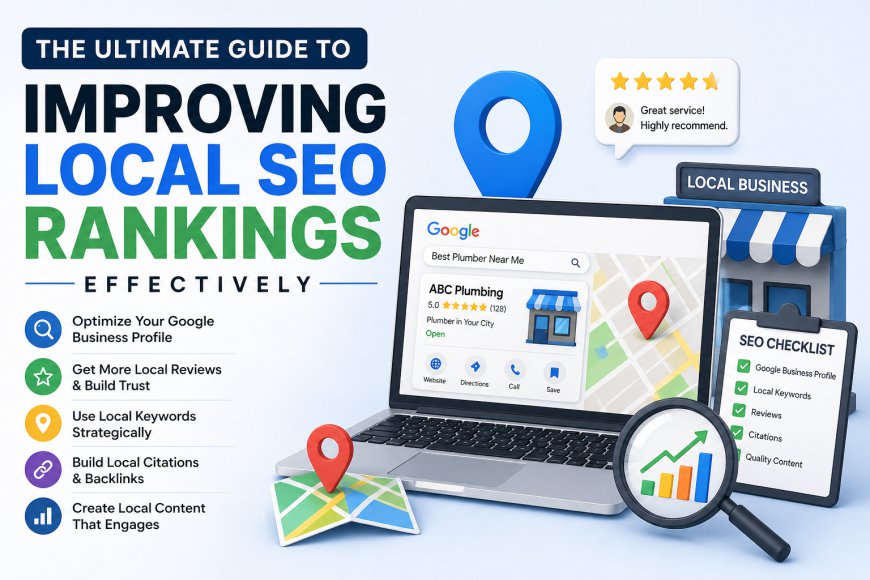
In today’s highly competitive digital landscape, local businesses can no longer rely solely on word-of-mouth or traditional advertising. Consumers increasingly turn to search engines to find nearby services, compare options, and make purchasing decisions. This shift has made Local SEO (Search Engine Optimization) one of the most powerful tools for businesses aiming to dominate their local markets.
This comprehensive guide will walk you through actionable strategies, modern techniques, and practical insights to help you improve your local SEO rankings effectively. Whether you're a small business owner, a marketer, or an agency professional, this guide is designed to provide fresh, valuable knowledge you can apply immediately.
Understanding Local SEO and Why It Matters
Local SEO is the process of optimizing your online presence to attract more business from relevant local searches. These searches typically include location-based queries such as “near me,” city names, or specific neighborhoods.
For example, when someone searches for “best bakery near me,” search engines deliver results based on proximity, relevance, and authority. If your business isn’t optimized for local SEO, you’re missing out on a significant portion of potential customers.
Key Benefits of Local SEO:
- Increased visibility in local search results
- Higher foot traffic to physical locations
- Improved credibility and trust
- Better conversion rates compared to general traffic
How Local Search Algorithms Work
To improve your rankings, you need to understand what influences local search results. Search engines consider three primary factors:
1. Relevance
How well your business matches the search query.
2. Distance
How close your business is to the searcher’s location.
3. Prominence
How well-known and authoritative your business is online.
Your goal is to optimize all three areas simultaneously.
The Role of Expertise in Local SEO
While many strategies can be implemented independently, working with professionals can accelerate results.
For example, partnering with a specialized team like a reliable seo company Burnaby can provide insights into advanced optimization techniques, competitor analysis, and scalable strategies that are difficult to execute alone. Experienced professionals understand algorithm updates, local trends, and data-driven decision-making, which can significantly impact your growth.
Step 1: Optimize Your Google Business Profile
Your Google Business Profile (GBP) is the foundation of local SEO. It acts as your digital storefront and plays a crucial role in map rankings.
Best Practices:
- Use your exact business name consistently
- Choose the most relevant primary category
- Add high-quality images regularly
- Keep your hours updated
- Write a compelling business description
Pro Tip:
Include keywords naturally in your description, but avoid keyword stuffing.
Step 2: Maintain NAP Consistency Across the Web
NAP stands for Name, Address, and Phone Number. Consistency across all platforms is critical for building trust with search engines.
Where to Ensure Consistency:
- Business directories
- Social media profiles
- Website footer and contact page
- Review platforms
Even minor inconsistencies can negatively impact your rankings.
Step 3: Build High-Quality Local Citations
Local citations are mentions of your business on external websites. These can be structured (directories) or unstructured (blog mentions, news articles).
Effective Citation Sources:
- Local business directories
- Industry-specific platforms
- Chamber of commerce websites
- Local blogs and news sites
Focus on quality over quantity. A few authoritative citations are more valuable than dozens of low-quality ones.
Step 4: Create Location-Specific Content
Content remains a powerful ranking factor, especially when tailored to local audiences.
Content Ideas:
- Local guides and resources
- Community event coverage
- Neighborhood-specific service pages
- Customer success stories
Example:
Instead of a generic “Plumbing Services” page, create pages like:
- “Emergency Plumbing Services in [City Name]”
- “Affordable Plumbing Solutions in [Neighborhood]”
Step 5: Optimize for Mobile and User Experience
Most local searches happen on mobile devices. A poor mobile experience can drive potential customers away.
Key Factors:
- Fast loading speed
- Mobile-friendly design
- Easy navigation
- Click-to-call functionality
A seamless user experience not only improves rankings but also boosts conversions.
Step 6: Leverage Online Reviews Strategically
Reviews are one of the most influential factors in local SEO.
How to Maximize Reviews:
- Ask satisfied customers for feedback
- Respond to all reviews (positive and negative)
- Use keywords naturally in responses
- Encourage detailed reviews
Why Reviews Matter:
They build trust, improve visibility, and directly influence purchasing decisions.
Step 7: Build Local Backlinks
Backlinks remain a cornerstone of SEO. For local SEO, focus on acquiring links from relevant local sources.
Strategies:
- Partner with local businesses
- Sponsor community events
- Collaborate with local influencers
- Get featured in local publications
Local backlinks signal authority and relevance to search engines.
Step 8: Use Schema Markup for Local SEO
Schema markup helps search engines understand your business better.
Important Schema Types:
- LocalBusiness schema
- Review schema
- FAQ schema
- Event schema
Adding structured data can enhance your search listings with rich snippets.
Step 9: Optimize On-Page SEO Elements
Your website must be fully optimized to support your local SEO efforts.
Focus Areas:
- Title tags with location keywords
- Meta descriptions that encourage clicks
- Header tags (H1, H2, H3)
- Internal linking
- Image alt text
Every page should clearly communicate its purpose and location relevance.
Step 10: Track and Measure Performance
Without tracking, you won’t know what’s working.
Key Metrics:
- Local keyword rankings
- Website traffic
- Conversion rates
- Click-through rates
- Review growth
Use tools like analytics dashboards and search console insights to refine your strategy.
Advanced Strategies for Local SEO Success
Once you’ve mastered the basics, it’s time to implement advanced techniques.
1. Voice Search Optimization
With the rise of voice assistants, optimize for conversational queries.
Example:
- “Where can I find the best dentist near me?”
2. Hyperlocal Targeting
Focus on micro-locations such as neighborhoods, streets, or landmarks.
3. Behavioral Signals
Improve user engagement metrics like:
- Click-through rates
- Time on site
- Bounce rate
Search engines use these signals to assess quality.
Common Mistakes to Avoid
Even well-intentioned efforts can backfire if not executed correctly.
Avoid These Pitfalls:
- Keyword stuffing
- Ignoring mobile optimization
- Inconsistent business information
- Neglecting reviews
- Using low-quality backlinks
Consistency and authenticity are key to long-term success.
Future Trends in Local SEO
Local SEO is constantly evolving. Staying ahead of trends can give you a competitive edge.
Emerging Trends:
- AI-driven search results
- Personalized search experiences
- Increased importance of video content
- Integration of augmented reality
- Zero-click searches
Adapting early can position your business as a market leader.
Final Thoughts
Improving local SEO rankings effectively requires a combination of technical optimization, high-quality content, strong online presence, and consistent engagement with your audience. It’s not a one-time effort but an ongoing process that evolves with search engine algorithms and user behavior.
By implementing the strategies outlined in this guide, you can build a local presence, attract more customers, and outperform competitors in your area. Focus on delivering real value, maintaining consistency, and staying adaptable to changes in the digital landscape.