United States Autonomous Cars Market Size, Trends, and Growth Strategies
The United States Autonomous Cars Market is estimated to be valued at USD 17.85 Bn in 2025 and is expected to reach USD 66.62 Bn by 2032, growing at a CAGR of 20.7% from 2025 to 2032.
 coherentmarket
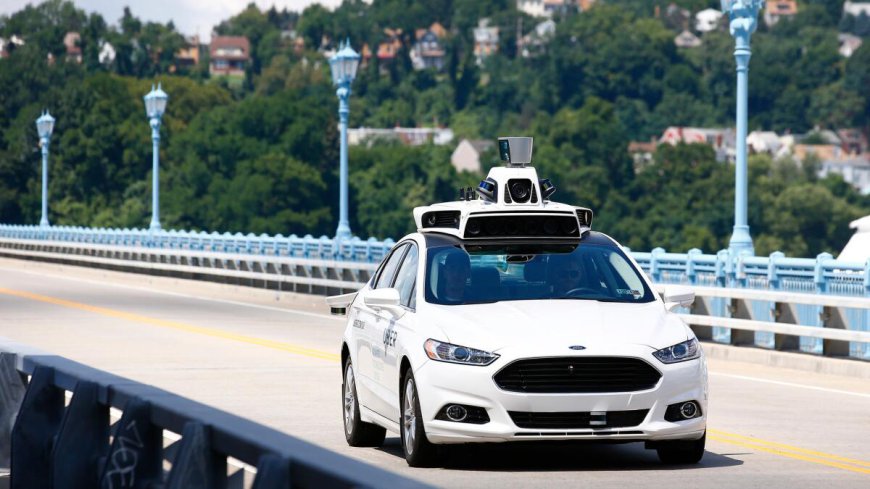
The United States autonomous cars market is witnessing rapid transformation fueled by advancements in AI, sensor technologies, and regulatory frameworks encouraging innovation. These developments are reshaping transportation dynamics and providing expansive market opportunities that are highlighted in the latest market analysis and industry trends.
Market Size and Overview
The United States Autonomous Cars Market is estimated to be valued at USD 17.85 Bn in 2025 and is expected to reach USD 66.62 Bn by 2032 , growing at a CAGR of 20.7% from 2025 to 2032.
This robust United States Autonomous Cars Market Growth reflects increasing adoption of autonomous technologies among private and commercial vehicles, supported by evolving consumer demand for enhanced safety and efficiency. Market insights suggest that rising investments in connected infrastructure and AI algorithms are pivotal drivers of this upward trajectory.
Market Segments
The United States autonomous cars market can be segmented into three core categories: Level of Autonomy, Component Type, and Application.
- Level of Autonomy: Sub-segments include Level 3 (Conditional Automation), Level 4 (High Automation), and Level 5 (Full Automation). Level 4 holds the current dominance due to its advanced operational design domains, while Level 5 is the fastest-growing segment, spurred by recent pilot programs in 2024 demonstrating fully driverless ride-hailing services.
- Component Type: Major sub-segments are LiDAR, Radar, Camera Sensors, and Software & AI Modules. Software & AI Modules have overtaken hardware components in revenue share since 2024, propelled by enhanced machine learning algorithms enabling better decision-making in complex urban environments.
- Application: Key sub-segments include Personal Vehicles, Commercial Transport, and Public Transit. Personal vehicles dominate market revenue, while commercial transport is the fastest-growing, driven by logistics companies incorporating autonomous trucks to reduce delivery times and costs, as seen in pilot runs in 2025.
Market Drivers
A significant market driver is the regulatory push for safer roads through autonomous vehicle integration. In 2024, the United States Department of Transportation introduced updated guidelines accelerating Level 4 deployment in select urban areas, leading to a 35% increase in autonomous vehicle testing permits compared to 2023. This policy shift mitigates market restraints related to safety concerns, thereby expanding the market scope while enhancing consumer confidence, which is vital to sustained market growth.
Segment Analysis
Focusing on the application segment, personal vehicles accounted for the majority of the market revenue in 2025, estimated at over USD 7 billion. The dominance is attributed to major automotive market players integrating semi-autonomous features in new models, especially electric vehicles. However, commercial transport is emerging as the fastest-growing sub-segment, with fleet operators like Aurora testing autonomous freight services, which reported a 40% improvement in operational efficiency during Q1 2025 trials. These developments underscore the evolving market dynamics shaping future business growth.
Consumer Behaviour Insights
Several behavioral shifts have been observed between 2024 and 2025. First, there is a growing preference for customizable autonomous features, as 60% of surveyed drivers in a 2025 mobility report expressed willingness to pay premiums for personalized AI driving assistants. Secondly, sustainability considerations influence purchase decisions, with buyers showing inclination toward autonomous electric cars, reinforcing industry trends towards green mobility. Lastly, digital consumption patterns reveal increased acceptance of subscription-based models for autonomous car software, with over 45% of end users opting for over-the-air updates rather than upfront software purchases during the same period.
Key Players
Prominent market players driving the United States autonomous cars market growth include Tesla Inc., General Motors, Ford, Waymo, and Aurora. In 2024 and 2025, Tesla expanded production capacity to include advanced Autopilot features integrated with Full Self-Driving (FSD) Beta in over 200,000 vehicles, boosting its competitive edge. General Motors launched a commercial autonomous vehicle pilot in major logistics hubs, while Waymo diversified its ride-hailing services into suburban areas, showing notable user adoption increases. Ford invested heavily in AI software development partnerships to enhance safety features, directly impacting market revenue growth.
Key Winning Strategies Adopted by Key Players
- Tesla Inc. (2025): Implemented continuous over-the-air Full Self-Driving software updates, a strategy that boosted customer satisfaction and retention by 25%. This dynamic software deployment is less common, offering Tesla a flexible, upgradable market advantage.
- Waymo (2024): Adopted a hyper-localization strategy by tailoring autonomous driving algorithms to specific urban geographies, resulting in a 30% reduction in system errors during real-world operations—an impactful move rarely replicated broadly.
- Aurora (2025): Focused on strategic partnerships with freight and logistics companies, aligning product development cycles directly with end-user operational needs, accelerating commercial adoption and improving revenue predictability.
FAQs
1. Who are the dominant players in the United States autonomous cars market?
The dominant players include Tesla Inc., General Motors, Ford, Waymo, and Aurora, each contributing significantly through technological innovation and strategic market expansions.
2. What will be the size of the United States autonomous cars market in the coming years?
The market is projected to grow from USD 17.85 billion in 2026 to USD 66.62 billion by 2032, registering a CAGR of 21%, indicating substantial growth opportunities.
3. Which end-user industry has the largest growth opportunity?
While personal vehicles currently dominate revenue, commercial transport is the fastest-growing end-user segment due to increased adoption of autonomous freight services.
4. How will market development trends evolve over the next five years?
Market trends indicate accelerated deployment of Level 5 automation, increased integration of AI-driven software, and expansion of autonomous applications in logistics and public transit.
5. What is the nature of the competitive landscape and challenges in the United States autonomous cars market?
The market landscape is shaped by technology innovation, regulatory changes, and consumer adoption patterns, while challenges include regulatory compliance and system safety requirements.
6. What go-to-market strategies are commonly adopted in the United States autonomous cars market?
Key strategies include continuous software updates, hyper-localization of technology, and strategic partnerships targeting specific industry needs to drive market growth and consumer trust.
‣ Get more insights on : United States Autonomous Cars Market
‣ Get this Report in Japanese Language: 米国の自動運転車市場
‣ Get this Report in Korean Language: 미국자율주행차시장
‣ Read More Related Articles : Brazil Flexfuel Cars: A Pioneer in Alternative Fuel Technologies
Author Bio:
Ameya Thakkar is a seasoned management consultant with 9+ years of experience optimizing operations and driving growth for companies in the automotive and transportation sector. As a senior consultant at CMI, Ameya has led strategic initiatives that have delivered over $50M in cost savings and revenue gains for clients. Ameya specializes in supply chain optimization, process re-engineering, and identification of deep revenue pockets. He has deep expertise in the automotive industry, having worked with major OEMs and suppliers on complex challenges such as supplier analysis, demand analysis, competitive analysis, and Industry 4.0 implementation.