US Emerges as Market Leader in Transport Aircraft Simulation Industry: Forecast 2034
The transport aircraft simulation market grows as global aviation emphasizes safety, cost efficiency, and advanced pilot training through innovative digital technology.
 raj sinha
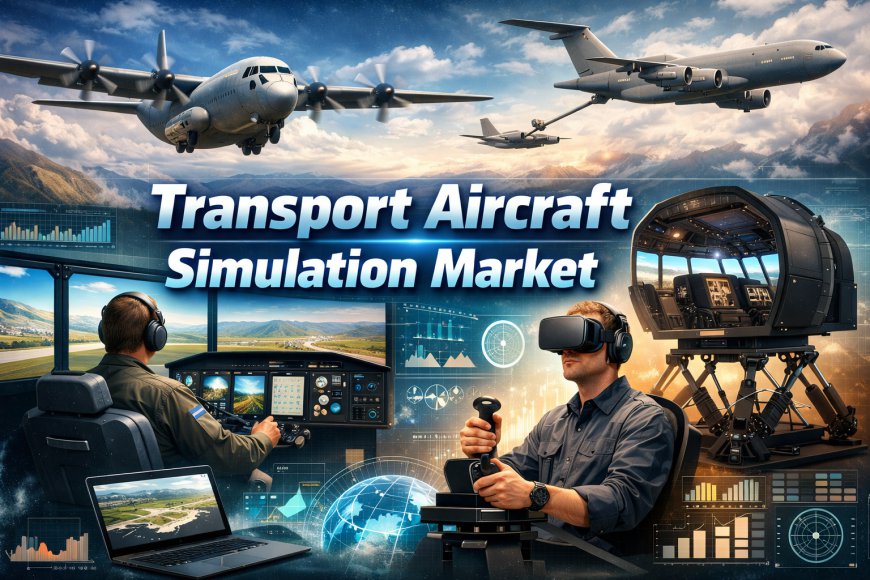
The Transport Aircraft Simulation Market is undergoing a period of rapid transformation driven by the necessity for enhanced safety protocols and the rising complexity of modern flight systems. As aviation technology progresses, the industry is shifting away from traditional classroom methods toward immersive, high fidelity environments. These systems are designed to replicate the exact flight dynamics of heavy transport vehicles, allowing pilots to gain mastery over complex controls without the immense costs associated with operating actual aircraft. This transition is fueled by the need for consistent training standards across the global aviation sector, ensuring that flight crews are prepared for any operational challenge they might encounter in the sky.
Evolution of Simulation Training Systems
One of the most prominent trends in the industry is the integration of advanced visual and motion technologies that provide a near perfect representation of reality. Modern simulators now utilize high resolution displays and satellite imagery to create precise digital twins of airports and terrain. This level of detail is crucial for transport pilots who must navigate diverse geographical regions and varying weather conditions. Furthermore, the development of motion cueing algorithms has improved the physical feedback provided to the trainee, making the simulation experience more authentic. These technological strides allow for the execution of maneuvers that would be too dangerous to perform during live flight training, such as total engine failure or severe structural damage.
North America Transport Aircraft Simulation Market Dynamics
In terms of regional development, the North America Transport Aircraft Simulation Market remains a primary hub for innovation and deployment due to the presence of major aerospace manufacturers and a vast network of airline operators. The region benefits from a robust infrastructure of flight schools and military training centers that prioritize the adoption of the latest simulation hardware. There is a strong emphasis on maintaining a high level of pilot proficiency to support the massive volume of domestic and international cargo traffic. Additionally, regulatory bodies in this region are proactive in updating certification standards to include credits for time spent in advanced simulation devices, which encourages continuous investment in new training technologies by both commercial and defense entities.
Integration of Virtual and Augmented Reality
A significant shift currently being observed is the adoption of mixed reality tools to supplement full flight simulators. By using wearable headsets, training providers can offer portable and cost effective solutions for procedures training and cockpit familiarization. This trend allows pilots to practice their routines in a virtual space during their downtime, reinforcing their knowledge of flight deck layouts and emergency checklists. While these tools do not replace the massive motion platforms used for final certification, they serve as a vital bridge in the learning process, making pilot education more accessible and flexible. The use of these technologies also assists in reducing the overall footprint of training facilities.
Download Sample Report:https://www.theinsightpartners.com/sample/TIPRE00018642
Focus on Data Analytics and Performance Monitoring
The use of big data is becoming a cornerstone of pilot evaluation within the simulation environment. Modern systems are equipped with sensors that track every input made by the pilot, from the force applied to the control column to the speed of their visual scans across the instrument panel. This data is then analyzed to provide objective feedback on a pilot's performance, identifying subtle habits or errors that might be missed by a human instructor. This trend toward data driven training ensures that every session is optimized for the specific needs of the individual, leading to a more efficient path to competency and higher overall safety margins for transport operations.
Key Players in the Global Industry
The market is supported by several leading organizations that provide the hardware, software, and maintenance services required for high level flight training. These companies are at the forefront of aerospace engineering and virtual reality development.
-
CAE Incorporated
-
L3Harris Technologies
-
Thales Group
-
FlightSafety International
-
The Boeing Company
-
TRU Simulation and Training
-
Rockwell Collins
-
Indra Sistemas
Impact of Fleet Modernization
As airlines and military forces replace their older transport fleets with next generation aircraft, the demand for corresponding simulation software spikes. These new aircraft often feature fly by wire systems and highly integrated glass cockpits that require a different skill set compared to older mechanical systems. Simulation providers must work closely with aircraft manufacturers to ensure that the training devices are ready at the same time the new planes are delivered. This synchronization is essential for a smooth transition and ensures that flight crews are fully qualified to operate the most advanced transport aircraft from the first day of service.
Future Outlook
The future of this sector is defined by the move toward more autonomous and intelligent training systems that can simulate a wider range of unpredictable scenarios. We can expect to see artificial intelligence playing a larger role in creating dynamic air traffic environments and realistic weather patterns that challenge the decision making skills of pilots. Additionally, the focus on environmental sustainability will continue to drive the industry toward ground based training as a way to reduce carbon emissions. As connectivity improves, remote and networked simulation will likely become standard, allowing crews located in different parts of the world to train together in a synchronized virtual environment, further enhancing the coordination required for global transport missions.
Related Reports:
About Us
The Insight Partners is a leading global market research and consulting firm specializing in delivering actionable insights across various industries. Our research reports combine extensive primary and secondary research to provide accurate market intelligence, helping businesses make informed strategic decisions. The company provides detailed analysis on emerging technologies, market trends, competitive landscapes, and growth opportunities across sectors including technology, healthcare, manufacturing, and energy.
Contact Us
The Insight Partners
Phone: +1-646-491-9876
Email: sales@theinsightpartners.com
Website: https://www.theinsightpartners.com