What Are the Benefits of an Engine Lubrication System?
An Engine Lubrication System reduces friction between moving engine parts, minimizes wear, controls heat, prevents corrosion, and keeps the engine clean by removing contaminants. It improves engine performance, extends component life, reduces maintenance costs, and ensures reliable operation in automotive and industrial applications.
 Technodrop
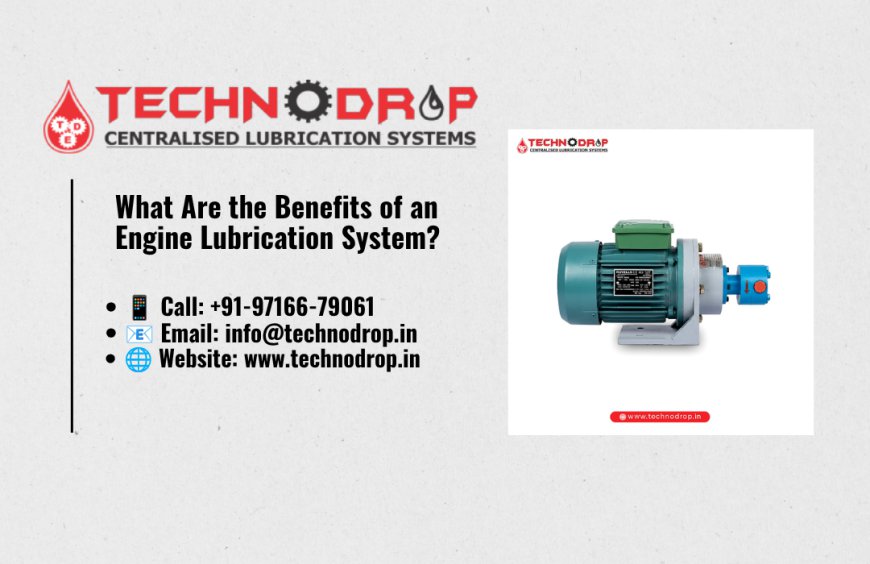
A machine does not fail only because one part breaks. Many times, it fails because oil did not reach the right point at the right time. An Engine Lubrication System is built to control that risk. It keeps oil moving across critical parts, reduces friction, and helps the engine or machine work under load without unnecessary heat, noise, and wear.
That’s where buyers need to be careful. A cheaper unit may look acceptable on paper, but if oil flow, pressure, pipe routing, and fitting compatibility are not checked before the purchase order, the real cost appears later—in breakdowns, rework, and delayed production.
Engine Lubrication System Specifications Buyers Should Not Leave Blank
Oil Flow Is Not a Guessing Point
The first specification is oil flow. The system must deliver oil steadily to moving parts, not just “supply lubrication.” Flow requirement depends on machine type, load condition, operating hours, and lubrication points.
Nobody tells you this during a rushed quotation.
A buyer should ask for oil grade compatibility, number of lubrication points, pipe size, pump type, reservoir size, mounting position, and expected working pressure. One commonly skipped detail is line length. If pipe routing is longer than expected, pressure drop can affect oil delivery. That small detail can create a big maintenance argument after installation.
The Overlooked Check: Access for Inspection
Engine lubrication systems are not only installed once and forgotten. Maintenance teams need access to refill points, filters, fittings, connectors, and inspection areas. If the unit is placed badly, even a simple check becomes a shutdown job.
A supplier who only asks, “What size do you need?” has not understood the application. The better question is, “Where will this system sit, and how will your team inspect it during running maintenance?”
Five Supplier Checks Before Releasing the Purchase Order
Most buyers compare price first. That is a weak procurement habit.
Use these five checks before selecting Engine Lubrication System Manufacturers:
- Application understanding – A bad answer sounds like: “Same system works everywhere.”
- Specification matching – The supplier should ask for lubrication points, oil type, duty cycle, and machine layout.
- Sampling approval – For repeated orders, sample approval reduces specification mismatch.
- QC inspection process – Ask how flow, leakage, fittings, and assembly are checked before dispatch.
- Lead time clarity – A vague “dispatch soon” is not a delivery commitment.
And yet, many purchase teams still release orders with half-filled technical details. That is how sampling delays start. Not in the factory. In the enquiry stage.
Practical Benefits That Protect Machines and Margins
Lower Friction Means Lower Wear Risk
The core benefit is friction control. Oil creates a protective layer between moving surfaces, reducing harsh metal-to-metal contact. For factories running long shifts, that means fewer sudden stoppages and better component life.
Better Heat Control During Long Running Hours
Friction creates heat. A steady oil supply helps carry heat away from critical parts. This matters in engines, industrial machinery, and heavy-duty setups where load changes during operation.
If lubrication is irregular, overheating may not appear on day one. It usually appears after repeated running cycles.
More Predictable Maintenance Planning
Manual lubrication depends on people. People miss points. Automatic or controlled lubrication reduces that dependency by supplying oil through organized routes. That supports planned maintenance instead of emergency repair.
Protection Against Costly Specification Mismatch
A properly selected system matches oil type, machine layout, and working conditions. This reduces the chance of under-lubrication or excess oiling. Both are problems. Under-lubrication causes wear. Excess oil can attract dust, create mess, and increase consumption.
Better Production Reliability
A machine that receives oil consistently runs with fewer interruptions. For procurement managers, that protects dispatch schedules, labour planning, and customer commitments.
Cleaner Accountability After Installation
Here’s the real advantage. If the specification sheet, sampling approval, QC inspection, and dispatch packing are documented, complaint handling becomes easier. Without records, every defect turns into blame between buyer, supplier, installer, and operator.
Availability in Faridabad and Across India
For buyers searching Engine Lubrication System Manufacturers in India or Engine Lubrication System Suppliers in India, location matters more than many people admit. Faridabad is close to major industrial belts in Delhi NCR, Haryana, Uttar Pradesh, and Rajasthan. That helps during sampling, replacement discussion, transport coordination, and urgent technical clarification.
Freight planning is not glamorous.
But poor packaging can damage fittings, pipes, threads, and mounting parts before the system reaches the plant. Buyers should confirm packing method, part labeling, invoice details, and transport handling before dispatch. For small MOQ orders, freight cost may look high per unit. For repeat batches, it becomes easier to plan.
What We Check Before a Buyer Commits
We work from Faridabad-121004 and deal with lubrication system enquiries where the buyer often has only a machine name, not a complete technical sheet. So we ask for the missing details before pushing a quotation.
We check the machine application, oil requirement, lubrication points, fitting needs, and installation conditions. Apart from this, we prefer clear explanation of MOQ, dispatch expectation, inspection if require or not as one not clear line on purchase order can delay whole production batch.
Our ISO working procedures are valid only when buyers also agree on clear inputs. Certificates validate, Specification and Quality specification should be reviewed prior to order, not after goods landed at the site.
Send These Details for a Faster Quotation
Please send us your machine type/part number, oil grade, number of lubrication points, how much quantity do you need and what is send us your MOQ expectation, delivery destination, a drawing or photo of the existing installation. If it‘s a replace, send us the old system picture and fitting details
We will follow up application details to verify the application practical response time.
We will confirm the practical response time after checking the application details.
For urgent enquiries, mention whether you need sampling first or direct purchase order processing. That small note helps us plan stock checking, production batch discussion, QC inspection, packing, and freight movement without wasting your time.
Where Better Lubrication Decisions Are Going
An Engine Lubrication System is not just a machine accessory; it is a maintenance control point. Buyers who treat lubrication as a technical purchase reduce friction, protect components, and avoid avoidable downtime. The next stage of smarter sourcing will belong to teams that document specifications before price negotiation begins.
FAQs
What is the main benefit of an Engine Lubrication System?
The main benefit is controlled oil flow to moving parts. It reduces friction, helps manage heat, and lowers wear risk during regular machine operation.
How do Engine Lubrication System Manufacturers check quality?
A practical manufacturer checks oil flow path, fitting tightness, leakage points, assembly finish, and compatibility with the buyer’s application. The caveat is simple: quality checking is only accurate when the buyer shares correct machine details.
Are Engine Lubrication System Manufacturers in India suitable for industrial buyers?
Yes, many Indian buyers prefer local manufacturer as sampling, inspection, transportation, replacement discussions are easy. But goods should be checked for specification compliance and certificate validity in case of repeated orders.
Questions to ask Engine Lubrication System Suppliers: What should I ask Engine Lubrication System Suppliers before I buy?
Ask for oil grade and compatibility, lubrication points, lead time, MOQ, inspection method, packing standard and after-sales complaint handling. If a supplier is reluctant to ask any of these questions and brush off you, then avoid him.
Do Engine Lubrication System Suppliers in India support small MOQ orders?
Some may support small MOQ orders, but pricing and freight cost can be less favourable. The honest trade-off is that a small order may be faster to approve, but not always cheaper per unit.
What do Engine Lubrication System Dealers usually help with?
Engine Lubrication System Dealers usually help buyers identify suitable models, compare application needs, and coordinate supply. A good dealer should not push a system without asking about machine load and oil requirement.
How can Engine Lubrication System Dealers in India reduce sourcing risk?
They can reduce risk by helping with specification matching, local availability, packing checks, and dispatch coordination. Still, final approval should come after technical confirmation, not only catalogue comparison.