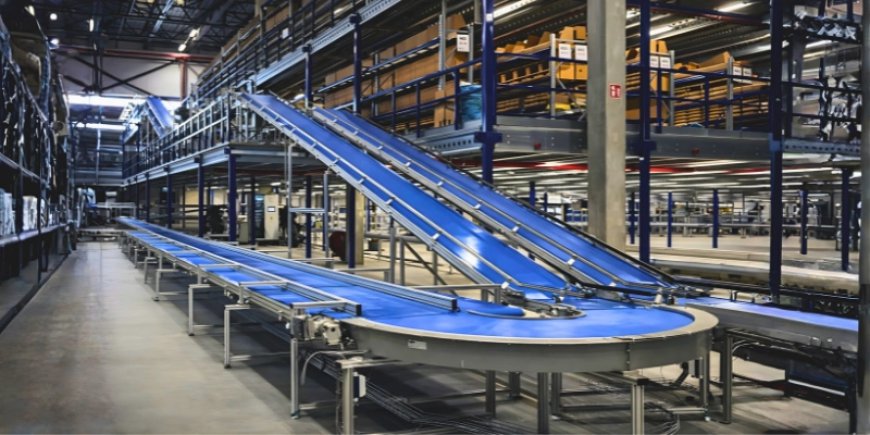
In today’s fast-paced industrial landscape, warehouse efficiency is no longer a luxury—it’s a necessity for survival and growth. Businesses across sectors like cement, mining, coal, salt, sugar, glass, and chemicals are constantly seeking ways to streamline operations, reduce costs, and accelerate order fulfillment. One of the most impactful yet often overlooked investments is the integration of advanced material handling systems. At the heart of this operational upgrade lies a critical decision: implementing robust belt conveyor solutions.
The Role of Conveyor Systems in Modern Warehousing
Warehouses are the nerve centers of supply chains. When goods move slowly, bottlenecks form, labor costs rise, and errors multiply. Belt conveyor solutions offer a systematic answer to these challenges by automating the movement of bulk materials and packaged goods. Unlike manual handling, which is prone to fatigue and inconsistency, conveyors provide a continuous, predictable flow of items from receiving to shipping.
How Belt Conveyor Solutions Directly Boost Productivity
The productivity gains from belt conveyors are measurable and multifaceted. Here’s how they transform warehouse operations:
1. Dramatically Reduced Handling Time
Manual material movement is time-consuming. Belt conveyor solutions slash transit times by moving products at consistent speeds along fixed paths. This eliminates the idle time associated with forklift travel or pallet jack maneuvering, allowing goods to reach their destination in a fraction of the time.
2. Minimized Product Damage
Products dropped or mishandled during manual transport lead to waste and returns. Belt conveyors provide a smooth, stable surface that reduces jostling and impact. For fragile items or delicate raw materials, this gentleness translates directly into higher yield and lower loss.
3. Optimized Labor Utilization
Instead of workers spending hours walking or pushing loads, they can focus on value-added tasks—like quality checks, order picking, or machine monitoring. This reallocation of human effort not only boosts morale but also significantly lowers the cost per unit handled.
4. Enhanced Safety and Ergonomics
Workplace injuries from lifting, carrying, or repetitive motion are common in warehouses. Belt conveyors bear the physical burden, moving heavy or bulky items without human strain. This creates a safer environment, reduces absenteeism, and improves overall workforce well-being.
5. Seamless Integration with Other Systems
Modern conveyors are not standalone machines; they are nodes in a connected system. They can be synchronized with sorters, scales, scanners, and automated storage systems. This integration enables real-time tracking and data collection, providing insights that further fine-tune warehouse performance.
Key Considerations for Implementing Belt Conveyor Solutions
To fully realize these benefits, the conveyor system must be tailored to the specific warehouse environment and material characteristics. This is where engineering expertise becomes invaluable.
The Engineering Difference: Customization Over Off-the-Shelf
Not all belts are created equal. The right system accounts for:
-
Material type: Is it abrasive like coal, corrosive like chemicals, or sticky like sugar?
-
Throughput requirements: How many tons or units must move per hour?
-
Layout constraints: Are there tight corners, elevation changes, or limited floor space?
-
Durability needs: Will the system operate in harsh conditions requiring robust construction?
The Manufacturing Process: A Foundation for Reliability
Effective belt conveyor solutions are born from a disciplined manufacturing process. From the initial requirement discussion to the final installation, every step is crucial:
-
Requirement Discussion: Understanding the application, material type, and project objectives.
-
Site Study: Evaluating the layout, space, and installation conditions.
-
Design & Engineering: Using precise calculations and CAD drawings to ensure reliability.
-
Manufacturing: Fabricating components with quality materials and precision techniques.
-
Quality Testing: Conducting thorough inspections to ensure consistent quality.
-
Dispatch & Delivery: Securing equipment for safe transit.
-
Installation: Providing expert guidance for proper alignment and commissioning.
-
After-Sales Support: Offering ongoing technical assistance and spare parts.
This meticulous approach ensures that the final product is not just a machine but a long-term productivity partner.
The Role of a Trusted Partner
Choosing the right manufacturer is as important as choosing the right conveyor. A reliable partner brings decades of experience, a commitment to quality, and a client-centric approach to every project.
For over 20 years, Samarth Engineering has been at the forefront of delivering durable conveyor systems. With a portfolio that includes over 1500 conveyors delivered to more than 1250 satisfied clients across India, the company exemplifies how engineering skill and system design automation drive client satisfaction and loyalty. Their expertise spans industries from coal and cement to sugar, glass, and chemical plants, offering everything from belt conveyors to screw conveyors and vibrating screens.
Tangible Productivity Outcomes
Implementing well-designed belt conveyor solutions typically yields impressive results:
-
Increased Throughput: Move more goods in less time.
-
Lower Operational Costs: Reduce labor, damage, and energy expenses.
-
Greater Space Utilization: Efficient designs can free up valuable floor space.
-
Improved Accuracy: Consistent flow reduces misplacement and errors.
-
Scalability: Systems can be adapted as business volumes grow.
Conclusion
In the competitive world of warehousing and material handling, productivity hinges on the seamless movement of goods. Belt conveyor solutions offer a proven, reliable, and scalable method to achieve this, turning logistical hurdles into streamlined processes. By automating transport, enhancing safety, and enabling efficient use of human resources, conveyors unlock significant performance gains.
The key to success lies in selecting a system that is precisely engineered for your specific needs. It requires a partner who understands not just the mechanics, but also the operational dynamics of your industry. In the journey towards enhanced warehouse productivity, a well-planned conveyor system is not an expense—it is a strategic investment in efficiency, safety, and long-term growth. When you prioritize intelligent material handling, you pave the way for a more responsive, resilient, and profitable operation.

 samarthengineerings1