Why Industrial Internet of Things is the Future of Smart Manufacturing
 Delancy
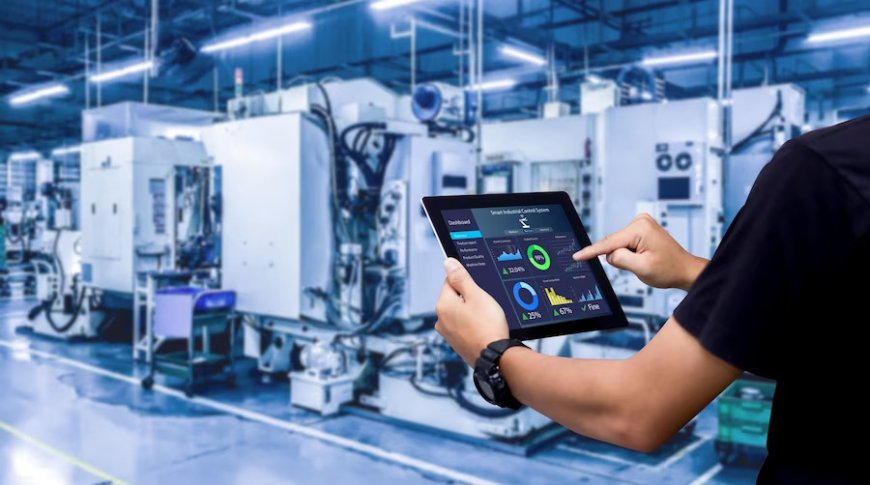
The manufacturing field is experiencing a very big change lead by digital technologies, mechanization as well as data intelligence. At the core of this change lies the industrial internet of things NC, an impactful idea that merges machines, systems and individuals to make clever, more effective industrial surroundings. As industries aim to stay competitive in a rapidly shifting global market, adopting updated technologies is not a choice anymore; it is super important. The industrial internet of things is developing as a notable supporter of smart manufacturing, delivering unparalleled degrees of reachability, control and development across activities.
Understanding Industrial Internet of Things in Manufacturing
The industrial internet of things relates to a network of interconnected gadgets, detectors as well and software systems that collect and share data in real time within industrial places. Unlike conventional manufacturing systems, that divisions, IIoT merges every element of the production process into a combined ecosystem. This unity lets producers to supervise machine productivity, monitor production metrics and check data for better problem-solving. By utilizing technologies like cloud services, artificial intelligence and local computing, IIoT changes raw data into functional insights that lead to effectiveness as well as creativity.
Enhancing Operational Efficiency
Among the main purposes why the industrial internet of things is considered the next phase of smart manufacturing is its capacity to notably develop operational effectiveness. With live supervising as well as predictive analytics, producers can find inefficiencies, minimize waste as well as develop resource applications. For instance, monitors connected to tool can speedily find anomalies as well as warn operators before issues develop into pricey breakdowns. This proactive approach often help to reduces inactive time and makes sure continuous production, eventually developing entire efficiency.
Enabling Predictive Maintenance
Upkeep has generally been a reactive procedure, often resulting in unpredictable tool malfunctions as well as production delays. The industrial internet of things shifts this version by letting predictive maintenance. By continuously supervising the state of machines through detectors as well as data analytics, producers can predict when an element is probably to fail as well as plan maintenance accordingly. This not just minimizes inactive time but also develops the lifetime of the tool. Predictive maintenance supports planning save charges, develop dependability as well as upkeep frequent production standard.
Improving Product Quality
Quality control is a super important factor in producing, and the industrial internet of things has a very important role in developing product standards. By gathering data at every phase of the production process, manufacturers can spot some issues, inconsistencies, as well and variations in real-time. Updated analytics equipment can represent the main reason for standard issues, allowing for speedy corrective step. This often makes sure that products align with top quality standards as well and reduce the probability of recalls or client unhappiness.
Driving Data-Driven Decision Making
In the universe of smart manufacturing, we all understand that data is among the most pricey assets. The industrial internet of things lets organizations to make data-based choices by offering precise as well as promptly datas. Supervisors can enter dashboards as well as analytics statements that deliver a detailed view of operations, right from production rates to supply chain efficiency. This visibility often lets businesses to react speedily to shifting market requirements, develop production plans as well as assign resources more proactively.
Supporting Sustainability and Energy Efficiency
Maintainability has turn into a top preference for industries throughout the world, as well as the industrial internet of things invests notably in reaching ecological aims. By monitoring energy usage as well as resource usage, IIoT units help manufacturers spot areas where energy can be saved as well and waste can be decreased. This not just help to minimize operational costs but also meets global maintainability initiatives.
Strengthening Supply Chain Integration
Contemporary manufacturing depends heavily on effective supply chain control. The industrial internet of things develops a supply chain combination by offering real time reachability into stock levels, production status as well as logistics productivity. This openness lets better collaboration between vendors, producers, and distributors. For example, automated systems can activate orders when inventory levels fall below a some limit, making sure prompt replenishment. Developing supply chain effectiveness minimizes holdups, decreases charges as well as develops client happiness.
The next phase of manufacturing is obviously intelligent, combined as well as data-based. The industrial internet of things is at the front of this shift, letting fields to attain greater effectiveness, develop standard as well as greater creativity. By inviting IIoT, producers can get new chances, decrease productivity charges as well as stay competitive in a developing digital world. As technology keeps on improving, the usage of IIoT will just speed up, develops its duty as a core of smart techniques. Businesses that contribute to this technique will be better placed to improve sectors of future. Click here for more details.