Zoconut Review: A Closer Look at Trust, Transparency, and User Confidence
This blog explores Zoconut from a transparency and trust perspective, covering privacy communication, security claims, pricing clarity, refund policies, and public professionalism. Designed for dietitians and wellness professionals, it highlights key factors to evaluate before choosing health-tech software.
 wellnessz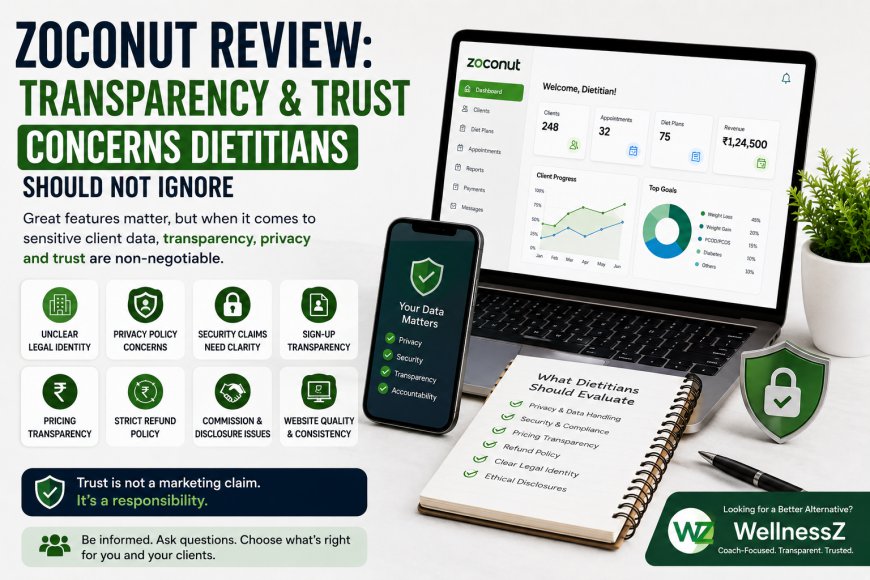
Nutrition software has become an essential part of modern wellness businesses. Dietitians and nutrition professionals rely on digital platforms to manage appointments, build diet plans, monitor progress, communicate with clients, and organize day-to-day operations.
But when software handles personal health information, choosing a platform becomes more than a feature comparison.
Professionals are trusting these systems with sensitive client records, private conversations, wellness goals, and payment information. That responsibility makes transparency and accountability just as important as technology itself.
Zoconut is one of the platforms serving dietitians and nutrition professionals. It offers tools intended to simplify client management and streamline business operations. While the platform promotes itself as a complete solution for nutrition practices, publicly available information raises several areas that professionals may wish to examine more closely.
This article does not attempt to issue legal conclusions or question every user experience. Instead, it explores public-facing transparency concerns and explains why they matter when evaluating health-tech software.
Trust Is More Than Features
Many software platforms compete by highlighting convenience and automation. Terms like secure, professional, HIPAA compliant, and all-in-one are commonly used across the industry.
Yet in healthcare and wellness technology, trust is rarely built through marketing language alone.
Professionals want confidence that the platform they choose communicates openly about:
- Data handling
- Privacy practices
- Ownership
- Security standards
- Pricing structure
- Customer policies
When sensitive health-related information is involved, transparency becomes part of the product experience itself.
Questions Around Legal Identity
One of the most basic expectations from a SaaS company is consistent legal identification.
Public references connected to Zoconut appear to mention multiple company names, including Zoconut Private Limited, Medicians Software Solutions Private Limited, and Zoconut Pvt Ltd.
Although there may be operational explanations for this, inconsistent naming can create confusion among prospective customers.
Before investing in software, users generally want clarity regarding:
- Which company owns the platform
- Who processes financial transactions
- Which entity manages customer data
- Who is accountable for support and disputes
For software operating in healthcare-related spaces, legal clarity contributes directly to trust.
Privacy Communication Deserves Attention
Privacy is a major decision factor in nutrition software.
Zoconut promotes features involving:
- Client communication
- Diet planning
- Appointments
- Progress tracking
- Wellness management
These functions normally require user information to be collected or processed in some form.
Public privacy labels and disclosures may leave some users seeking additional explanation regarding how information is managed.
Common user expectations typically include clear answers to questions such as:
- What information is collected?
- Why is it necessary?
- How is it protected?
- How long is it retained?
- Can users request deletion?
When privacy communication feels incomplete or difficult to interpret, confidence can decline even if the platform itself provides useful functionality.
Clear communication matters because users increasingly evaluate privacy before committing to software.
Privacy Policies Should Feel Understandable
A privacy policy should function as a practical guide rather than a technical obstacle.
Publicly available privacy information connected with Zoconut may appear challenging for some users to navigate, particularly when policies contain dense wording or combine multiple topics together.
A strong privacy framework usually explains:
- Data collection practices
- Storage methods
- User rights
- Access permissions
- Retention periods
- Contact procedures for privacy concerns
For professionals working with sensitive wellness information, policies written in straightforward language are easier to trust and follow.
Clarity benefits both users and software providers.
Sign-Up Transparency Shapes First Impressions
The registration process often creates the first meaningful trust interaction between a company and its users.
During onboarding, people commonly provide:
- Name
- Phone number
- Email address
- Business information
- Team details
- Practice-related data
While Zoconut directs users toward terms and conditions, some professionals may expect more visible privacy guidance during registration.
Many SaaS platforms now provide short privacy explanations alongside sign-up forms that clarify:
- What information is requested
- Why it is needed
- How it will be used
These small details can improve comfort and help users feel informed from the beginning.
Trust often starts before the first login.
Security Claims Work Best With Supporting Context
Security remains one of the strongest decision factors for health-tech buyers.
Zoconut publicly references security and compliance frameworks such as HIPAA and PCI, which naturally attract attention from professionals handling client information.
When platforms promote these standards, users often seek supporting details like:
- Audit information
- Certification references
- Scope of protection
- Systems included
- Practical limitations
Without easily accessible context, users may struggle to understand how security claims apply in real-world use.
In healthcare technology, confidence grows strongest when security communication feels transparent and verifiable.
Pricing Transparency Matters
Pricing clarity influences purchasing decisions and long-term satisfaction.
Although Zoconut presents pricing as straightforward, some users may still seek more visibility around:
- Subscription costs
- Usage credits
- Additional charges
- Renewal rules
- Refund conditions
- Custom pricing structures
Clear pricing supports informed decision-making and reduces future misunderstandings.
This is particularly important for:
- Solo practitioners
- Small clinics
- Growing wellness brands
- Budget-conscious professionals
Transparent pricing helps buyers evaluate software with greater confidence.
Refund Policies Affect User Comfort
Refund terms often influence how comfortable professionals feel when exploring a new platform.
Public refund language associated with Zoconut appears relatively restrictive, including references to limited refund eligibility and longer processing timelines.
While companies may establish strict policies for operational reasons, users generally prefer refund systems that feel clear and predictable.
Many professionals look for:
- Defined eligibility rules
- Clear timelines
- Simple procedures
- Transparent expectations
Fair and understandable refund communication contributes to a stronger customer experience.
Commission Opportunities May Raise Ethical Questions
Zoconut promotes earning opportunities connected with lab tests and future product-related recommendations.
Commission systems are not automatically problematic, and many industries use referral models successfully.
However, within health and wellness environments, they can create concerns if financial relationships are not openly communicated.
Clients may reasonably expect transparency when recommendations involve potential earnings connected to:
- Lab testing
- Supplements
- Wellness products
- Referral programs
Disclosure helps protect professional credibility and supports informed client decision-making.
Website Quality Also Builds Trust
A company’s public communication often shapes how its professionalism is perceived.
Some public Zoconut content appears to include:
- Repetitive wording
- Language inconsistencies
- Older references
- Uneven presentation
Individually, these may appear minor. Collectively, however, they can influence confidence and first impressions.
In health-tech businesses, website quality supports:
- Brand trust
- Professional reputation
- User confidence
- Search visibility
Communication quality matters because users frequently judge reliability through public-facing content.
Final Thoughts
Zoconut may offer practical tools and workflow solutions for dietitians and nutrition professionals. Many users may find genuine value in its features and business capabilities.
At the same time, choosing health-tech software requires looking beyond functionality alone.
Professionals increasingly evaluate:
- Transparency
- Privacy communication
- Security messaging
- Pricing clarity
- Refund policies
- Ethical disclosures
- Overall professionalism
The observations discussed here are not intended to predict every user experience or dismiss the platform entirely. Instead, they encourage thoughtful software evaluation when sensitive client and wellness information is involved.
For professionals exploring alternatives, WellnessZ positions itself as a coach-focused platform designed around transparency, workflow efficiency, automation, and business growth support.