10 Types of Indian Dal & Pulses and Their Health Benefits
Dal and pulses have been an essential part of Indian cuisine for centuries. Whether it's a comforting bowl of dal tadka, a wholesome khichdi, or a nutritious salad made with sprouts, pulses are among the healthiest foods you can include in your daily diet.
 refreshyourlife
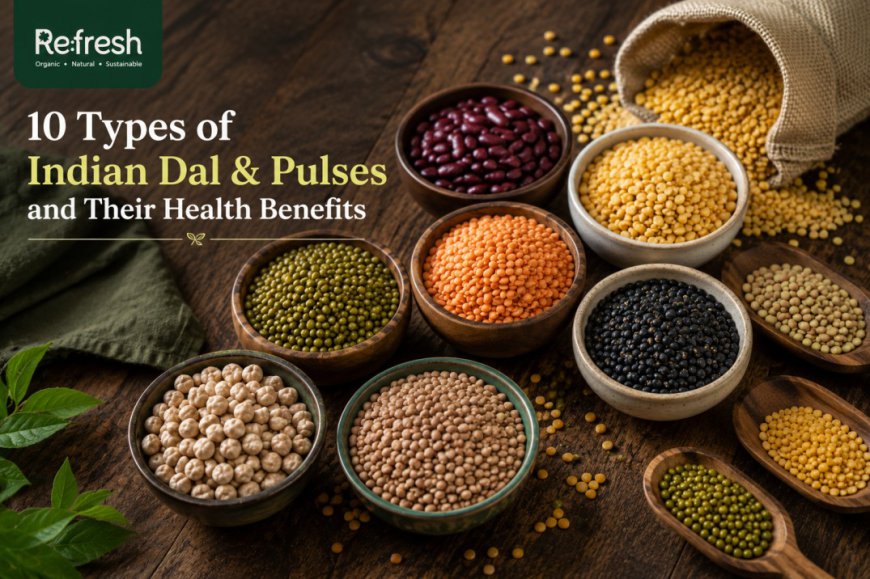
What Are Dal and Pulses?
Many people use the terms "dal" and "pulses" interchangeably, but they are slightly different.
Pulses are the edible dried seeds of legumes such as chickpeas, lentils, peas, and beans.
Dal refers to pulses that have been split and sometimes polished for cooking.
Both are excellent sources of nutrition and form an important part of vegetarian diets across India.
1. Toor Dal (Pigeon Pea)
Toor Dal is one of India's most commonly consumed dals. It has a mild flavor and is widely used in sambhar, dal fry, and Gujarati dal.
Health Benefits
- Rich source of plant protein
- High in dietary fiber
- Supports healthy digestion
- Helps regulate blood sugar levels
- Promotes heart health
- Provides long-lasting energy
2. Moong Dal (Green Gram)
Moong Dal is known for being light on the stomach and easy to digest. It is commonly used in soups, khichdi, cheela, sprouts, and desserts.
Health Benefits
- Easy to digest
- High-quality protein source
- Rich in antioxidants
- Supports gut health
- Helps in weight management
- May reduce inflammation
3. Masoor Dal (Red Lentil)
Masoor Dal cooks quickly and has a mild earthy flavor. It is ideal for busy households looking for a nutritious meal.
Health Benefits
- Excellent source of protein
- Rich in iron
- Supports healthy blood circulation
- Helps reduce fatigue
- Good source of folate
- Supports muscle recovery
4. Urad Dal (Black Gram)
Urad Dal is widely used in dosa, idli, medu vada, and Dal Makhani. It has a creamy texture and impressive nutritional value.
Health Benefits
- High in protein
- Rich in calcium and iron
- Supports bone health
- Helps improve stamina
- Good for muscle repair
- Promotes digestive health
5. Chana Dal (Split Bengal Gram)
Chana Dal has a nutty flavor and is commonly used in curries, snacks, and traditional Indian sweets.
Health Benefits
- Rich in protein
- High in dietary fiber
- Keeps you fuller for longer
- Helps control appetite
- Supports healthy blood sugar levels
- Good for heart health
6. Rajma (Kidney Beans)
Rajma is technically a pulse rather than a dal, but it deserves a place on this list because of its exceptional nutritional profile.
Health Benefits
- Excellent source of protein
- Rich in soluble fiber
- Supports cardiovascular health
- Helps lower LDL cholesterol
- Improves digestive health
- Keeps you satisfied for longer
7. Kabuli Chana (Chickpeas)
Kabuli Chana is widely used in salads, curries, hummus, and healthy snacks.
Health Benefits
- Rich in plant-based protein
- High in fiber
- Supports healthy digestion
- Helps maintain stable blood sugar
- Promotes satiety
- Rich in magnesium and folate
8. Lobia (Black-Eyed Peas)
Lobia is popular in many Indian households and is known for its soft texture and earthy taste.
Health Benefits
- Rich in protein
- Good source of iron
- Supports healthy blood circulation
- Helps improve digestion
- Low in fat
- Ideal for balanced diets
9. Horse Gram (Kulthi Dal)
Horse Gram is considered one of India's oldest superfoods. It has long been valued in traditional diets.
Health Benefits
- High in protein
- Rich in antioxidants
- Supports weight management
- Good source of iron
- Helps improve metabolism
- Supports kidney health when included as part of a balanced diet
10. Whole Green Gram
Whole Green Gram retains its outer layer, making it even richer in fiber than split Moong Dal.
Health Benefits
- Excellent source of dietary fiber
- Supports digestive health
- Rich in protein
- Helps maintain healthy cholesterol levels
- Supports healthy gut bacteria
- Keeps you energized throughout the day
Why Should You Include Dal & Pulses in Your Daily Diet?
Adding different varieties of dal and pulses to your meals can provide numerous health benefits.
Some key advantages include:
- Excellent source of plant-based protein
- Naturally low in fat
- Rich in dietary fiber
- Supports healthy digestion
- Helps maintain blood sugar levels
- Promotes heart health
- Keeps you fuller for longer
- Affordable and nutritious
- Suitable for vegetarian and vegan diets
- Highly versatile for Indian cooking
Tips for Buying Quality Dal & Pulses
Choosing good-quality pulses is just as important as including them in your diet.
Here are a few tips:
- Choose trusted brands that maintain quality standards.
- Prefer clean, unpolished varieties whenever possible.
- Store pulses in airtight containers.
- Keep them in a cool and dry place.
- Wash thoroughly before cooking.
- Soaking larger pulses like Rajma and Kabuli Chana helps improve digestibility and cooking time.