Anhydrous Hydrofluoric Acid Prices: Latest Market Trends and Forecast Outlook
The global chemical industry continues to witness significant transformations as supply chains evolve, environmental regulations tighten, and industrial demand fluctuates across regions.
 cheminfo
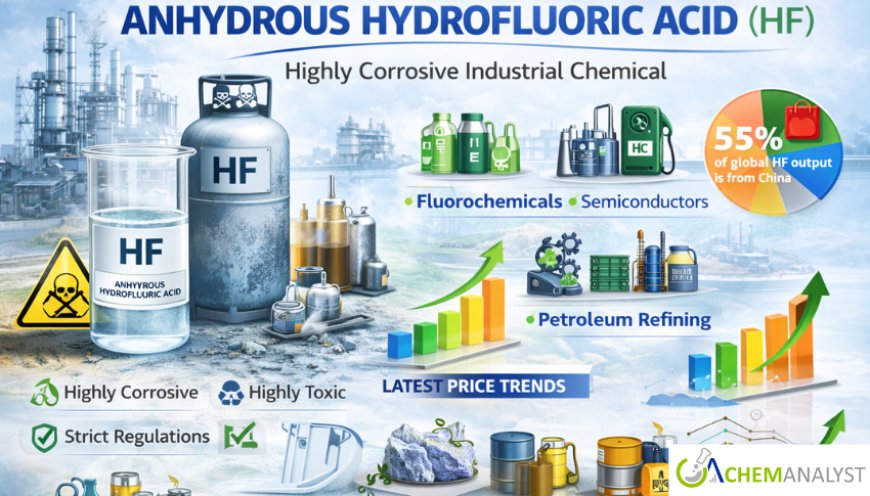
The global chemical industry continues to witness significant transformations as supply chains evolve, environmental regulations tighten, and industrial demand fluctuates across regions. Among essential industrial chemicals, Anhydrous Hydrofluoric Acid Prices remain closely monitored due to the product’s critical role in manufacturing fluorochemicals, semiconductors, petroleum refining catalysts, and specialty materials. As a key raw material in numerous high-value sectors, price movements for this chemical often reflect broader industrial trends and economic conditions.
In 2026, the market outlook indicates ongoing volatility shaped by feedstock availability, regional demand shifts, and expanding downstream industries. With strong growth expected in electronics, refrigerants, and energy sectors, the price trajectory of anhydrous hydrofluoric acid is likely to remain dynamic in both developed and emerging markets.
Market Overview and Industry Significance
Anhydrous hydrofluoric acid (AHF) is a highly reactive, colorless liquid produced primarily from fluorspar and sulfuric acid. It serves as an indispensable feedstock in fluorochemical production, semiconductor manufacturing, and petroleum refining processes. The global market for hydrofluoric acid reached around USD 3.29 billion in 2025 and is projected to expand steadily through the next decade due to increasing industrial consumption.
The importance of this chemical stems from its versatility. It is widely used in the production of fluoropolymers, refrigerants, aluminum fluoride, lithium battery chemicals, and electronic components. As demand for these products continues to rise, the Anhydrous Hydrofluoric Acid Price Market remains closely tied to global industrial activity and technological advancements.
Latest Anhydrous Hydrofluoric Acid Prices Trends in 2025–2026
Recent market data indicates that the price of anhydrous hydrofluoric acid experienced notable fluctuations during 2025. In China, prices rose from approximately RMB 11,583 per ton at the beginning of the year to over RMB 13,000 per ton by year-end, reflecting an increase of more than 12%.
In global markets, price levels also varied across regions. During late 2025, the United States recorded prices near USD 2,517 per metric ton, while China averaged around USD 1,680 per metric ton, highlighting significant regional cost differences.
Several factors contributed to these fluctuations:
-
Tight supply of fluorspar, the primary raw material
-
Rising production costs due to energy prices
-
Strong demand from refrigerant and semiconductor industries
-
Logistics disruptions affecting supply chains
As 2026 progresses, analysts expect the Anhydrous Hydrofluoric Acid Price Trends to remain firm due to persistent cost pressures and steady industrial consumption.
Key Factors Influencing Anhydrous Hydrofluoric Acid Prices
1. Raw Material Supply
Fluorspar availability plays a dominant role in determining production costs. Limited mining output, export restrictions, and environmental regulations can significantly impact price levels. When raw material supply tightens, manufacturers often pass higher costs to buyers, pushing market prices upward.
2. Energy and Production Costs
The production of hydrofluoric acid requires energy-intensive processing. Rising electricity and fuel prices increase manufacturing costs, directly influencing the Anhydrous Hydrofluoric Acid Prices across regions.
3. Demand from Downstream Industries
Demand growth from fluorochemicals, semiconductors, and refrigerants remains a major price driver. Expansion in electronics manufacturing and green technologies continues to support long-term demand.
4. Supply Chain Disruptions
Shipping delays, trade restrictions, and geopolitical uncertainties can reduce product availability in key markets, causing short-term price spikes.
Track Real Time of Anhydrous Hydrofluoric Acid
https://www.chemanalyst.com/ChemAnalyst/PricingForm?Product=Anhydrous%20Hydrofluoric%20Acid
Regional Price Analysis
Asia-Pacific
Asia-Pacific dominates global hydrofluoric acid production, with China accounting for more than 55% of global supply.
The region’s strong industrial base, expanding electronics sector, and increasing chemical manufacturing capacity continue to support steady demand and relatively competitive pricing.
North America
Prices in North America tend to remain higher due to stricter environmental regulations, higher production costs, and reliance on imports. Market tightness in late 2025 caused prices to rise slightly due to reduced availability.
Europe
European markets often experience higher prices due to stringent environmental compliance requirements and increased energy costs.
Demand Drivers Supporting Market Growth
Fluorochemical Industry Expansion
More than half of global hydrofluoric acid demand comes from fluorocarbon production, including refrigerants used in HVAC systems.
This sector remains a primary driver of the Anhydrous Hydrofluoric Acid Price Market, especially with increasing demand for energy-efficient cooling technologies.
Semiconductor Industry Growth
Hydrofluoric acid is essential for cleaning and etching silicon wafers used in electronics manufacturing. Rising global semiconductor production continues to boost demand significantly.
Applications in microelectronics, advanced displays, and MEMS technologies have further strengthened consumption patterns in recent years.
Oil Refining and Petrochemicals
Hydrofluoric acid is widely used as a catalyst in alkylation processes for producing high-octane gasoline. This application accounts for a substantial share of global consumption and remains a stable demand source.
Battery and Renewable Energy Sector
Growing electric vehicle production has increased demand for lithium battery chemicals, indirectly supporting hydrofluoric acid consumption.
Supply Dynamics and Production Landscape
The global production landscape is concentrated among major chemical manufacturers and regions rich in fluorspar reserves. Investment in new production facilities continues to expand supply capacity.
Recent industry developments include new plant investments and expansion projects aimed at increasing production efficiency and meeting rising demand.
Despite capacity expansion, supply constraints persist due to environmental regulations, mining limitations, and rising operational costs.
Market Challenges and Constraints
Environmental and Safety Regulations
Hydrofluoric acid is highly toxic and corrosive, requiring strict handling and storage measures. Increasing environmental regulations raise compliance costs for manufacturers.
Raw Material Dependency
Heavy reliance on fluorspar mining makes the industry vulnerable to supply disruptions.
Price Volatility
Fluctuating raw material costs and demand cycles can lead to unpredictable pricing trends.
Market Opportunities
Despite challenges, several opportunities are shaping future growth:
-
Rising semiconductor manufacturing capacity worldwide
-
Increased investment in renewable energy technologies
-
Expansion of fluoropolymer applications
-
Growing demand for lithium battery chemicals
These factors are expected to provide long-term support to the Anhydrous Hydrofluoric Acid Price Market.
Forecast Outlook for 2026 and Beyond
Looking ahead, industry forecasts suggest moderate but steady market growth. The global hydrofluoric acid market is expected to reach approximately USD 4.22 billion by 2034, driven by increasing industrial demand and technological advancements.
Price trends in 2026 are likely to remain influenced by:
-
Stable downstream demand
-
Continued raw material cost pressures
-
Expanding electronics and energy sectors
Overall, analysts anticipate gradual price increases with periodic fluctuations due to supply-demand imbalances.
Conclusion
The global Anhydrous Hydrofluoric Acid Prices outlook in 2026 reflects a market characterized by steady demand growth, evolving supply dynamics, and ongoing cost pressures. Driven by expanding semiconductor manufacturing, rising refrigerant consumption, and increasing energy sector applications, the market is expected to maintain stable long-term growth.
While challenges such as environmental regulations, raw material dependency, and price volatility remain significant, ongoing investments in production capacity and technological innovation are likely to support future market stability.
As industrial demand continues to expand globally, the Anhydrous Hydrofluoric Acid Price Trends will remain closely tied to developments in key downstream industries, making this chemical a critical indicator of broader industrial economic activity.