Expert Services for Healthcare Data Security Rules
In the bustling economic corridor of East New York, from the high-traffic logistics hubs near JFK to the specialized clinics lining Pennsylvania Avenue, the digital stakes have never been higher.
 defendmybusiness12
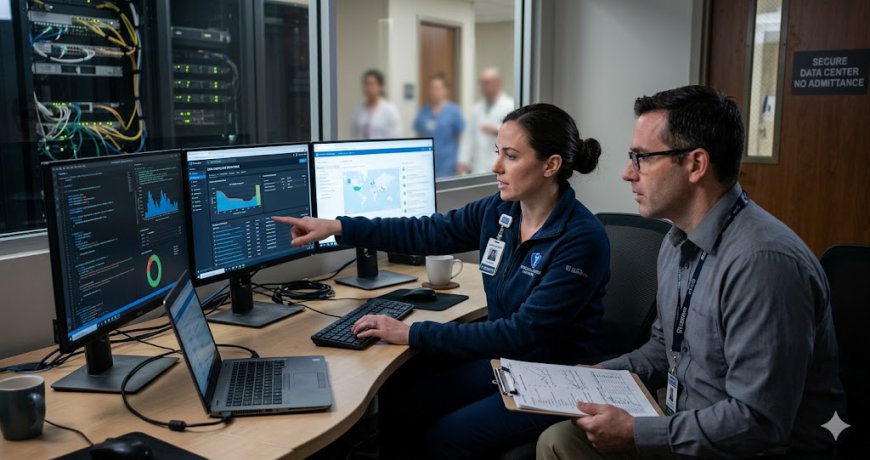
In the bustling economic corridor of East New York, from the high-traffic logistics hubs near JFK to the specialized clinics lining Pennsylvania Avenue, the digital stakes have never been higher. For healthcare facility managers and corporate IT leads, "compliance" is no longer just a checkbox—it is a defensive perimeter. As we move through 2026, the landscape of Expert Services for Healthcare Data Security Rules has shifted from basic firewall maintenance to a complex web of federal mandates and state-specific protections like the NY SHIELD Act.
Local medical practices and warehouse operators handling sensitive health data face a predatory threat environment where ransomware groups specifically target mid-sized New York entities. Whether you are managing a multi-specialty surgical center or a hospitality group overseeing employee health benefits, the risk of a breach is a question of "when," not "if." Establishing a baseline of trust requires more than just software; it demands a strategic partnership with an expert hipaa compliance consultant who understands the unique regulatory pressures of the New York market.
The 2026 Regulatory Landscape for East New York Healthcare
The compliance environment in New York is a dual-layered challenge. While federal standards provide the foundation, New York State has introduced more aggressive timelines for breach notification and data sovereignty. If you operate in the Five Boroughs, you are likely balancing the updated HIPAA Security Rule—which now mandates annual risk assessments—with the SHIELD Act's broader definition of "private information."
Mandatory Annual Security Risk Assessments
The ambiguity of "periodic" reviews is dead. New federal updates now require every covered entity to perform a documented Security Risk Analysis (SRA) every 12 months. For an East New York clinic, this means identifying every endpoint, from the front-desk tablet to the remote billing specialist's laptop. Failing to document this process is often viewed by the Office for Civil Rights (OCR) as a "willful neglect" violation, which carries significantly higher penalties.
Encryption and Multi-Factor Authentication (MFA)
What used to be "addressable" is now mandatory. Encryption for data at rest and in transit is a hard requirement for 2026. Furthermore, MFA is no longer an optional security layer; it is the standard for any system accessing Electronic Protected Health Information (ePHI). If your staff can log into a patient portal with just a password, your facility is currently out of compliance.
The Impact of the NY SHIELD Act
The SHIELD Act casts a wider net than HIPAA. It covers Social Security numbers, biometric data, and even login credentials for non-health systems. For logistics and warehouse operators in East New York who handle employee medical files or worker’s compensation data, this means you are a regulated entity. You must maintain a data security program that includes administrative, technical, and physical safeguards scaled to your business size.
Technical Safeguards and IT Business Solutions
Securing a modern healthcare or corporate environment requires a move toward "Zero Trust" architecture. This philosophy assumes that threats exist both outside and inside the network. Local businesses are increasingly moving away from "set it and forget it" hardware in favor of integrated it business solutions that offer real-time monitoring and automated threat response.
Cloud vs. On-Premise Security
Many East New York medical facilities are migrating to the cloud to reduce hardware overhead. While cloud providers offer robust security, the "shared responsibility model" means the facility is still responsible for user access and data configuration.
-
On-Premise: Offers total control but requires a dedicated team for patching and physical security.
-
Cloud: Provides scalability but requires expert configuration to prevent "leaky" buckets and unauthorized API access.
Implementing Enterprise-Grade Firewalls
A standard residential router is a revolving door for hackers. High-density environments in Brooklyn need advanced traffic inspection. When evaluating the best enterprise firewall providers US market, look for features like deep packet inspection (DPI) and encrypted traffic analysis. These tools can identify malware hidden inside "secure" HTTPS traffic without slowing down your patient check-in process.
Endpoint Protection and Mobile Device Management (MDM)
In a world of telehealth and mobile nursing, the "network" extends to wherever the practitioner is standing. MDM allows IT managers to remotely wipe a lost phone or tablet, ensuring that a stolen device doesn't become a gateway to your entire database. This is a critical component of satisfying the HIPAA "Physical Safeguards" requirement.
Workforce Security Training: The Human Firewall
Technology can block 99% of attacks, but the remaining 1% relies on your employees. In East New York, social engineering and "smishing" (SMS phishing) are the primary vectors for initial access. A receptionist clicking a "urgent invoice" link can bypass a million-dollar security stack in seconds.
Phishing Simulations and Real-Time Feedback
Generic annual training videos don't work. Modern security programs use randomized phishing simulations that mimic real-world threats. When an employee fails a simulation, they receive immediate, non-punitive "micro-learning" that reinforces the correct behavior. This builds a culture of skepticism that is vital for long-term data integrity.
Role-Based Access Control (RBAC)
The principle of "Least Privilege" is a cornerstone of HIPAA. Does your janitorial staff need access to the billing server? Does your marketing team need to see patient diagnoses? By implementing RBAC, you ensure that even if an account is compromised, the "blast radius" of the breach is limited to only what that specific user could access.
Incident Response Planning
Compliance requires having a written plan for when things go wrong. This includes designated roles, communication channels, and a list of "first calls" (legal, forensic IT, insurance). For healthcare facilities, this plan must also include procedures for maintaining patient care during a system outage, such as returning to paper charts during a ransomware lockdown.
Physical Security and Business Protection
Data security doesn't stop at the keyboard. For East New York logistics centers and corporate offices, the physical environment is just as vulnerable. If an unauthorized person can walk into a server room or pick up a discarded hard drive, your digital encryption won't save you. Integrating modern security systems for business into your overall compliance strategy is essential.
Modern Access Control Systems
Gone are the days of easily duplicated metal keys. Modern facilities utilize biometric scanners or encrypted key fobs that create an "audit trail." This allows administrators to see exactly who entered a sensitive area and at what time—a key requirement for forensic investigations and HIPAA audits.
Surveillance and AI-Powered Monitoring
Smart cameras can now detect unusual behavior, such as a person loitering near a restricted exit at 2:00 AM. For hospitality and event managers in East New York, these systems provide a dual benefit: protecting guest privacy while ensuring that the back-office IT infrastructure remains untouched by unauthorized personnel.
Secure Disposal and Asset Management
Every piece of hardware has a lifecycle. When a workstation is retired, it must be "sanitized" according to NIST standards. Simply deleting files isn't enough; the data remains on the platters. Professional security services ensure that retired assets are physically destroyed or cryptographically erased, with a "Certificate of Destruction" provided for your compliance records.
Comparing Managed Services vs. In-House IT
One of the biggest decisions for East New York business owners is how to staff their security needs. The table below outlines the trade-offs between hiring internal staff and partnering with a Managed Security Service Provider (MSSP).
|
Feature |
In-House IT Team |
Managed Security (MSSP) |
|
Availability |
Typically 9-5 (Mon-Fri) |
24/7/365 Monitoring |
|
Specialization |
Generalists (IT + Security) |
Dedicated Security Specialists |
|
Cost |
High (Salaries + Benefits) |
Predictable Monthly Fee |
|
Retention |
High turnover in NYC market |
Continuity of Service |
|
Compliance |
Employee-dependent knowledge |
Built-in Regulatory Expertise |
While a large hospital might afford a full-time CISO (Chief Information Security Officer), most East New York clinics and logistics firms find that the managed model provides better "bang for the buck" by offering a whole team of experts for the price of one mid-level hire.
Frequently Asked Questions (PAA)
What is the penalty for a HIPAA violation in 2026?
Penalties are tiered based on the level of negligence. They range from "No Knowledge" ($137 to $34,464 per violation) to "Willful Neglect" ($17,232 to over $2 million per year). Importantly, the OCR has increased its focus on small-to-medium practices that fail to perform their annual risk assessments.
Does the NY SHIELD Act apply if my business is small?
Yes. The SHIELD Act applies to any person or business that owns or licenses the private information of a New York resident. While there are some "small business" exemptions regarding the complexity of the security program, the requirement to protect data and notify residents of a breach remains absolute.
How often should we train employees on cybersecurity?
While HIPAA requires training "periodically," the 2026 industry standard is quarterly formal training supplemented by monthly phishing simulations. High-turnover industries, like hospitality or logistics, should include security training as a mandatory part of the Day 1 onboarding process.
Can a firewall guarantee HIPAA compliance?
No. A firewall is a technical safeguard, but compliance also requires administrative safeguards (policies and procedures) and physical safeguards (locking your server room). Think of a firewall as a high-quality lock; it’s useless if you leave the back door open or give a key to the wrong person.
How long do we have to report a data breach in New York?
Under HIPAA, you have up to 60 days to notify individuals. However, the NY SHIELD Act requires notification "without unreasonable delay." Furthermore, new 2026 federal guidelines for critical infrastructure (including some healthcare sectors) may require reporting significant incidents to CISA within 72 hours.
Securing Your Future in East New York
Navigating the intersection of patient care and digital defense is a relentless task. For the businesses that power East New York—from the medical clinics to the distribution centers—the goal is to build a resilient operation that can withstand the evolving threats of the 2020s. Cybersecurity is no longer an "IT problem"; it is a foundational business risk that impacts your reputation, your legal standing, and your bottom line.
By aligning your operations with the latest Expert Services for Healthcare Data Security Rules, you aren't just avoiding a fine; you are signaling to your patients and partners that their most sensitive information is in safe hands. Whether you need a comprehensive gap analysis, a hardware refresh, or a complete compliance overhaul, the right strategy starts with local expertise.
At Defend My Business, we specialize in shielding New York organizations from the complexities of the modern threat landscape. We combine deep technical knowledge with a practical understanding of the East New York business climate. Don't wait for a "Wall of Shame" notification to take action. Contact us today for a confidential security assessment and let’s ensure your business stays protected, compliant, and competitive.