Hydrogenated Nitrile Butadiene Rubber Prices: Latest Market Trends, Supply Dynamics, and Forecast Outlook
 cheminfo
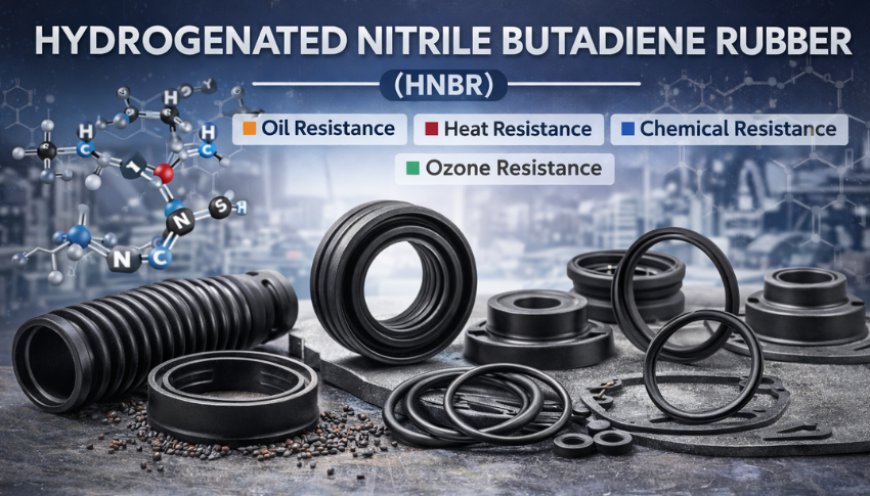
Hydrogenated Nitrile Butadiene Rubber Prices have become a key indicator for industries that rely on high-performance elastomers, particularly automotive, oil and gas, aerospace, and industrial manufacturing sectors. This specialty rubber, commonly known as HNBR, is valued for its superior heat resistance, chemical stability, durability, and mechanical strength. As a result, price movements of this material closely reflect trends in global industrial production, feedstock costs, and macroeconomic conditions.
In 2026, the global market for Hydrogenated Nitrile Butadiene Rubber continues to demonstrate evolving dynamics shaped by supply chain developments, raw material volatility, technological advancements, and demand patterns across end-use sectors. Understanding Hydrogenated Nitrile Butadiene Rubber Prices, along with related Hydrogenated Nitrile Butadiene Rubber Price Trends and Hydrogenated Nitrile Butadiene Rubber Price Market insights, is essential for stakeholders navigating procurement decisions and strategic planning.
Market Overview
The global Hydrogenated Nitrile Butadiene Rubber market has experienced steady growth due to increasing demand for advanced elastomer materials. The market is supported by the rising need for durable rubber components in automotive engines, oilfield equipment, and industrial machinery.
Market data indicates that the HNBR sector achieved strong valuation levels in recent years, with projections showing sustained expansion over the next decade. The market is expected to grow steadily, supported by rising adoption in electric vehicles, renewable energy infrastructure, and industrial automation systems.
The automotive industry remains the dominant consumer of HNBR, accounting for a significant share due to applications such as seals, hoses, gaskets, belts, and O-rings. Its ability to withstand harsh environments makes it indispensable in demanding industrial operations.
Latest Hydrogenated Nitrile Butadiene Rubber Prices Trends
Price Movement in 2025–2026
Recent market data reveals that Hydrogenated Nitrile Butadiene Rubber Prices experienced moderate volatility throughout 2025, driven primarily by feedstock cost fluctuations and changes in demand.
In North America, the HNBR price index declined by approximately 3.6% during the quarter ending September 2025 due to weak automotive demand and elevated inventory levels. The average price was reported at around USD 32,260 per metric ton.
Similarly, Asia-Pacific markets witnessed marginal price declines, largely attributed to reduced input costs for raw materials such as butadiene and acrylonitrile. Weak export activity also contributed to downward pressure on prices in the region.
However, Europe showed mild stabilization with slight price increases, reflecting improved demand conditions and balanced supply.
Overall, the latest Hydrogenated Nitrile Butadiene Rubber Price Trends indicate a market characterized by cautious stability, with periodic fluctuations influenced by feedstock and industrial demand cycles.
Key Factors Influencing Hydrogenated Nitrile Butadiene Rubber Prices
1. Raw Material Costs
Feedstock prices remain the most significant determinant of HNBR pricing. Key inputs include:
-
Butadiene
-
Acrylonitrile
Changes in the costs of these petrochemical derivatives directly impact production expenses. For example, increases in butadiene prices have historically triggered short-term spikes in HNBR prices, while falling feedstock costs typically lead to price corrections.
2. Demand from Automotive Industry
The automotive sector is the largest consumer of HNBR, particularly for engine components requiring high heat and oil resistance. Market growth is closely tied to vehicle production levels, especially in emerging economies.
Increasing adoption of electric vehicles is also supporting long-term demand for advanced elastomers like HNBR due to their performance characteristics.
3. Supply Chain and Inventory Levels
Inventory levels play a critical role in shaping price trends. High stock availability often leads to competitive pricing and downward pressure, while tight supply conditions can result in price increases.
Supply chain disruptions, logistics delays, and transportation costs also influence market pricing dynamics.
4. Industrial and Oil & Gas Applications
The oil and gas industry uses HNBR for sealing systems and drilling equipment. Demand from this sector depends on crude oil prices, exploration activity, and infrastructure investments.
Industrial manufacturing growth also drives demand for high-performance rubber components.
Track Real Time Price Of Hydrogenated Nitrile Butadiene Rubber
Regional Price Analysis
North America
North America remains a significant HNBR market due to strong industrial and aerospace demand. Price trends in this region are closely tied to automotive production cycles and feedstock availability.
Recent data indicates that high inventory levels and moderate demand resulted in slight price declines in 2025.
Asia-Pacific
Asia-Pacific dominates the global HNBR consumption market, led by China, Japan, and India. Rapid industrialization and automotive manufacturing growth are key drivers.
The region is expected to maintain the highest growth rate due to expanding infrastructure and manufacturing sectors.
Europe
European markets exhibit relatively stable price trends due to strong regulatory frameworks and consistent industrial demand.
The region also shows increasing adoption of sustainable and recyclable rubber materials, influencing future pricing dynamics.
Hydrogenated Nitrile Butadiene Rubber Price Market Dynamics
The Hydrogenated Nitrile Butadiene Rubber Price Market is shaped by several macroeconomic and industry-specific factors, including:
-
Global economic growth trends
-
Energy prices
-
Environmental regulations
-
Technological innovation
Advancements in material science, including development of eco-friendly HNBR variants, are expected to influence market competitiveness and pricing structures in the coming years.
Demand Outlook by End-Use Industry
Automotive
The automotive industry accounts for nearly half of total HNBR demand, driven by applications in fuel systems, seals, and belts.
Oil and Gas
HNBR is widely used in drilling operations and high-pressure environments due to its chemical resistance.
Industrial Machinery
Manufacturing sectors utilize HNBR for equipment components exposed to extreme conditions.
Aerospace
Demand from aerospace applications remains stable due to the need for durable elastomers in aircraft systems.
Supply Trends
Global supply of HNBR depends on production capacity, feedstock availability, and technological efficiency.
Manufacturers are increasingly focusing on sustainable production methods to meet environmental regulations and reduce costs.
Strategic partnerships and mergers among major industry players are also shaping supply dynamics.
Forecast Outlook for 2026 and Beyond
The outlook for Hydrogenated Nitrile Butadiene Rubber Prices in 2026 suggests moderate growth with periodic volatility.
Key forecast trends include:
-
Gradual price stabilization
-
Increasing demand from EV and renewable energy sectors
-
Continued influence of feedstock costs
Market projections indicate steady expansion supported by industrial growth and technological innovation.
Challenges Affecting Price Stability
Despite positive growth prospects, several challenges may impact price trends:
-
Feedstock price volatility
-
Environmental compliance costs
-
Supply chain disruptions
-
Economic uncertainties
Addressing these challenges will be crucial for maintaining stable pricing in the future.
Opportunities in the Market
Emerging opportunities include:
-
Growth in electric vehicle production
-
Increasing adoption of renewable energy infrastructure
-
Expansion in industrial automation
-
Development of sustainable rubber technologies
These factors are expected to create long-term demand growth and support price stability.
Conclusion
Hydrogenated Nitrile Butadiene Rubber Prices in 2026 reflect a market transitioning toward stability following recent fluctuations driven by feedstock costs, supply conditions, and industrial demand patterns. The latest Hydrogenated Nitrile Butadiene Rubber Price Trends indicate moderate volatility but overall positive long-term growth prospects.
The Hydrogenated Nitrile Butadiene Rubber Price Market continues to be shaped by automotive demand, technological advancements, and global industrial expansion. As industries increasingly prioritize high-performance materials and sustainable solutions, the HNBR market is expected to experience steady demand growth and evolving pricing dynamics.
Looking ahead, stakeholders should closely monitor raw material trends, supply chain developments, and industrial demand indicators to make informed decisions in this evolving market landscape.