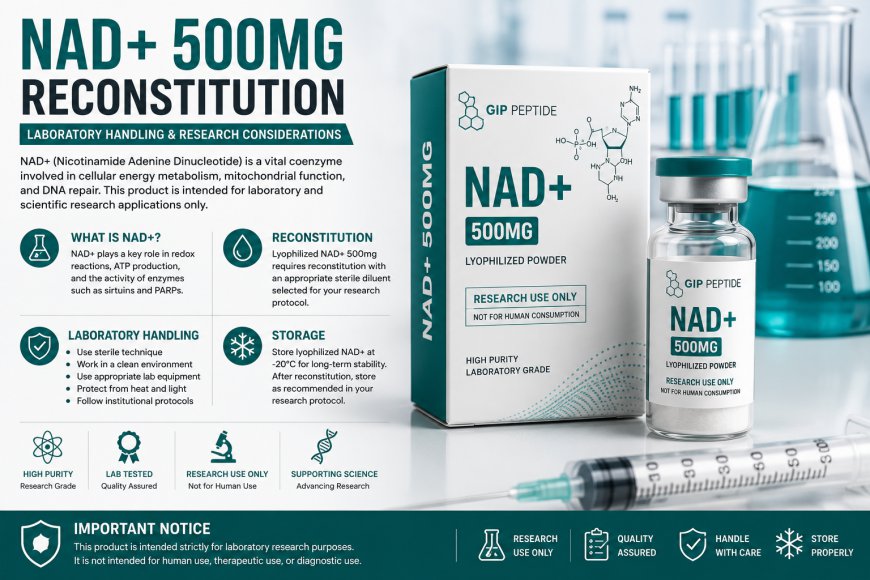
NAD+ 500mg Reconstitution: Laboratory Handling and Research Considerations
Research Use Only: NAD+ 500mg is intended exclusively for laboratory and scientific research. It is not intended for human consumption, therapeutic use, or diagnostic applications.
 andygibson
Introduction
NAD+ (Nicotinamide Adenine Dinucleotide) is a naturally occurring coenzyme found in all living cells and is widely studied for its role in cellular energy metabolism, mitochondrial function, and enzymatic activity. In laboratory settings, NAD+ 500mg is commonly supplied as a lyophilized powder that requires reconstitution before use in research applications.
This guide provides an overview of NAD+ 500mg reconstitution from a laboratory perspective, including general handling practices, storage considerations, and factors researchers should keep in mind when working with this investigational material.
What Is NAD+?
NAD+ is an essential coenzyme involved in numerous biochemical reactions. It plays a central role in redox reactions, ATP production, DNA repair pathways, and the activity of enzymes such as sirtuins and PARPs. Because of its biological importance, NAD+ continues to be investigated in studies involving cellular aging, mitochondrial health, metabolism, and oxidative stress.
Researchers use NAD+ in a variety of experimental models to better understand these biological processes.
Why Reconstitution Is Required
Lyophilization, commonly known as freeze-drying, helps improve the stability and shelf life of many research compounds during storage and transportation. Before laboratory experiments can begin, the dried powder must typically be reconstituted using an appropriate sterile laboratory diluent selected according to the research protocol.
The specific diluent, concentration, and preparation method depend on the objectives of the study and should always follow validated laboratory procedures or the manufacturer’s technical documentation.
Laboratory Handling Considerations
When reconstituting NAD+ 500mg for research purposes, laboratories generally emphasize sterile handling techniques to minimize contamination and preserve sample quality.
Good laboratory practices include:
- Working in a clean laboratory environment.
- Using sterile equipment and appropriate laboratory-grade diluents.
- Labeling reconstituted samples clearly.
- Avoiding unnecessary exposure to heat and direct light.
- Following institutional protocols for preparation and storage.
Maintaining consistent handling procedures helps improve reproducibility across experiments.
Storage After Reconstitution
Storage recommendations may vary depending on the supplier, study design, and stability data available for the specific formulation. Researchers should consult the product documentation provided with the material and follow institutional laboratory guidelines regarding storage temperature, handling, and sample stability.
Repeated freeze-thaw cycles are generally avoided in many laboratory settings because they may affect the stability of certain biological compounds.
Research Applications
NAD+ continues to be investigated across numerous scientific fields, including:
- Cellular metabolism
- Mitochondrial function
- Aging research
- Oxidative stress studies
- DNA repair mechanisms
- Neurobiology
- Energy metabolism
- Molecular biology
Ongoing research continues to expand scientific understanding of NAD+ and its role in cellular physiology.
Conclusion
NAD+ 500mg remains an important research compound in modern biomedical science. Proper laboratory reconstitution, careful handling, and appropriate storage practices help support the quality and consistency of experimental work.