Servo Stabilizer Manufacturing: Process, Technology & Industry Insights
Servo stabilizers play a critical role in maintaining a stable voltage supply for electrical equipment. In industries, laboratories, hospitals, and even residential setups
 shaktiservo89
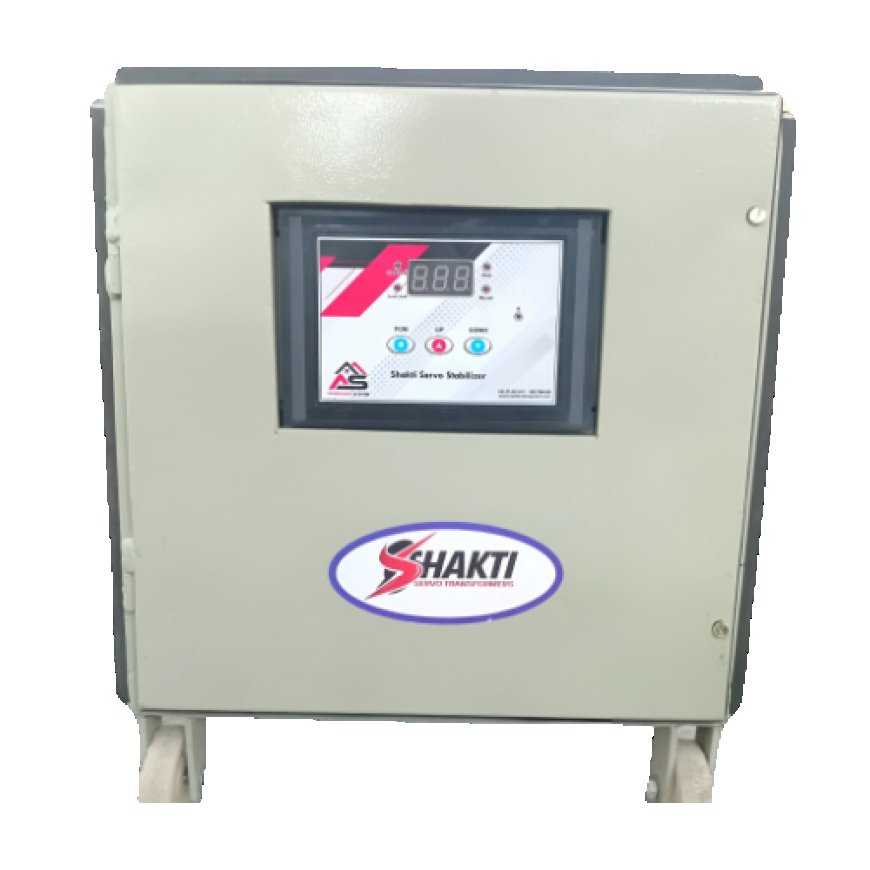
Servo stabilizers play a critical role in maintaining a stable voltage supply for electrical equipment. In industries, laboratories, hospitals, and even residential setups, voltage fluctuations can damage sensitive machines and reduce efficiency. This is where servo stabilizers come into action, ensuring consistent voltage output regardless of input variations.
In this article, we will explore the complete process of servo stabilizer manufacturing, the technology behind it, and why choosing a reliable manufacturer is important for long-term performance.
What is a Servo Stabilizer?
A servo stabilizer is an automatic voltage regulator that uses a servo motor mechanism to control voltage fluctuations. It continuously monitors the input voltage and adjusts it to provide a stable output, protecting electrical equipment from damage.
These stabilizers are widely used in:
- Industrial machinery
- Medical equipment
- Laboratories
- Commercial establishments
- Residential appliances
Importance of Servo Stabilizer Manufacturing
The quality of a stabilizer depends heavily on the manufacturing process. Poorly manufactured stabilizers can lead to inefficient performance, frequent breakdowns, and even equipment failure.
A well-executed servo stabilizer manufacturing process ensures:
- Accurate voltage correction
- High efficiency and performance
- Long operational life
- Safety and reliability
Key Components Used in Manufacturing
Servo stabilizers consist of several important components, each playing a vital role in their functioning:
1. Servo Motor
The servo motor adjusts the voltage by controlling the variable transformer.
2. Dimmer (Variable Transformer)
It regulates voltage levels based on input fluctuations.
3. Control Circuit
The control circuit continuously monitors voltage and sends signals to the servo motor.
4. Buck-Boost Transformer
It increases or decreases voltage to maintain stability.
5. Carbon Brush Assembly
Ensures smooth electrical contact in the transformer.
6. Metal Enclosure
Protects internal components and ensures durability.
Step-by-Step Servo Stabilizer Manufacturing Process
1. Design and Planning
The process begins with designing the stabilizer based on capacity (kVA), application, and load requirements. Engineers plan the circuit design, transformer capacity, and control system.
2. Core and Transformer Winding
High-quality copper or aluminum windings are used to create the transformer. Proper insulation is applied to prevent overheating and electrical faults.
3. Assembly of Components
All major components like servo motor, dimmer, and control circuit are assembled carefully. Precision is important to ensure smooth operation.
4. Circuit Integration
The control panel and electronic circuits are integrated to monitor and regulate voltage automatically.
5. Testing and Calibration
Each unit is tested under different voltage conditions to ensure accuracy and performance. Calibration ensures the stabilizer responds correctly to fluctuations.
6. Quality Inspection
Final inspection checks for safety, durability, and compliance with industry standards.
7. Packaging and Delivery
Once approved, the stabilizers are packed securely and prepared for dispatch.
Types of Servo Stabilizers
During servo stabilizer manufacturing, different types of stabilizers are produced based on usage:
Air-Cooled Servo Stabilizers
Used for small to medium applications like offices and homes.
Oil-Cooled Servo Stabilizers
Suitable for heavy industrial use where high load capacity is required.
Single Phase Stabilizers
Used for residential and small commercial applications.
Three Phase Stabilizers
Designed for industries and large-scale operations.
Applications of Servo Stabilizers
Servo stabilizers are used across various sectors:
Industrial Sector
- CNC machines
- Printing machines
- Textile machinery
Medical Sector
- Diagnostic equipment
- Lab machines
- Imaging devices
Commercial Use
- Offices
- Retail outlets
- IT infrastructure
Residential Use
- Air conditioners
- Refrigerators
- Home appliances
Latest Trends in Servo Stabilizer Manufacturing
The industry is evolving with new technologies to improve performance and efficiency:
- Digital control systems for higher accuracy
- Energy-efficient designs
- Compact and space-saving models
- IoT-enabled monitoring systems
- Enhanced safety features
These advancements are making stabilizers more reliable and user-friendly.
Choosing the Right Manufacturer
Selecting the right manufacturer is crucial for getting a high-quality stabilizer. Look for:
- Experience in manufacturing
- Use of quality components
- Proper testing and certification
- Customization options
- After-sales support
A trusted manufacturer ensures better performance and longer equipment life.
Conclusion
Servo stabilizer manufacturing is a detailed and technical process that requires precision, quality materials, and advanced engineering. From design to final testing, every step plays a vital role in ensuring the stabilizer performs efficiently and reliably.