Sudha Medical College: A Complete Guide for MBBS Aspirants
Sudha Medical College offers quality MBBS education with modern infrastructure, experienced faculty, and strong clinical training, preparing students for successful medical careers.
 doctorsguardian
Introduction
Medical education in India continues to grow rapidly, with new institutions emerging to meet the increasing demand for quality healthcare professionals. Among these developing institutions, Sudha Medical College is gaining attention as a promising destination for students aspiring to pursue an MBBS degree. With modern infrastructure, a strong academic framework, and a focus on practical medical training, the college aims to produce competent and compassionate doctors.
For students preparing for NEET and planning their medical careers, choosing the right medical college is a critical decision. Factors such as faculty quality, hospital facilities, clinical exposure, and academic environment play a significant role in shaping a medical student’s journey. Sudha Medical College is gradually building a reputation for offering a balanced combination of academic excellence and practical learning.
This detailed guide by The Doctors Guardian will help aspiring medical students understand everything about Sudha Medical College, including its infrastructure, courses, admission process, facilities, and career opportunities.
Overview of Sudha Medical College
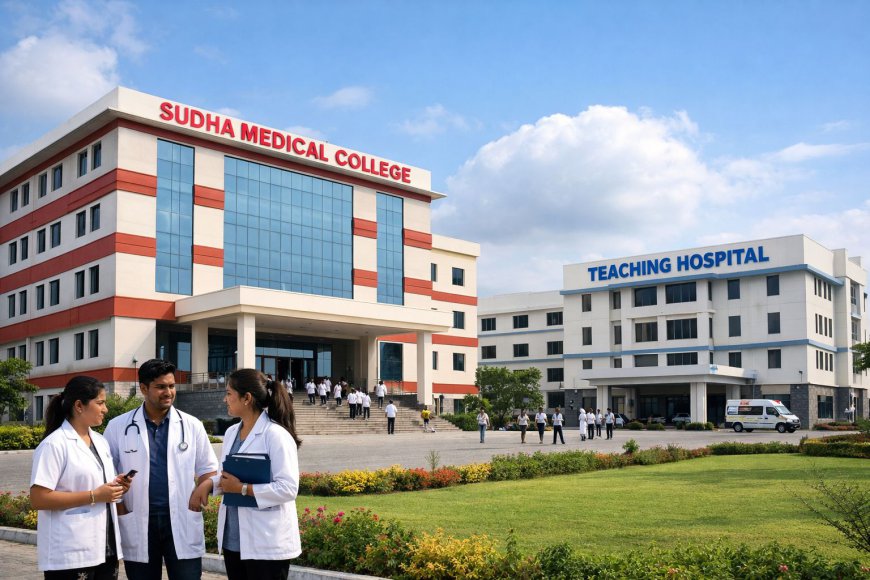
Sudha Medical College is established with the aim of providing quality medical education and strengthening healthcare services in the region. The institution is designed to offer comprehensive medical training supported by modern laboratories, experienced faculty, and a teaching hospital that provides hands-on clinical exposure.
The college focuses on developing medical professionals who are not only academically strong but also ethically responsible and socially aware. By integrating classroom learning with real-world clinical practice, Sudha Medical College ensures that students gain the necessary skills required in the healthcare sector.
The institution follows the guidelines and curriculum laid down by the National Medical Commission (NMC), ensuring that the education provided meets national medical education standards.
Vision and Mission
Vision
The vision of Sudha Medical College is to become a center of excellence in medical education, research, and healthcare services. The institution aims to nurture skilled doctors who can contribute significantly to improving healthcare systems.
Mission
The mission of the college focuses on three major aspects:
-
Providing high-quality medical education through modern teaching methodologies.
-
Promoting research and innovation in medical sciences.
-
Delivering affordable and accessible healthcare services to the community.
Through these objectives, Sudha Medical College seeks to create responsible doctors who are prepared to face real medical challenges.
Courses Offered
Sudha Medical College primarily offers undergraduate medical education, particularly the Bachelor of Medicine and Bachelor of Surgery (MBBS) program.
MBBS Program
The MBBS program is designed to provide a strong foundation in medical sciences while ensuring that students gain practical clinical experience.
Key Highlights of the MBBS Course
-
Duration: 5.5 years
-
Includes 4.5 years of academic study
-
Followed by 1 year of compulsory internship
-
Structured according to the Competency Based Medical Education (CBME) curriculum
The course includes subjects such as anatomy, physiology, biochemistry, pathology, pharmacology, microbiology, forensic medicine, community medicine, and various clinical specialties.
The internship period allows students to work in different hospital departments, giving them real-world exposure to patient care.
Admission Process
Admission to Sudha Medical College is conducted through the National Eligibility cum Entrance Test (NEET), which is the standard medical entrance examination in India.
Steps for Admission
-
Qualify NEET Examination
Students must appear for and qualify in the NEET exam conducted at the national level. -
Participate in Counseling
Eligible candidates must participate in centralized counseling conducted by the respective authorities. -
Seat Allotment
Based on NEET rank, category, and seat availability, students are allotted seats. -
Document Verification
Candidates must verify their academic and identity documents. -
Final Admission
After successful verification and fee submission, admission is confirmed.
Eligibility Criteria
To apply for MBBS admission, candidates must meet the following criteria:
-
Must have completed 10+2 with Physics, Chemistry, and Biology
-
Minimum qualifying marks as per NEET guidelines
-
Must have qualified the NEET examination
-
Must meet age requirements set by regulatory authorities
Infrastructure and Campus Facilities
Sudha Medical College is designed with modern infrastructure to support effective medical education. The campus includes academic buildings, laboratories, hospital facilities, and student amenities.
Academic Infrastructure
The academic block of the college includes:
-
Spacious lecture halls with audio-visual teaching aids
-
Well-equipped laboratories
-
Demonstration rooms
-
Seminar halls
These facilities help students learn complex medical concepts through both theoretical and practical approaches.
Laboratories
Medical education requires extensive laboratory work. The college provides fully equipped labs for:
-
Anatomy
-
Physiology
-
Biochemistry
-
Pathology
-
Microbiology
-
Pharmacology
Students gain hands-on experience through experiments, dissections, and practical training.
Library
The college library plays an essential role in supporting academic learning. It provides access to:
-
Medical textbooks
-
Reference materials
-
National and international journals
-
Digital learning resources
A quiet study environment allows students to focus on academic preparation and research.
Teaching Hospital and Clinical Exposure
One of the most important aspects of medical education is clinical training. Sudha Medical College is associated with a teaching hospital that provides real-time exposure to patient care.
Hospital Facilities
The hospital typically includes departments such as:
-
General Medicine
-
General Surgery
-
Obstetrics and Gynecology
-
Pediatrics
-
Orthopedics
-
Dermatology
-
ENT
-
Ophthalmology
Students participate in ward rounds, clinical discussions, and patient examinations under the supervision of experienced doctors.
This hands-on training helps students develop diagnostic and treatment skills.
Faculty and Teaching Approach
The faculty at Sudha Medical College consists of experienced medical professionals dedicated to teaching and mentoring students. Professors and specialists guide students through theoretical knowledge as well as clinical practice.
Modern Teaching Methods
The college adopts several advanced teaching techniques, including:
-
Interactive classroom learning
-
Case-based discussions
-
Clinical skill training
-
Simulation-based learning
This modern approach ensures that students not only memorize medical knowledge but also understand how to apply it in real healthcare situations.
Student Life at Sudha Medical College
Medical education is demanding, but a balanced campus life helps students stay motivated and productive. Sudha Medical College promotes a positive and engaging student environment.
Hostel Facilities
The college provides separate hostel accommodation for male and female students. Hostel facilities usually include:
-
Comfortable rooms
-
Mess and dining facilities
-
Security and supervision
-
Common study areas
Hostels help create a supportive community where students can focus on their studies.
Sports and Recreation
The institution encourages students to participate in sports and extracurricular activities. Sports facilities often include:
-
Cricket grounds
-
Indoor games
-
Fitness areas
-
Cultural activity spaces
Such activities help students maintain physical and mental well-being.
Clinical Training and Internship
The internship year is a crucial part of the MBBS program. During this period, students rotate through various hospital departments.
Departments Covered During Internship
Interns typically gain experience in:
-
Medicine
-
Surgery
-
Pediatrics
-
Obstetrics and Gynecology
-
Community Medicine
-
Emergency Care
This training prepares graduates for independent medical practice and postgraduate education.
Research and Academic Development
Sudha Medical College encourages students to participate in research activities. Medical research plays an important role in advancing healthcare knowledge.
Students are encouraged to:
-
Participate in medical conferences
-
Present research papers
-
Conduct community health studies
-
Engage in academic discussions
Research exposure helps students develop analytical thinking and contributes to the advancement of medical science.
Community Health Services
Apart from academic education, Sudha Medical College also focuses on community healthcare. Medical camps and outreach programs are organized to provide healthcare services to underserved communities.
Community Activities
These initiatives often include:
-
Free health check-ups
-
Vaccination drives
-
Health awareness programs
-
Rural medical camps
Such activities help students understand real healthcare challenges and build empathy toward patients.
Career Opportunities After MBBS
Graduating from Sudha Medical College opens several career pathways in the medical field.
Postgraduate Education
Many students choose to pursue postgraduate courses such as:
-
MD (Doctor of Medicine)
-
MS (Master of Surgery)
-
Diploma programs in specialized fields
Postgraduate education allows doctors to specialize in specific medical disciplines.
Clinical Practice
Graduates can start practicing medicine in hospitals, clinics, or private healthcare institutions.
Government Medical Services
Doctors may also work in government hospitals, public health programs, and healthcare administration.
Research and Academics
Some graduates choose careers in medical research or teaching at medical institutions.
Importance of Choosing the Right Medical College
Selecting the right medical college is one of the most important decisions for aspiring doctors. A good medical institution provides the right combination of academic excellence, practical exposure, and professional guidance.
Sudha Medical College is gradually establishing itself as an institution that focuses on training skilled medical professionals. With its emphasis on quality education, hospital training, and community healthcare, it offers a solid platform for students pursuing MBBS.
Why Consider Sudha Medical College
There are several reasons why aspiring medical students may consider Sudha Medical College:
-
Modern academic infrastructure
-
Structured MBBS curriculum
-
Clinical training through a teaching hospital
-
Experienced faculty members
-
Opportunities for research and community service
These factors contribute to the development of well-rounded medical professionals.
Conclusion
Sudha Medical College represents a growing institution committed to advancing medical education and healthcare services. With its focus on academic excellence, clinical training, and community healthcare, the college aims to prepare students for successful medical careers.
For NEET aspirants and future doctors, choosing a college that provides both theoretical knowledge and real clinical exposure is essential. Sudha Medical College strives to offer this balanced approach, helping students build strong medical foundations.
As the demand for skilled healthcare professionals continues to rise, institutions like Sudha Medical College play an important role in shaping the next generation of doctors. With dedication, discipline, and the right guidance, students graduating from this institution can make meaningful contributions to the healthcare system and society as a whole.