The Art of the Fruit Stack: Why Suika Game is Your New Favorite Zen Puzzle
If you have ever wanted a game that feels both soothing and satisfying, the watermelon puzzle offers exactly that balance.
 AliceMyers
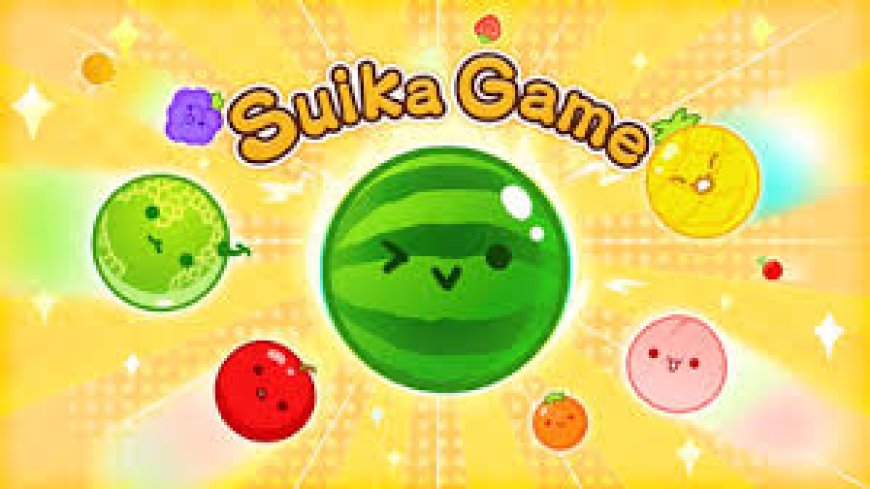
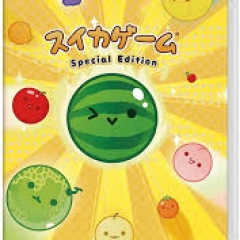
Have you ever found yourself staring at a screen, completely entranced by a tiny, smiling cherry rolling over the curve of a slightly larger strawberry? If you’ve spent any time on the internet lately, you’ve likely seen the colorful, fruit-filled phenomenon that has taken the gaming world by storm. It’s a deceptively simple experience that balances the line between extreme relaxation and high-stakes tension. We are talking about the "Watermelon Game," or as it is officially known, Suika Game.
While high-octane shooters and complex role-playing games have their place, there is something uniquely refreshing about a game that asks nothing more of you than to drop fruit into a box. But don’t let the cute faces and bright colors fool you; beneath its sweet exterior lies a physics-based puzzle that will test your spatial awareness and your patience in the best possible way.
The Simple Magic of the Merge
The premise of the Suika Game is straightforward enough that anyone can pick it up in seconds. You are given a transparent rectangular container and a sequence of fruits that appear at the top, one by one. Your job is to drop them. When two identical fruits touch, they "pop" and evolve into a single, larger fruit. Two cherries become a strawberry; two strawberries become a grape; and so the cycle continues through dekopons, persimmons, apples, pears, peaches, pineapples, and melons.
The ultimate goal? To merge two large honeydew melons into the giant, smiling Watermelon.
The catch is the physics. Unlike traditional tile-matching games where items stay where you put them, these fruits are round, bouncy, and susceptible to gravity. As the container fills up, the pressure mounts. If any fruit crosses the top line of the box for more than a second, it’s game over. What starts as a spacious playground quickly becomes a cramped storage unit where one wrong bounce can send a tiny blueberry wedging under a massive pineapple, tilting your entire strategy into chaos.
Finding Your Fruit-Stacking Flow
To get the most out of your Suika experience, it helps to approach it with a mix of strategy and intuition. Here are a few tips to help you reach that elusive watermelon without losing your mind:
1. Respect the Hierarchy of Size The most common mistake beginners make is dropping small fruits wherever they fit. Early on, try to keep your largest fruits toward the bottom and to one side. If you end up with a large pineapple sitting on top of a tiny cherry, you’ve created a "gap" that is very difficult to fill. This gap creates instability, making it much more likely for your fruit tower to tumble or overflow.
2. Use the Preview Window Just like in Tetris, the game shows you which fruit is coming up next. Use this information to plan your "merging chain." If you see a grape is next, and you have two strawberries ready to pop, you can place the current fruit in a way that sets up a triple-merge reaction. These chain reactions are not only satisfying to watch but are essential for clearing out space quickly.
3. Master the "Squeeze" Sometimes, you’ll have two identical fruits that are close to each other but separated by a small gap. By dropping a slightly heavier fruit on one side, you can often use the weight and momentum to "shove" them together. It’s a risky move, but when you see a peach slide perfectly into another peach to create a pineapple, you’ll feel like a physics genius.
4. Don't Panic When Things Roll The physics engine can be unpredictable. A fruit might bounce off the wall or roll further than you expected. When this happens, take a breath. The game doesn't have a timer, so you can wait for the fruits to settle completely before making your next move. Patience is often the difference between a high score and a premature game over.
More Than Just a High Score
Why has such a simple concept become a global sensation? The answer lies in the "just one more round" factor. Suika Game taps into a very specific part of the human brain that loves order and progression. There is a deep, primal satisfaction in watching a cluttered box suddenly clear out because a series of merges triggered a massive evolution.
It’s also an incredibly social experience. Despite being a single-player game, it has become a staple for streamers and friends who enjoy "backseat gaming." Everyone has a different theory on where the next orange should go, and the shared groan when a melon unexpectedly leaps out of the box is a universal language.
Furthermore, the game serves as a digital "fidget spinner." It’s the perfect companion for a quiet afternoon or a quick break between tasks. There is no lore to memorize, no complex controls to master, and no aggressive monetization. It is just you, the fruit, and the laws of physics.
Why This Simple Game Works So Well
There's a reason Suika Game has resonated with so many people. In an era of sprawling open worlds and hundred-hour RPGs, there's something refreshing about a game that asks almost nothing of you. No story to follow. No inventory to manage. No lore to memorize. Just fruit, gravity, and the quiet thrill of watching two kiwis become something more.
It's the kind of game that respects your time. You can play for five minutes during a coffee break or sink into an hour-long session — both feel equally valid. The difficulty curve is gentle but real: easy to learn, hard to master, and just punishing enough to make every watermelon feel like a genuine achievement.
Conclusion: A Sweet Escape
Whether you are looking to kill five minutes or find yourself accidentally spending five hours chasing a high score, the watermelon puzzle experience is one of the most charming additions to the puzzle genre in years. It reminds us that games don't need photorealistic graphics or epic narratives to be captivating; sometimes, all you need is a clear goal, a bit of a challenge, and a few smiling strawberries.
So, if you haven’t yet experienced the thrill of the "big pop," give it a try. Just be warned: once you start seeing the world in terms of fruit evolution, there’s no turning back. Your quest for the perfect watermelon starts with a single cherry—drop it wisely!