A Complete Guide to Choosing Smart Fans for Large Living Rooms
Here's the thing about large living rooms: they look beautiful, they feel spacious, but they're surprisingly difficult to cool. Standard fans just don't cut it. You get dead zones where the air barely moves, or if the fan actually works, your electricity bill becomes a small second mortgage.
 priyagupta97
Here's the thing about large living rooms: they look beautiful, they feel spacious, but they're surprisingly difficult to cool. Standard fans just don't cut it. You get dead zones where the air barely moves, or if the fan actually works, your electricity bill becomes a small second mortgage.
The real issue? Most fans out there weren't designed for spaces this big. They're engineered for bedrooms and offices, not expansive living areas. That's why smart ceiling fans have quietly become the go-to solution for people who actually understand what they're doing: people who want both comfort and efficiency without sacrificing how their space looks.
Why Do Large Living Rooms Need Different Specifications?
Think about room size. A 20-inch fan? Useless in a sprawling living room. It's like trying to cool a warehouse with a desk fan. What you actually need is something with real power behind it: something that moves air across 400+ square feet without sounding like a jet engine at takeoff.
This is where blade design gets important. Not all blades are the same. Curved, aerodynamically pitched blades aren't just marketing fluff. They genuinely move air more efficiently than the flat, boring blades most conventional fans use. Better design means you can run the fan slower, which gives you two wins: quieter operation and lower energy use.
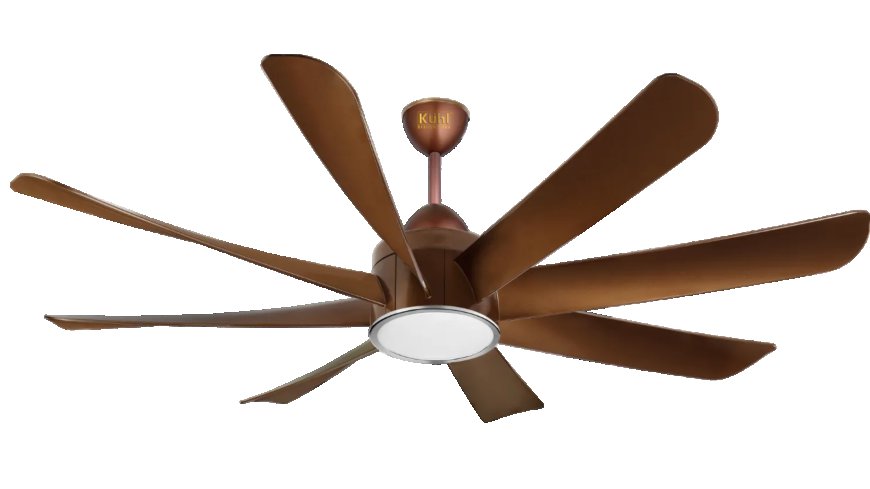
That's why a modern ceiling fan for large spaces needs at least six to eight properly designed blades. It's not about having more blades just for the sake of it. It's engineering that actually works and pays for itself year after year.
BLDC Technology and Its Impact
BLDC - Brushless Direct Current. Yeah, it's a mouthful. But here's why it matters: a BLDC smart fan uses about 65% less electricity than the old AC motors your parents probably had in their house.
How? Simple. Traditional motors waste energy through friction from brushes rubbing against other components, plus they generate unnecessary heat. BLDC motors skip all that. No brushes, no friction, no wasted energy. Power goes directly to doing what actually matters: moving air.
The durability angle is interesting too. Since there's less heat and less wear, these motors just keep running. They last longer. A lot longer. Throw in a remote control ceiling fan like Kühls, where you can dial in the exact speed you want instead of being stuck with three fixed options, and you've got a system that actually makes sense.
Key Performance Features for Large Spaces
Beyond the basics, what actually separates a decent fan from one you'll genuinely love? A few things stand out.
-
Reverse mode is one. Most people forget about this. Winter comes around, and they think their ceiling fan is done for the season. Wrong. Flip it into reverse, and it pushes warm air down from the ceiling instead of pulling it up. Sounds simple. Actually saves money. Homeowners in places with real winters get this immediately.
-
Lighting is another. A ceiling fan for a large living room that includes integrated downlights does double duty. You cut down on the number of separate fixtures you need, and you get better ambient light. Quality downlighting doesn't scream smart ceiling fan; it just looks intentional, like part of the design.
Smart Controls That Simplify Everything
The control problem is real. You're across the room from the thermostat, it's hot, and you have to walk over just to adjust the fan. That's just awkward.
A best smart ceiling fan solves this instantly. WiFi means controlling it from your phone. Coming home on a hot evening? Adjust it before you walk in. Voice commands like Alexa and Google Home mean you just say, "Turn on the fan", and it's done.
The apps aren't just on/off switches. They show current settings, schedule operation around your day, and log usage so you see where efficiency gains actually come from. Bonus: scene settings like "relaxation mode" drop the fan to sleep speed while lights dim automatically.
Aesthetics Count, Especially at Ceiling Height
Your ceiling is the fifth wall of the room. Most people ignore the ceiling. They shouldn't. Whatever's up there changes how the entire space feels.
A smart home ceiling fan or any modern ceiling fan isn't just functional. It's visible. It's prominent. Which is why design matters. Minimalist, flush-mounted designs look like they belong. Sculptural blades (twisted, distinctive lines) become architectural features that actually enhance the room instead of cluttering it. With the right finish, your fan still looks polished.
Making the Smart Choice
What makes a good choice for large rooms? Balance. You need engineering that works. Smart ceiling fans solve real problems, not gimmicks. Genuine cooling performance. Quiet operation. And a design that belongs in modern homes.
Most fans compromise somewhere. They're efficient but ugly. Or beautiful but loud. Or smart but weak. The best ones nail all of it. Brands like Kühl get this. They prioritise performance over hype: BLDC technology, proper blade design, extensive smart home integration, and finishes that hold up. Your large living room deserves more than a cheap fan.
Find Your Perfect Kühl Fan
Want to see how this actually works in real living rooms? Head over to Kühl and look at their range of smart ceiling fans engineered specifically for spaces your size. They offer a complete range, with wireless controls, energy-efficient BLDC motors that won't spike your power bill, and designs that make sense for modern homes.
Better yet, request a home demo. See it. Hear how quiet it actually is. That's when you realise what proper engineering feels like.