Advanced Access Control System in Bahrain: Securing Premises with Intelligent Technology
 expreshma
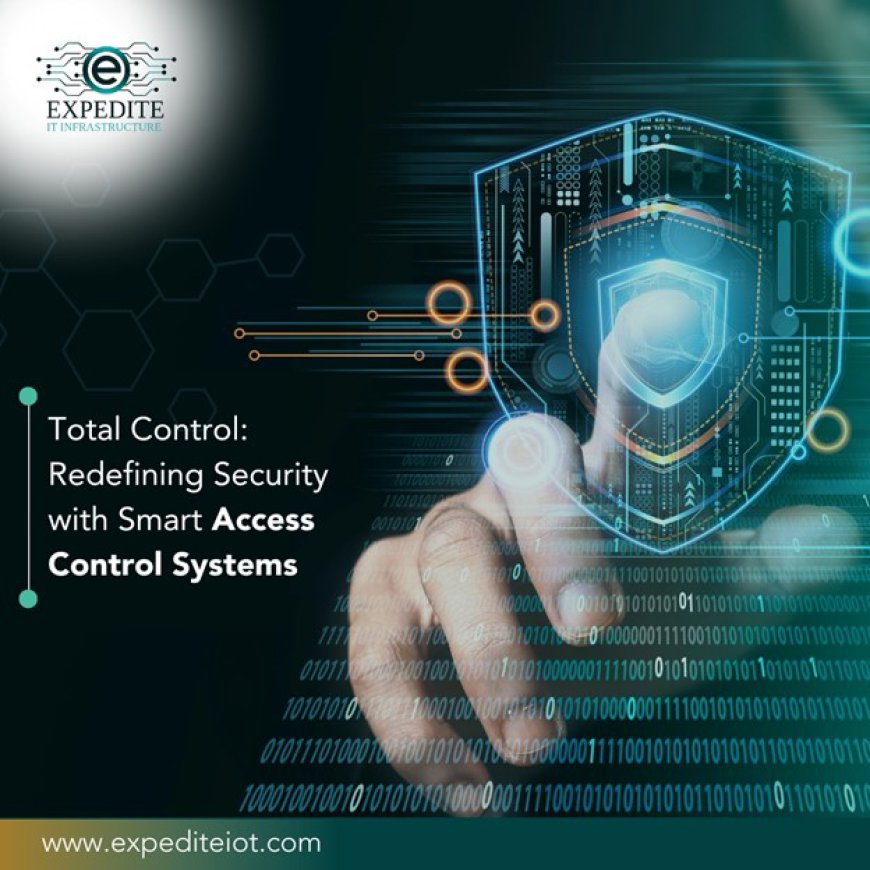
Bahrain's emergence as one of the Gulf's most progressive economies has brought with it an urgent demand for enterprise-grade physical security infrastructure. From the gleaming towers of the Manama Financial Harbour to the sprawling industrial complexes of Hidd and Sitra, organisations across every sector are discovering that a conventional lock and key is no longer sufficient. What they need — and increasingly mandate — is an intelligent Access Control System that not only restricts unauthorised entry but also generates actionable security intelligence, integrates with broader safety ecosystems, and scales effortlessly as the organisation grows.
At Expedite IoT , we design, deploy, and support advanced physical security platforms across Saudi Arabia, Qatar, Oman, and the wider GCC. Our deep regional expertise now extends to Bahrain, where a unique convergence of regulatory requirements, smart-city ambitions, and critical infrastructure obligations makes the right integrated access management platform an absolute operational necessity. This guide covers every dimension of modern access governance — from Biometric Access Control and Door Access Control hardware to enterprise-grade Security Access Control software — helping Bahraini decision-makers choose, deploy, and optimise the right solution for their environment.
Why Bahrain Demands an Advanced Access Control System Now
Bahrain's Vision 2030 framework is reshaping the Kingdom's economic and infrastructure landscape at remarkable speed. Smart-city projects, expanded financial services districts, and the continued growth of the oil, gas, and logistics corridors all create environments where people flow is high, assets are valuable, and security breaches are commercially and reputationally catastrophic. A purpose-built Access Control System Bahrain deployment addresses these pressures head-on, replacing manual security procedures with automated, audit-ready, and highly scalable electronic access management.
Regulatory Mandates and Compliance Obligations
Bahrain's regulatory landscape imposes clear access-control obligations across multiple sectors. The Central Bank of Bahrain (CBB) Rulebook Volume 5 requires licensed financial institutions to maintain documented physical access controls for server rooms, data vaults, and trading floors. The National Counter Terrorism Law mandates visitor and contractor screening at critical infrastructure facilities. The Personal Data Protection Law (PDPL) requires that access to systems holding personal data be restricted to authorised personnel, with a full audit log. An enterprise electronic access control platform with role-based permissions, time-stamped event logs, and real-time alert notifications satisfies all three regulatory frameworks simultaneously.
The Growing Insider Threat Landscape
Global security research consistently identifies insider threats — whether deliberate or accidental — as the leading cause of data and physical-asset loss in regulated industries. In Bahrain's densely networked financial and government sectors, an employee or contractor accessing a restricted zone without authorisation can expose organisations to regulatory penalties, reputational damage, and operational disruption. Granular, hardware-enforced zone-based access management is the most effective countermeasure, ensuring that no individual can enter an area beyond their authorised clearance level regardless of social engineering attempts or procedural lapses.
Smart City Integration and Digital Infrastructure Goals
Bahrain's eGovernment Authority and the Information and eGovernment Authority (iGA) have championed digital-first infrastructure across public services. Modern smart building access control solutions that integrate with building management systems (BMS), IP CCTV networks, and emergency-response platforms align perfectly with Bahrain's national digitalisation agenda — and position organisations as forward-thinking, infrastructure-ready partners for government tenders and international business development.
Core Technologies Powering Modern Access Control Solutions
A mature Access Control Solutions ecosystem is built from several interlocking technology layers — each addressing a distinct dimension of physical security. Understanding each layer enables procurement teams to build comprehensive specifications and evaluate vendors against real-world performance benchmarks rather than marketing claims.
Biometric Access Control System: The Gold Standard for Identity Assurance
The most secure and fraud-resistant form of entry authentication is biometrics. A Biometric Access Control System verifies identity against a physical characteristic that cannot be borrowed, forgotten, or shared — eliminating the credential-sharing vulnerabilities inherent in PIN codes and proximity cards. Bahraini organisations with high-security requirements deploy biometric modalities including:
• Facial Recognition: AI-powered cameras perform sub-second liveness-detection checks, matching a live facial scan against enrolled templates with accuracy rates exceeding 99.9% under controlled lighting — suitable for high-throughput entry points such as bank branch entrances and government ministry lobbies.
• Fingerprint Scanners: Optical and capacitive fingerprint readers remain the most widely deployed biometric modality globally, offering a compelling balance of accuracy, cost, and user familiarity — ideal for medium-security zones such as office floors and IT server rooms.
• Iris Recognition: The highest-accuracy biometric modality available, iris scanning is deployed in maximum-security environments such as currency vaults, evidence repositories, and data centre cages where absolute identity assurance is non-negotiable.
• Palm Vein Recognition: A contactless biometric modality that reads the unique vascular pattern beneath the skin — increasingly favoured in healthcare environments for its hygiene benefits and exceptionally low false-acceptance rate.
Door Access Control: Intelligent Hardware for Every Entry Point
The physical foundation of any access management programme is Door Access Control hardware — the locks, controllers, and credential readers that enforce the logical policies configured in the software. A well-specified hardware layer is not merely about locking doors; it is about creating a layered physical defence that responds intelligently to real-time conditions. Key hardware components for Bahraini deployments include electromagnetic and electric-strike locks rated to EN 14846 and UL 294 standards, IP-rated steel-reinforced door frames for exterior and perimeter doors in Bahrain's humid coastal climate, anti-tailgating sensors and mantrap vestibules for high-security zones, and integrated intercom and video-verified entry systems that allow remote visual confirmation before releasing an electronic lock.
Access Control Readers: Credential Technology for Every Security Tier
The credential reader is the interface between the access seeker and the access policy. Selecting the right Access Control Readers for each zone is a critical design decision that balances throughput speed, security assurance, and total cost of ownership. Bahrain deployments typically layer multiple reader technologies across a single facility:
• RFID / Proximity Card Readers (125 kHz): Suitable for low-security zones such as car parks and common areas. Fast throughput and low cost, though susceptible to card cloning if not supplemented by a secondary factor.
• Smart Card Readers (13.56 MHz / MIFARE): Industry-standard for medium-security environments. MIFARE DESFire EV3 encryption makes these highly resistant to credential cloning and replay attacks.
• Mobile Credential Readers (BLE / NFC): Increasingly deployed in modern office environments, allowing employees to use a provisioned smartphone as their access credential — eliminating card issuance costs and enabling instant remote revocation.
• Multi-Technology Readers: Future-proof readers that support RFID, smart card, mobile, and biometric credentials simultaneously — enabling phased migration from legacy systems without replacing all readers at once.
• PIN Pad Readers: Two-factor authentication (card + PIN) for medium-to-high security zones — adding a knowledge factor to the possession factor of a physical credential.
Security Access Control Software: The Command Layer
Hardware is only as effective as the policy layer that governs it. Enterprise Security Access Control software is the command centre of the entire system — translating organisational policy into hardware-enforced rules, capturing every access event into a tamper-evident audit log, and generating the real-time alerts and historical reports that security teams and compliance auditors depend on. Capabilities Bahraini organisations should demand from their software platform include role-based access policy management with Active Directory / Azure AD integration, time-of-day and day-of-week scheduling for restricted zones, anti-passback and occupancy-count enforcement, real-time alarm management with automated escalation workflows, CCTV event synchronisation that links an access event to the corresponding video clip, and PDPL-compliant data retention with configurable purge schedules.
Deploying an Access Control System in Manama: Practical Considerations
Organisations evaluating an Access Control System Manama deployment encounter a set of city-specific environmental, regulatory, and operational factors that shape system design, hardware selection, and implementation timelines. Addressing these considerations upfront prevents costly redesigns and integration failures post-deployment.
Environmental and Climate Resilience
Bahrain's coastal climate — characterised by high humidity (averaging 70–80% in summer), salt-laden air, and temperatures regularly exceeding 40°C — places demanding requirements on outdoor and semi-outdoor hardware. All exterior-mounted electronic door locking hardware and readers must carry a minimum IP65 ingress protection rating, with IP67 or IK10 preferred for perimeter gates, car-park barriers, and coastal-facing installations. Internal equipment located in air-conditioned offices is less constrained, but server-room access hardware must still be rated for the higher airflow and static-discharge environments typical of data centres.
Multi-Tenant Building Complexity
Manama's commercial real estate market is dominated by multi-tenant towers — the Bahrain Financial Harbour, Seef District, and Diplomatic Area all host dozens of organisations sharing common lobbies, lift lobbies, and car parks. A robust multi-tenant physical access management solution must support tenant-isolated access policies that allow each occupier to manage their own staff credentials independently while the building management team retains master-level visibility over all common areas. This architecture also enables building managers to instantly revoke access for a departing tenant's entire workforce with a single administrative action — a critical requirement in high-churn commercial environments.
Integration with Existing IT and Security Ecosystems
Most established Bahraini enterprises already operate SAP, Oracle, or Microsoft 365 environments alongside legacy physical security equipment. The right enterprise access control integration platform connects via open-standard APIs (REST, OSDP, OPC-UA) to HR directories for automated joiner-mover-leaver (JML) provisioning, to IP CCTV systems (Milestone, Genetec, Hikvision) for video-event correlation, to building management systems for HVAC and lighting integration, and to fire-safety panels for emergency door-release automation. Avoiding proprietary, locked-in hardware ecosystems is essential: open-architecture systems protect the organisation's long-term technology investment and allow incremental upgrades without full system replacement.
Industry-Specific Access Control Use Cases Across Bahrain
Banking, Finance, and FinTech
Bahrain's 400+ licensed financial institutions operate under CBB directives that explicitly mandate physical access controls for trading floors, server rooms, and currency-handling areas. A banking-grade physical security system in this sector typically combines mantrap vestibules with dual-authentication biometric readers at data centre entrances, time-locked vault access with dual-custody requirements, and real-time integration with SIEM platforms for unified cyber-physical security monitoring. The access event log also serves as a primary evidence source during CBB audits and internal compliance reviews.
Government Ministries and Critical National Infrastructure
Bahrain's government ministries, the National Security Apparatus, and critical national infrastructure operators — including BAPCO Energies, the Electricity and Water Authority (EWA), and Bahrain Telecommunications Company (BATELCO) — require access control systems certified to international security standards. These environments demand perimeter-security integration with hostile vehicle mitigation (HVM), turnstile and speed-gate deployment for high-volume staff entry points, and a centralised government security operations centre (SOC) integration that aggregates access events, CCTV feeds, and intrusion-detection alarms into a unified situational-awareness dashboard.
Healthcare and Pharmaceutical Facilities
Hospitals such as Salmaniya Medical Complex, the King Hamad University Hospital, and the growing network of specialist clinics across the Capital Governorate require access control that balances stringent security with the clinical need for rapid movement between zones. Healthcare-specific requirements include automatic door-release on fire-alarm activation, controlled access to pharmacy dispensaries and controlled-drug stores, infant and paediatric patient protection systems, and HIPAA-equivalent privacy compliance that restricts access to medical records rooms to authorised clinical staff only.
Oil, Gas, and Industrial Facilities
At BAPCO's refinery in Awali, the Alba aluminium smelter in Askar, and the Khalifa Bin Salman Port logistics hub, access control serves a dual safety and security function. Hazardous-area-rated (ATEX/IECEx) reader hardware is required for zones with explosive atmospheres. Permit-to-work system integration ensures that a contractor cannot physically access a work zone until the relevant safety induction and permit approvals are digitally recorded. Real-time occupancy tracking for muster-point accountability during emergency evacuations is equally critical — an integrated industrial site access management system can produce a live headcount by zone within seconds of an emergency evacuation alarm.
Education and University Campuses
Bahrain's universities — including the University of Bahrain, the Arabian Gulf University, and the Royal College of Surgeons in Ireland — Bahrain campus — balance open, welcoming campus environments with the need to protect laboratories, data centres, staff offices, and examination halls. A campus access control solution in this context integrates with student information systems (SIS) for automated credential provisioning at enrolment and revocation at graduation, supports temporary event-access permissions for open days and conferences, and enforces after-hours lockdown schedules for sensitive research facilities.
Selecting the Right Access Control Solutions for Your Organisation
Not all Access Control Solutions are created equal, and the GCC market contains both globally established platforms and regional point-solutions with limited scalability. The following evaluation framework helps Bahraini procurement teams cut through vendor claims and identify a system architected for long-term operational success.
• Open Architecture and Interoperability: Insist on OSDP v2-compliant readers and REST API-first software platforms. Proprietary ecosystems lock organisations into a single vendor and drive up long-term maintenance costs.
• Scalability from Day One: Choose a platform that supports hundreds of doors today and thousands tomorrow without a complete re-architecture. Cloud-managed controllers with edge-processing capability provide the best scalability-to-resilience balance.
• Cybersecurity Posture: Physical access control systems are increasingly targeted by cyber attackers seeking to disable security hardware remotely. Demand AES-128 or AES-256 encryption on all card-to-reader and reader-to-controller communications, TLS 1.3 on all software API traffic, and regular firmware security updates as contractual obligations.
• PDPL Compliance: Ensure the platform supports configurable data-retention policies, right-to-erasure workflows for biometric templates, and an exportable audit log in a legally admissible format.
• Regional Support and SLA Guarantees: A Bahrain or GCC-resident support team with documented response-time SLAs (on-site response within four hours for critical systems) is a non-negotiable requirement for mission-critical security infrastructure.
• Proven Regional Track Record: Expedite IoT's documented deployment experience across Saudi Arabia, Qatar, and Oman — published in verifiable case studies and third-party references — demonstrates the regional operational expertise that transfers directly to Bahrain's security market requirements.
The Business Case: ROI from Enterprise Access Control Investment
Security leadership in Bahrain increasingly needs to present a quantified return-on-investment case to finance committees. The business case for a modern enterprise electronic access management system rests on four measurable pillars:
• Loss Prevention: Physical theft, inventory shrinkage, and intellectual property loss are dramatically reduced when movement within secure zones is hardware-enforced and fully logged. Insurance actuaries consistently offer premium reductions for facilities with certified electronic access systems.
• Compliance Cost Avoidance: A single CBB enforcement action or PDPL breach penalty can dwarf the total five-year cost of a fully deployed access management platform. Automated compliance reporting eliminates the manual effort previously absorbed by security and legal teams during audit cycles.
• Operational Efficiency: Mobile-credential and self-service onboarding workflows eliminate physical card-desk queues and reduce the IT helpdesk burden of credential reset requests — estimated time savings of 15–20 minutes per employee-lifecycle event across an organisation of 500 staff represents thousands of productive hours annually.
• Incident Response Speed: Integrated access-event and CCTV logs reduce security incident investigation time from days to hours — measurably limiting operational disruption and reputational exposure when incidents occur.
Why Expedite IoT Is the Trusted Partner for Access Control in the GCC
Expedite IoT occupies a distinctive position in the GCC physical security market: we are neither a global software vendor disconnected from regional realities, nor a local hardware reseller with limited engineering depth. We combine international-standard technology platforms with on-the-ground regional implementation expertise — a combination that matters enormously when deploying mission-critical security infrastructure in Bahrain's complex regulatory and operational environment.
Experience and Expertise: Our security systems engineers hold internationally recognised credentials including Certified Protection Professional (CPP), Physical Security Professional (PSP), CISSP, and AWS Solutions Architect certifications. Our project management methodology is ISO 27001-aligned, and our pre-deployment site surveys follow the physical security assessment framework defined by ASIS International — the global gold standard for security engineering practice.
Authority and Industry Recognition: Expedite IoT maintains active technology partnerships with Suprema, HID Global, Genetec, Honeywell, Bosch Security, and Milestone Systems — the most widely deployed access control and video management platforms in the GCC. Our deployment case studies span banking headquarters, government ministries, healthcare campuses, and industrial facilities across Saudi Arabia, Qatar, and Oman — environments that share Bahrain's security complexity and regulatory demands. These documented references provide the verifiable evidence of authority and trustworthiness that Bahraini procurement committees rightly demand of mission-critical security vendors.
Conclusion
The security landscape in Bahrain is evolving faster than at any point in the Kingdom's history. Rising threat sophistication, expanding regulatory obligations, and the accelerating pace of commercial and government digital transformation all converge on a single imperative: organisations that rely on outdated or fragmented physical security infrastructure are operating with unacceptable risk exposure. A modern, intelligently integrated Access Control System is not a cost centre — it is a foundational operational investment that protects assets, ensures regulatory compliance, and enables the confident pursuit of business growth.
Whether your requirement is a precision-engineered Biometric Access Control System for a data centre in the Bahrain Financial Harbour, a networked multi-door electronic locking system for a multi-tenant commercial tower in Seef, or a fully integrated industrial site access management platform for a refinery in Awali — Expedite IoT has the technology portfolio, regional deployment experience, and certified engineering team to deliver a system that performs on day one and scales with your organisation for years to come. The right Access Control System Bahrain deployment begins with a conversation. Reach out to our team today and take the first step toward a more secure, compliant, and operationally resilient future.
FAQs
1. What is an Access Control System and how does it differ from a traditional lock and key?
An Access Control System is an electronic platform that replaces mechanical locks with credential-based authentication — using smart cards, biometrics, mobile devices, or PIN codes to verify identity before releasing a door or gate. Unlike a mechanical key, electronic access credentials can be instantly granted, modified, or revoked without changing physical hardware; every access attempt is time-stamped and logged; and access policies can be enforced automatically based on role, time of day, and zone-specific rules. For Bahraini organisations, this combination of flexibility, auditability, and real-time control represents a quantum leap over legacy lock-and-key security.
2. Which environments in Bahrain benefit most from a Biometric Access Control System?
A Biometric Access Control System is most beneficial wherever credential sharing, card loss, or identity spoofing present unacceptable security risks. In Bahrain this includes CBB-regulated financial institutions requiring access logs to trading floors and server rooms, government ministries and critical infrastructure sites where national-security considerations mandate absolute identity assurance, healthcare facilities with controlled-drug dispensaries and sensitive medical-records rooms, and data centres or telecommunications exchange facilities where a single unauthorised entry event could constitute both a security breach and a regulatory violation. Biometric authentication is also increasingly adopted in high-throughput corporate headquarters where speed and security must be simultaneously achieved.
3. What types of Door Access Control hardware are recommended for Bahrain's climate?
Bahrain's hot, humid, and salt-laden coastal environment places demanding requirements on exterior Door Access Control hardware. For outdoor and semi-outdoor installations, electromagnetic locks and electric-strike mechanisms should carry a minimum IP65 ingress protection rating with corrosion-resistant stainless-steel or powder-coated aluminium housings. Credential readers should be selected with an operating temperature range of at least −20°C to +70°C and UV-resistant polycarbonate or aluminium faceplates. For car-park barriers and perimeter gates, IK10 impact-resistance rating is also recommended. Expedite IoT specifies and sources hardware from manufacturers with documented GCC climate-performance certifications, eliminating the risk of premature hardware failure from environmental degradation.
4. How do Access Control Readers integrate with my existing HR and IT systems?
Modern Access Control Readers and their associated controller platforms connect to HR and IT systems via industry-standard APIs and directory protocols. Active Directory / Azure AD integration via LDAP or SCIM enables automated joiner-mover-leaver (JML) workflows — when a new employee is added to the HR system, their access credential is automatically provisioned to appropriate zones; when they resign, all credentials are revoked at the instant their employment record is terminated. SIEM integration via syslog or REST API enables unified cyber-physical event monitoring. For Bahraini organisations running SAP SuccessFactors, Oracle HCM, or Microsoft 365, Expedite IoT provides pre-built connectors that reduce integration time from weeks to days.
5. How long does it take to deploy an Access Control System in Bahrain, and what is involved?
Deployment timelines for an enterprise access control platform in Bahrain depend on the number of doors, integration complexity, and site-access constraints. A single-site deployment of up to 20 doors — encompassing hardware installation, software configuration, credential enrolment, and staff training — can typically be completed within three to six weeks from project kick-off. Multi-site enterprise rollouts across five or more locations, with deep HR, CCTV, and BMS integrations, typically span twelve to twenty weeks following an initial phased-deployment roadmap. Expedite IoT conducts a detailed pre-deployment site security survey, produces a Bill of Materials and integration architecture document, and provides a project plan with defined milestones before any hardware is ordered — ensuring that your Access Control System Manama or Kingdom-wide deployment proceeds on schedule, within budget, and to specification.
Biometric Access Control System